
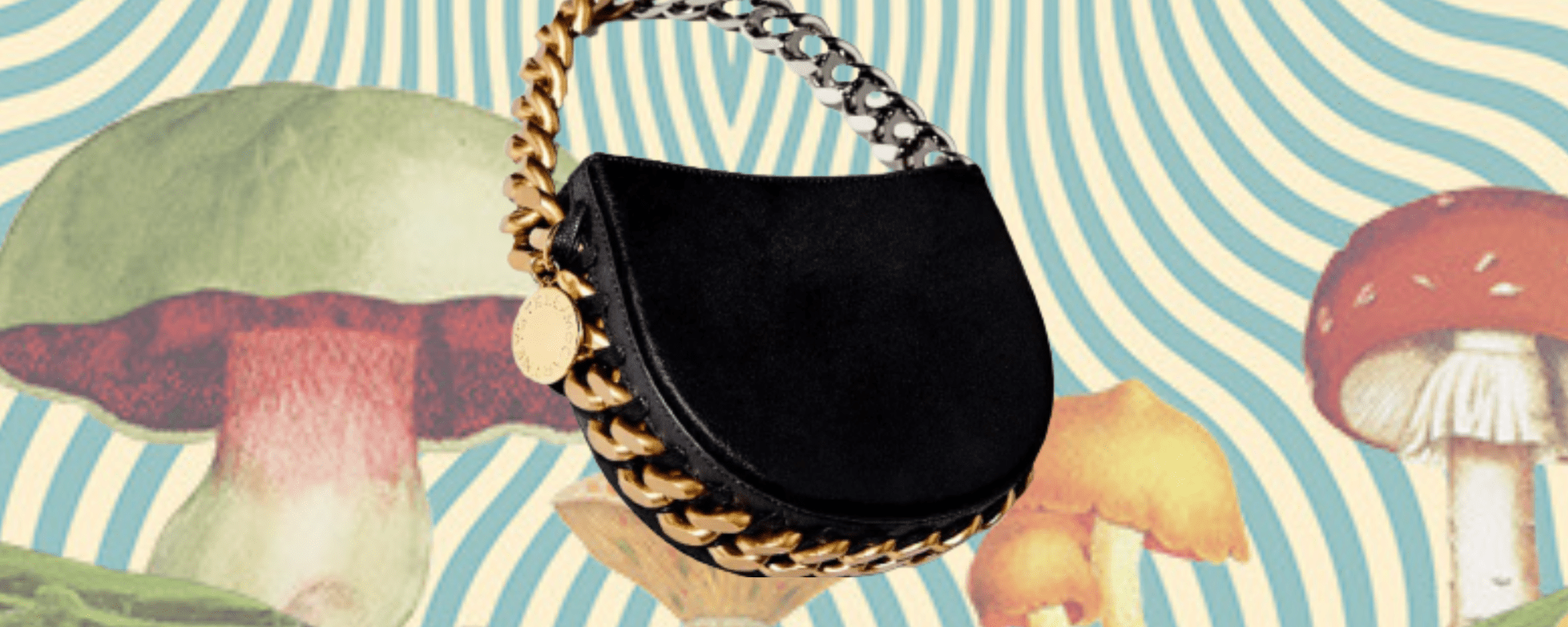
“The imminent debut of the limited-edition Frayme Mylo bag by this socially conscious brand showcases the ever-increasing allure of mycelium-based materials within the illustrious realm of luxury.”
British luxury fashion trailblazer Stella McCartney has consistently pushed the boundaries of sustainability in fashion, incorporating organic cotton into her ready-to-wear collections and introducing the eco-friendly Stella McCartney Airslide shoes in 2021, crafted from recycled production waste. Now, McCartney is breaking new ground by embracing a novel material, Frayme Mylo, for her latest creation – a stunning bag made from mycelium, a mushroom root-like structure renowned for its intricate, thread-like appearance.
This groundbreaking innovation is the result of a collaboration between Stella McCartney and California-based innovation firm Bolt Threads, who pioneered the development of Mylo material in early 2018. Mylo replicates the luxurious look of genuine leather while remaining entirely cruelty-free and sustainable.
But Frayme Mylo’s appeal goes beyond its synthetic leather alternative. Only a limited edition of 100 bags, priced at £1,995 , will be available worldwide upon its release on July 1st, exclusively through http://www.stellamccartney.com.
Stella McCartney continues to redefine sustainable fashion, and the Frayme Mylo bag stands as a testament to her commitment to environmentally responsible innovation.
Frayme Mylo represents the pinnacle of the luxury brands’ revolution in the world of sustainable leather. As fashion adapts to a more ecological vision, Hermes unveiled a new interpretation of its iconic Victoria bag for the Fall/Winter 2021 season, crafted from a revolutionary material: Sylvania, a mushroom leather developed by the prestigious Californian company MycoWorks.
These luxury brands are demonstrating extraordinary commitment to embracing sustainable solutions, investing in innovative materials such as mycelium, known for its eco-friendliness. Stella McCartney’s Frayme Mylo and Hermes’ Victoria bag with Sylvania are tangible examples of how the luxury fashion industry is entering a new era of environmental responsibility and creativity.
With these initiatives, the future of luxury fashion is undeniably sustainable, and ecological innovations merge with high-class design to shape the industry in unprecedented ways.
Disclaimer:
The information provided here about the production and benefits of mushroom leather is intended for general informational purposes only. While we strive to provide accurate and up-to-date information, please be aware of the following:
- Changing Landscape: The field of sustainable materials, including mushroom leather, is constantly evolving. New developments, research findings, and production methods may have emerged since the last knowledge update in September 2021.
- Product Variability: The production processes for mushroom leather can vary between manufacturers and brands. The specific methods and materials used may differ, which can affect the properties of the final product.
- Consult Manufacturer: If you are interested in purchasing mushroom leather products or learning more about them, we recommend consulting the manufacturer or brand directly. They can provide the most accurate and current information about their products, including production methods, sustainability practices, and availability.
- Environmental Claims: While mushroom leather is generally considered more sustainable and environmentally friendly than traditional leather, the environmental impact can still vary depending on factors such as production scale, transportation, and other supply chain considerations. It’s advisable to research and verify any environmental claims made by manufacturers.
- Legal and Regulatory Considerations: The production and marketing of alternative materials like mushroom leather may be subject to regional or national regulations and certifications. It’s important to be aware of any legal and regulatory considerations related to these products.
In summary, while mushroom leather is an exciting and promising sustainable material, consumers are encouraged to conduct their own research and due diligence when considering products made from this material. Stay informed about the latest developments in sustainable materials and consult with manufacturers or trusted sources for the most accurate and current information.
 curlycurlworld: Get Twisted with CurlyCurl: The Latest in Curls, Coils, and Confidence!
One thought on “Sustainability Assessment: Exploring the Viability of Mushroom Skin in Fashion – Stella McCartney’s Innovative Bag Creation”