
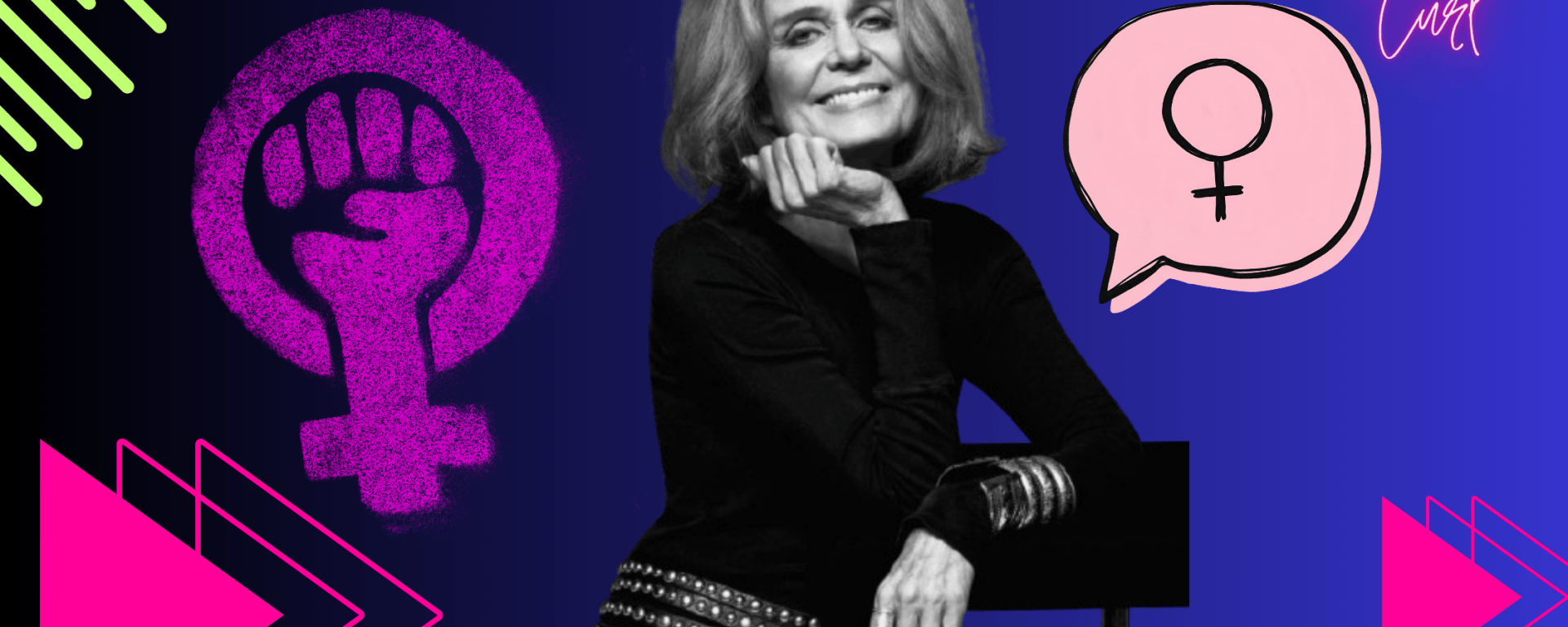

There was a time when feminism was expected to whisper. Then came Gloria Steinem.
With her trademark aviator glasses, razor-sharp prose, and a stubborn refusal to behave as expected, Steinem became the defining face of American second-wave feminism. But her impact did not respect borders. The questions she forced into mainstream print—about work, sex, reproductive freedom, power, and bodily autonomy—were part of a seismic shift tearing across the United States, Britain, and Continental Europe.
Underneath the rallies and the headlines, the movement was driving at a radical core question: Who gets to decide what a woman’s life looks like?
The Personal Becomes Political
When the second wave erupted in the 1960s and 70s, it shifted the battleground. Where first-wave suffragettes fought for the ballot box and legal standing, second-wave activists marched straight into daily life.
- Marriage and Motherhood transformed from assumed destinies into open political debates.
- Pay Disparity was stripped of its excuse as an “individual problem” and exposed as systemic economic suppression.
- Domestic Violence was dragged out from behind closed doors and rebranded as a crisis of state protection.
The era’s defining rallying cry—“The personal is political”—refused to let society treat structural oppression as private misfortune.
America Finds Its Voice
In the U.S., Steinem transformed activism into media power. Co-founding Ms. magazine, she gave women’s lived experiences the weight of front-page news.
She was far from alone, operating within a loud, brilliant, and often fractured coalition. Betty Friedan had already blown open the myth of the contented suburban housewife. Shirley Chisholm broke political glass ceilings as the first Black woman elected to Congress and the first to seek a major-party presidential nomination. Bella Abzug brought raw, unapologetic movement politics to the floors of Capitol Hill.
Together, they made gender inequality impossible for Washington to dismiss as a niche concern.
Across the Atlantic
Across the pond, British feminists built an activist movement grounded in labor rights, equal pay, and community organizing. Through mass demonstrations and fierce regional conferences, the British Women’s Liberation Movement systematically dismantled the idea that domesticity was a woman’s natural state.
In Europe, the revolution took local shape:
- In France, intellectuals and activists launched direct assaults on patriarchal marriage laws and reproductive bans.
- In Italy, feminist organizing tied reproductive rights and divorce reform directly to labor strikes and class struggles.
There was no unified European playbook—and that was the point. While laws and cultures varied, women everywhere recognized the same pattern: the “natural” boundaries of their lives were economic and social traps built by men.
A Movement That Refused to Be Respectable
Second-wave feminism refused to play nice. It rejected the demand that women remain polite to be heard. It exposed the invisible labor of unpaid caretaking and challenged the policing of female sexuality.
It was not without critical blind spots. Mainstream second-wave leadership frequently centered white, middle-class narratives, leaving working-class women, women of color, and lesbians fighting for space within the movement itself. Yet that internal conflict sparked the next evolution: laying the groundwork for intersectionality and modern LGBTQ+ advocacy.
The Unfinished Revolution
Decades later, the language has evolved, but the battlelines remain strikingly familiar.
The questions driving today’s headlines are the same ones raised fifty years ago: Who controls a woman’s body? Who bears the burden of unpaid care? Who gets heard, who gets promoted, and who gets believed?
Gloria Steinem’s legacy isn’t an icon frozen in the 1970s. It is the enduring assertion that power structures deserve relentless questioning—and that silence is never neutral. Sometimes, silence is just the engine that keeps the system running.