
Boldly Advocating for Palestine, Challenging Nationalism, and Redefining Fashion as a Political Canvas
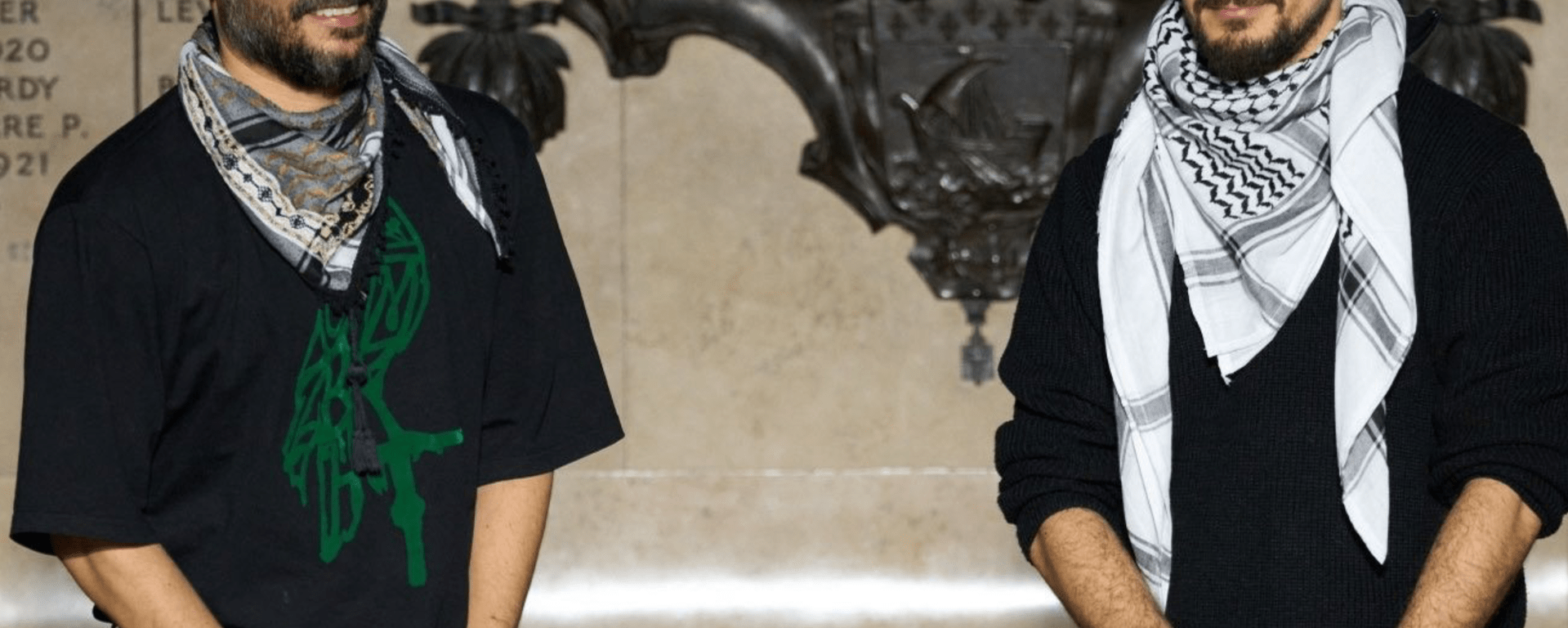
In a stunning departure from the expected glamour and opulence of Paris Fashion Week, GmbH, under the visionary guidance of founders and creative directors Benjamin Huseby and Serhat Isik, closed the prestigious event on an unprecedented note. Eschewing the traditional “nod and smile” approach, the duo transformed their runway into a compelling political platform, advocating for Palestine, a message that resonated far beyond the confines of the fashion world.
The opening of the show set the tone with a ten-minute impassioned speech by Huseby and Isik, articulating their support for Palestine, urging a ceasefire, and calling for the release of hostages. This wasn’t just a collection; it was a profound statement, an artistic endeavor transcending the boundaries of mere fashion.
As models strutted down the runway, the audience witnessed a departure from the brand’s classic queer sensuality, replaced by garments infused with deep political significance. Keffiyeh jackets, painstakingly embroidered by refugees in Jordanian camps, took center stage. Drapes reminiscent of prayer shawls cascaded over shoulders, and United Nations symbols adorned sweatshirts, collectively forming the collection’s theme: “Untitled Nations.”
The juxtaposition of fashion and politics was deliberate. GmbH aimed to protest against the resurgence of nationalism, a global phenomenon challenging the multiculturalist ideals championed by Millennials in recent years. This bold stance garnered mixed reactions, particularly concerning the interpretation of certain pieces. A bomber jacket with multiple pockets, for instance, drew comparisons to the explosive belts of suicide bombers, raising eyebrows and stirring debate.
Joelle Diderich of WWD encapsulated the sentiment, describing the show as “a harrowing experience illustrating the power and responsibility of using fashion as a political platform.” The concern extended to the runway murmurs, with some critics contending that the show went against the grain of combating the stereotyping and demonization of Muslims, a stance typically endorsed by the brand.
However, the real-time social media landscape painted a different picture. The show garnered widespread appreciation, fueled by the fashion industry’s broad support for the Palestinian cause. It became a testament to the evolving role of fashion as a socio-political commentary, challenging norms and sparking necessary conversations.
Regardless of one’s political stance, the GmbH showcase compelled a collective acknowledgment – it is undeniably refreshing to witness fashion creatives take a bold and unapologetic stance on a controversial issue, pushing the boundaries of the industry’s impact beyond aesthetic allure. The dialogue spurred by “Untitled Nations” transcends the runway, reminding us that fashion, at its core, has the power to be a catalyst for societal reflection and change.
In recent years, a notable shift has occurred in the fashion landscape, particularly in the wake of the lockdown and the amplification of social justice movements like Black Lives Matter and Me Too. Fashion brands, keenly attuned to the evolving zeitgeist, have recognized the potential benefits of aligning themselves with political causes – not just as a form of expression but as a dynamic channel for charitable endeavors, brand promotion, and enhanced sales. While this trend is palpable and needs no explicit examples, what sets certain brands apart is their willingness to delve into truly “hot” and controversial causes.
In navigating this landscape, it becomes evident that fashion’s foray into liberal causes often centers around issues that garner widespread agreement, such as environmentalism, gender equality, and the promotion of tolerance and love. However, the majority shy away from addressing the more contentious and heated subjects that spark uncomfortable conversations. Issues like racism, gender disparity, pollution, transphobia, and the struggle for acceptance of queer minorities remain largely untouched in the mainstream fashion discourse.
From a societal perspective, it is undeniably easy – and perhaps taken for granted – to rally behind the banner of a tolerant and liberal society. Supporting environmental initiatives and championing universal love align with a generic and intuitive common sense that has persisted since the revolutionary ’60s. Yet, there lies a gap in the fashion narrative, where the truly divisive and challenging issues are left unexplored.
This reluctance to engage with the “hot” topics raises questions about the depth of the fashion industry’s commitment to social change. Are brands genuinely pushing boundaries and catalyzing meaningful conversations, or are they merely capitalizing on the safer, more universally accepted aspects of activism? The challenge for fashion lies in embracing discomfort, tackling controversial subjects head-on, and navigating the complexities of these conversations while maintaining authenticity and sincerity.
In a landscape where activism and commercial interests dance a delicate tango, the true impact of fashion’s engagement with politics lies in its ability to transcend token gestures and venture into the heart of societal discourse. It’s time for fashion to not just follow trends but to set them, challenging conventions and sparking conversations that go beyond the expected, fostering a genuine and profound connection between the industry and the diverse tapestry of human experience.
Balenciaga’s snow-filled spectacle, an ode to the war-torn landscapes of Ukraine, navigated the delicate waters of politics without succumbing to a polarizing stance. In the realm of fashion, where every move is scrutinized as a veiled promotion, this moment stood out as a nuanced reflection. Amidst the glamour of Paris and the cocoon of privilege that is fashion week, addressing the complex Palestinian cause and venturing into incendiary topics like immigration, religious tolerance, multiculturalism, historical judgments, and biases presented a daring divergence. The runway became a canvas for artists to intertwine with the contentious threads of humanitarian demands and the ever-evolving landscape of political discourse. Beyond the facade of quiet luxury, fashion, in its true artistic essence, boldly embraced a vibrant, contemporary, and divisive dialogue—one that hadn’t been explored with such fervor in quite some time.
Amidst the looming Biden vs. Trump electoral encore and heightened political discord in the United States, the fashion industry grapples with the potential fallout of engaging in contentious issues like inclusivity, climate change, and LGBTQ rights. The cautious retreat is fueled by a BoF-noted surge in conservative resistance and a weariness among the public, rendering humorous T-shirts less applause-worthy and more susceptible to Fox News scrutiny and consumer boycotts.
Recalling Bud Light’s summer sponsorship fiasco with transgender woman Dylan Mulvaney and Disney’s struggles in cinema and fashion, companies tread a precarious line, wary of the “go woke, go broke” warning. A discerning public, fatigued by fashion’s perceived hypocrisy, rejects empty sycophancy. As the credibility of some factions rises, even those with extremist ideologies, it becomes acceptable to endorse regressive or authoritarian politics, exemplified by figures like tradwives and Andrew Tate.
The forecast suggests that the fashion industry, seeking to avoid controversies, will opt for safe battlegrounds to secure sales. The consequence: brands that masked creative poverty with political posturing face uncertainty. The craving for safety and a reluctance to take real creative risks portend a 2024 marked by reassuring fashion but alarming global news. However, in this landscape, the bold choice of Benjamin Huseby and Serhat Isik stands as a testament to courage, earning them respect for their human stature and intellectual depth.
 curlycurlworld: Get Twisted with CurlyCurl: The Latest in Curls, Coils, and Confidence!