
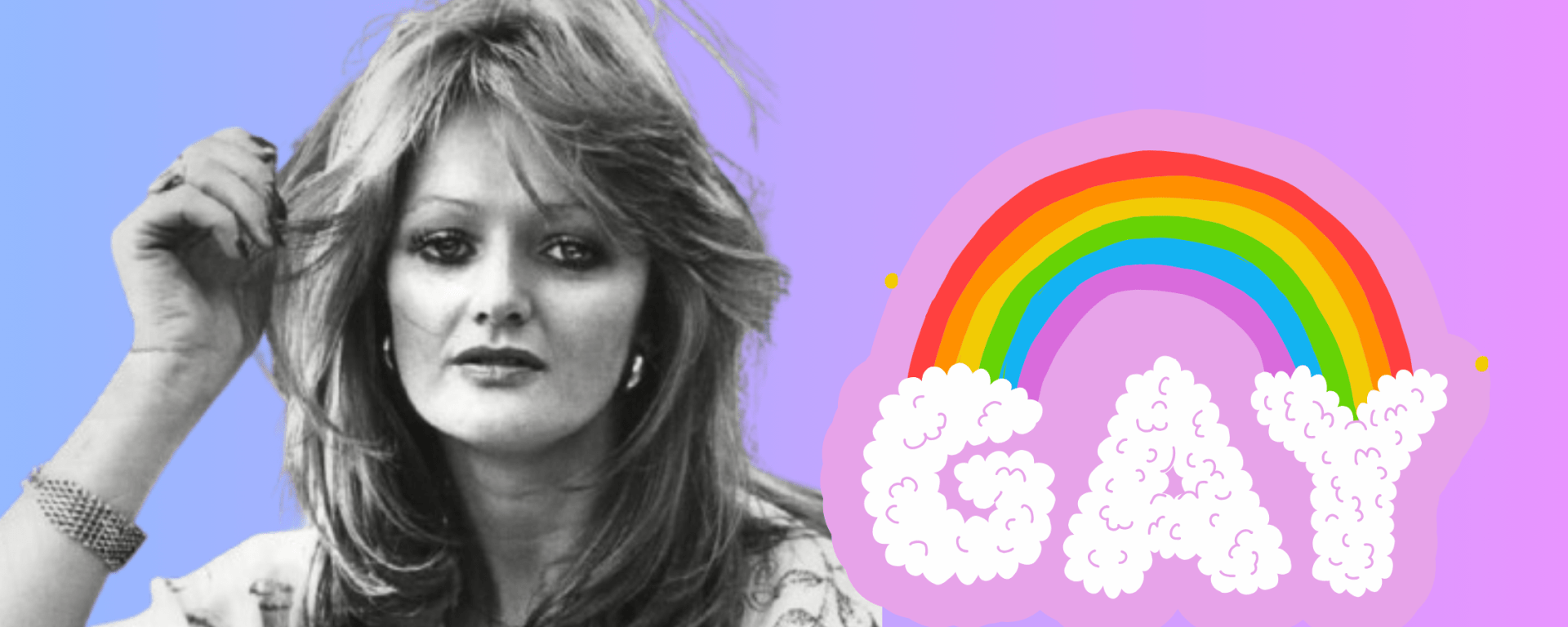

Wrap yourselves in a cheap faux-fur coat and pour a double vodka-cranberry, because the universe has dealt us a devastating, wind-machine-shattering blow. Somewhere in the heavens, a celestial fog machine has just been cranked to maximum, and a thousand drag queens are simultaneously dropping to their knees in slow-motion agony, reaching for an imaginary microphone that isn’t there. Bonnie Tyler has left the building—and frankly, our collective vocal cords will never truly recover.
Let’s be completely honest: Total Eclipse of the Heart was never just a song. It was a mandatory five-minute psychological evaluation disguised as a pop anthem. The second that iconic piano intro echoed through the sticky, sweaty walls of G-A-Y London, the entire dance floor transformed into a high-stakes theatrical production. You weren’t just a person standing near the toilets anymore; you were suddenly the tragic, rain-soaked protagonist in a 1980s music video. Your lukewarm drink was forgotten, your friends vanished into the strobe lights, and the chaos became beautifully predictable.
On one side of the room, someone was weeping openly into a plastic cup. In the center, a sea of aggressively pointed fingers aimed directly at the ceiling, demanding answers from God. And without fail, there was always a huddle of twenty-somethings scream-singing with the raw, agonizing passion of a woman who had survived three bitter divorces and a shipwreck, even though their biggest actual life trauma was being left on “Read” by a guy named Fletcher.
Then came the chorus. The collective screech of a thousand unhinged clubbers trying to mimic Bonnie’s signature, gravelly rasp was less “choir of angels” and more “pack of hyenas fighting over a carcass.” It was beautiful, it was deeply traumatic, and it was pure, unadulterated camp.
But Bonnie’s assault on our emotional stability didn’t stop with a single eclipse. It’s a Heartache became the official national anthem for every text message you absolutely should not have sent at 3:00 AM to a guy who listed his job description as “entrepreneur.” Meanwhile, Holding Out for a Hero convinced generations of heavily intoxicated people that a shirtless knight in shining armor was going to crash through the venue roof to rescue them, rather than just a very tired bouncer handing them their jacket and telling them it was closing time.
Throughout her reign, Bonnie didn’t just sing pop songs; she engineered weapons-grade emotional damage. She demanded big hair, bigger feelings, and a level of vocal commitment that defied medical science. G-A-Y London always understood that assignment. Those nights were a messy, loud crucible of questionable neon fashion, dangerous choreography, and vocals that were violently out of key. But nobody cared, because under Bonnie’s raspy rule, everyone belonged to the same glorious delusion of grandeur.
So tonight, dim the lights, turn on a desk fan to mimic a dramatic gale-force wind, and scream-sing until your neighbors call the police. Thank you, Bonnie, for the emotional whiplash, the ruined vocal cords, and the magnificent drama. May your afterlife be filled with endless key changes and a permanent smoke machine. 🕊️✨