

The Hidden Symbolism of Miranda Priestly
What if a modern fashion film hides the same moral warning found in Dante’s Divine Comedy? At first glance, The Devil Wears Prada looks like a story about ambition, style, and career success. But beneath the designer clothes and sharp dialogue, it reveals something darker: the human obsession with status, power, and material desire.
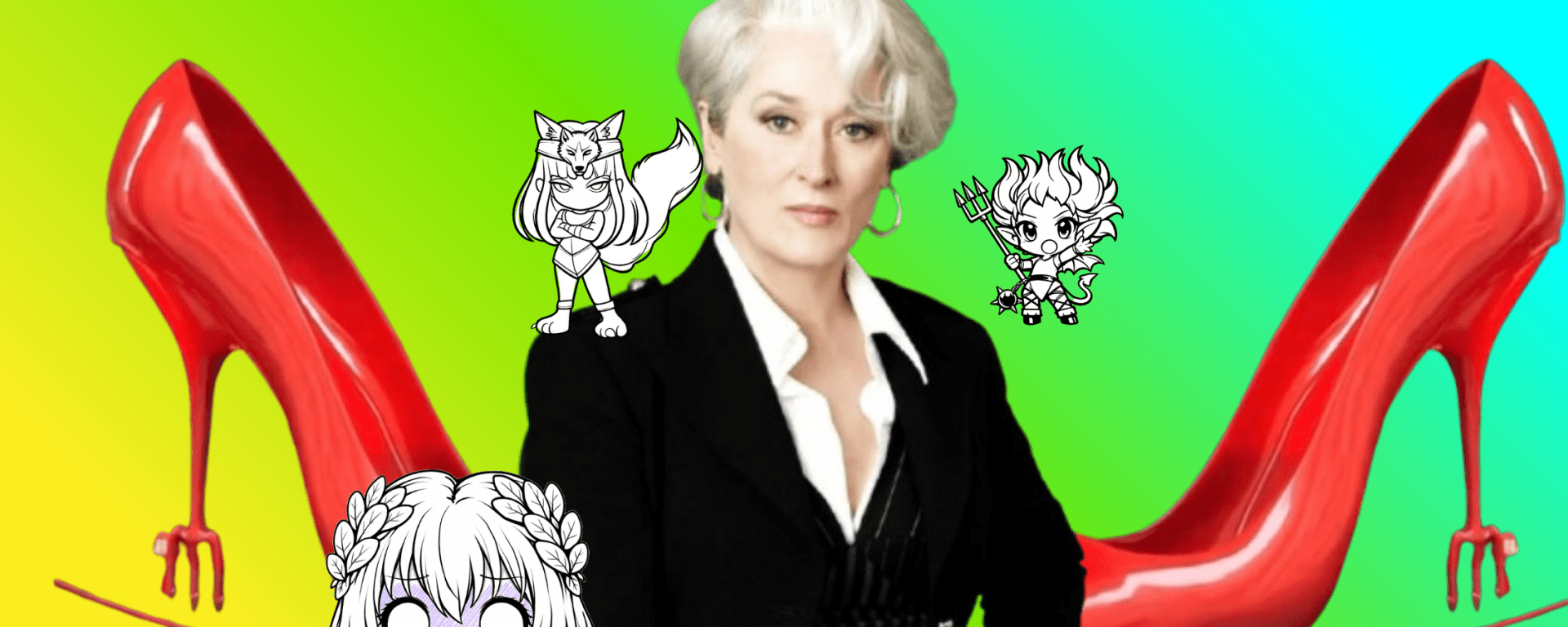
In this reading, Miranda Priestly is more than a demanding editor. She becomes a symbol of greed—an elegant version of the She-Wolf (La Lupa) from Dante’s Inferno.
The She-Wolf and the Appetite for More
In the Divine Comedy, the wolf represents Avarice (Incontinence/Greed): a creature that, the more it consumes, the hungrier it becomes. Miranda embodies this force in the modern corporate world.
She possesses everything society tells us to want:
- Influence and Wealth
- Recognition and Beauty
- Absolute Control
Yet, nothing is ever enough. Every issue of Runway must be perfect. Every employee must give more. Every sacrifice is expected. Her world is built on achievement but sustained by constant dissatisfaction.
Andrea’s Descent into the “Dark Woods”
Andrea Sachs enters this world as many of us enter modern society—with talent, hope, and the belief that success brings fulfillment. At first, she resists. Then, slowly and invisibly, she adapts. She changes her dress, her thoughts, and her values.
This is where the film becomes a mirror for our culture. We are taught to measure worth through:
- External Symbols: A bigger house, a better title.
- Productivity: The hustle culture of “more is better.”
- Visibility: The need to be admired by everyone.
The promise is always the same: once you get the next thing, you will finally be complete. But like Dante’s wolf, desire has no natural ending when it is fed only by appearances.
“Everybody Wants This”: The Illusion of Success
The tragedy isn’t the clothes or the success; it’s when possessions replace purpose.
Miranda’s greatest power is a psychological one. She convinces everyone that her world is the only world that matters. When she says, “Everybody wants this,” she captures the ultimate illusion of modern life: if everyone desires it, it must be valuable.
The Choice: Rejection of Emptiness
Andrea’s awakening comes when she realizes she is free to refuse. This is her “turning point.”
- It is not a rejection of excellence.
- It is a rejection of emptiness disguised as success.
Dante’s journey was never just about Hell; it was about learning to recognize the forces that trap the soul—and choosing another path.
Final Thought: Does Greed Wear Prada?
Today, greed rarely appears as a monster. It appears as aspiration, branding, and endless comparison. It wears luxury and speaks confidently.
The real question is not whether the world wants that life. The real question is: Do you?

