
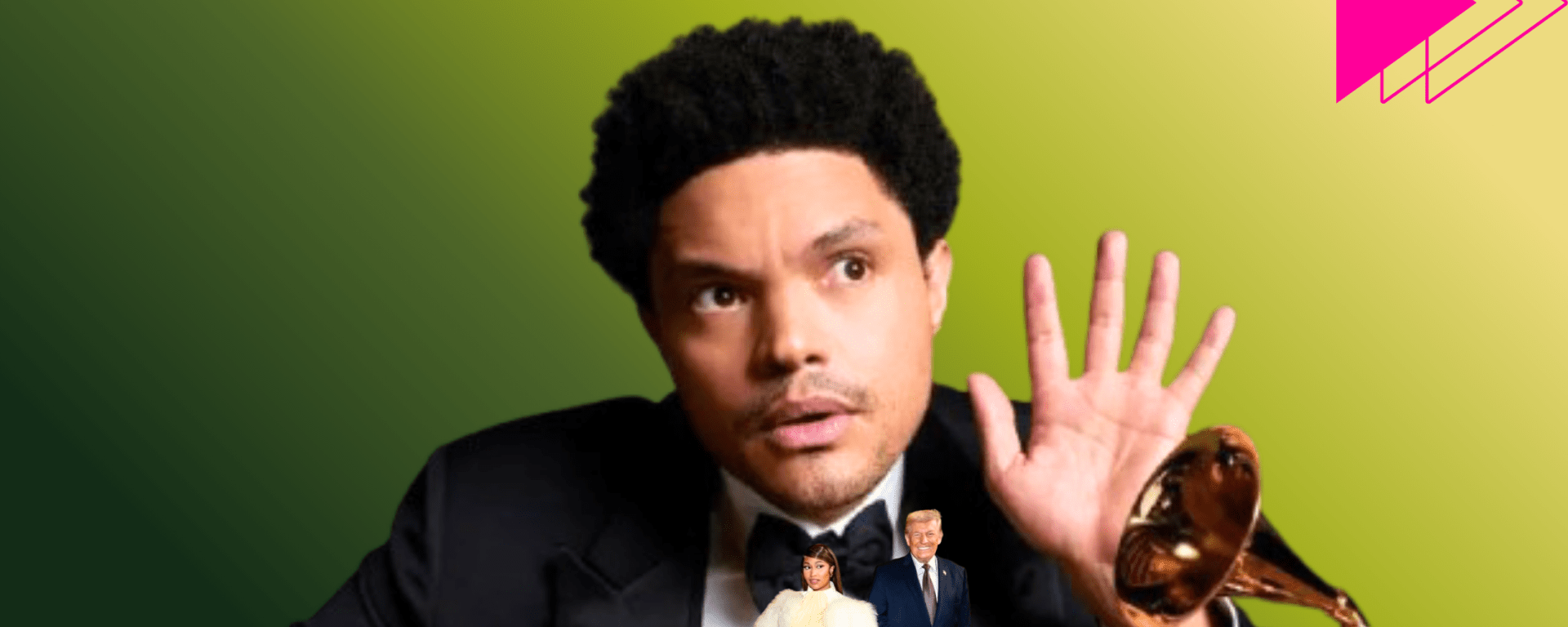

Trevor Noah’s opening monologue at the GRAMMYs reignited an old but evergreen debate at the intersection of pop culture, politics, and free speech: when comedy steps into political satire, who really controls the narrative? His jokes referencing Nicki Minaj, Donald Trump, Greenland, and the now-infamous Epstein Island instantly escaped the awards-show bubble and entered the global political conversation, proving once again that entertainment stages have become some of the most influential political platforms of our time.
Comedy has always thrived on exaggeration, provocation, and cultural tension. Noah’s GRAMMYs remarks followed a long tradition of comedians using humor to spotlight power, hypocrisy, and public obsession. When he quipped that “Nicki Minaj is not here, she’s still at the White House with Donald Trump,” he wasn’t making a literal claim. He was compressing weeks of political spectacle, celebrity commentary, and media outrage into a single punchline. Satire works precisely because audiences recognize the absurdity behind the reference, even when the joke makes powerful people uncomfortable.
The same dynamic applied to his “Song of the Year” line, where he compared the prestige of a GRAMMY to Trump’s well-documented interest in acquiring Greenland, then escalated the joke by referencing Epstein Island and Bill Clinton. The joke itself was less about the individuals named and more about how conspiracy, scandal, and politics dominate modern discourse. In an era where headlines often read like satire, comedians increasingly act as translators of collective disbelief. They say out loud what many people are already thinking but rarely articulate so bluntly.
Donald Trump’s reaction, threatening legal action and labeling Noah a “talentless” host, added fuel to the moment and extended its lifespan far beyond the broadcast. Public threats of lawsuits against comedians are not new, but they are revealing. They highlight a tension between political authority and cultural influence. While politicians hold institutional power, comedians often control public mood, framing, and memory. A joke can linger longer than a policy announcement, especially in the age of viral clips and algorithm-driven outrage.
From an educational perspective, this moment offers a clear case study in how satire functions in democratic societies. Political comedy does not operate under the same rules as journalism or law. Its purpose is not to prove, but to provoke. It exaggerates truth to expose emotional or moral realities, not to establish factual records. When satire is treated as literal accusation, the conversation shifts away from its intent and toward performative offense, which often benefits the satirist more than the subject.
The GRAMMYs incident also underscores how award shows have evolved. Once primarily about celebrating artistic achievement, they are now hybrid events where culture, politics, and activism collide. Viewers no longer tune in only for trophies; they watch for moments that define the cultural temperature of the year. Trevor Noah’s monologue succeeded because it captured that temperature perfectly: cynical, media-literate, and acutely aware of how power operates behind spectacle.
For artists and audiences alike, this controversy reinforces why freedom of expression remains central to creative industries. Music, comedy, and art have always reflected political realities, whether subtly or overtly. Attempts to silence or intimidate performers rarely erase the message; instead, they amplify it. In this case, the backlash became part of the performance, extending the joke into real-time political theater.
Ultimately, the significance of Trevor Noah’s GRAMMYs jokes lies not in whether they offended, but in why they resonated. They tapped into widespread fatigue with political absurdity, celebrity-politics crossover, and the endless recycling of scandal in public life. That resonance is what makes moments like this evergreen. Long after the headlines fade, the underlying question remains: who gets to joke about power, and why does it matter so much when they do?
In a media landscape where outrage travels faster than context, satire remains one of the sharpest tools for cultural reflection. Whether praised or condemned, Trevor Noah’s GRAMMYs monologue reminds us that comedy is not just entertainment—it is commentary, critique, and, at times, a mirror held uncomfortably close.

