
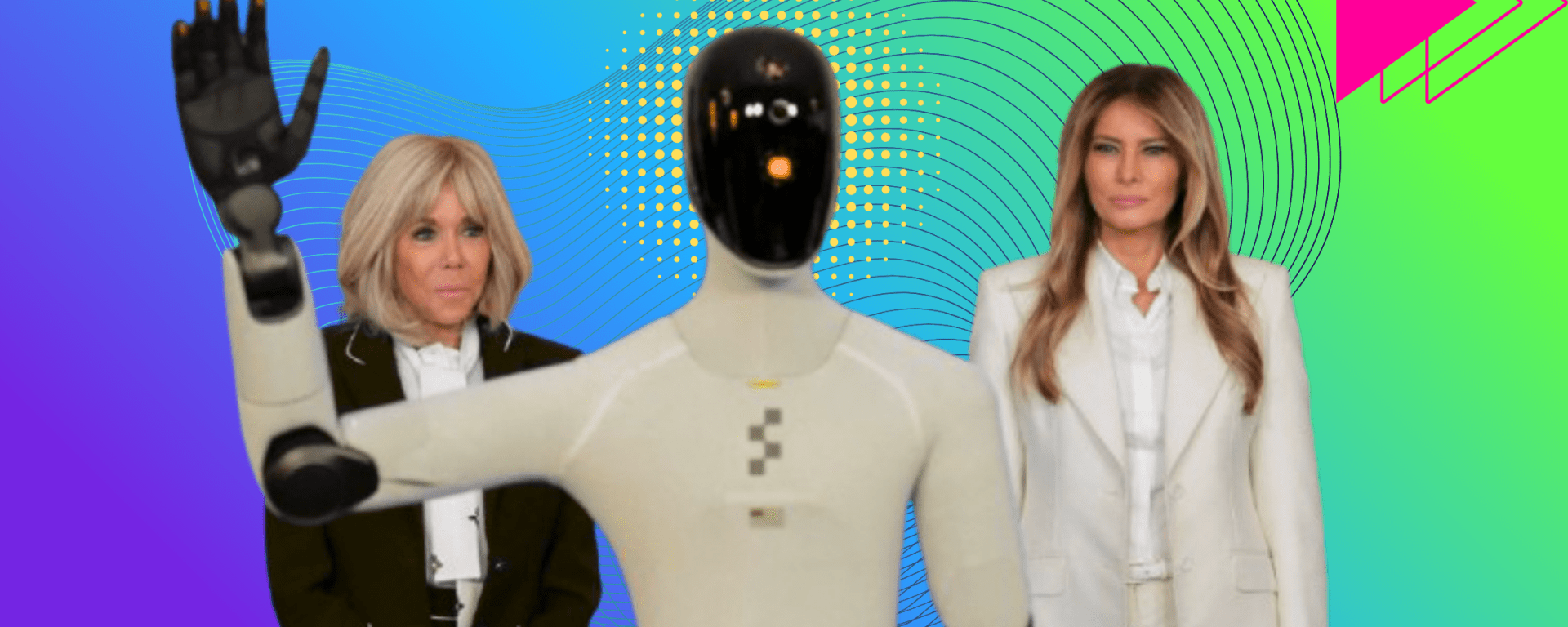

When Melania Trump walks into a White House summit with a humanoid robot at her side, it feels less like education policy and more like a scene from a near-future film—sleek, ambitious, slightly unreal. The promise is irresistible: AI tutors that adapt to every child, lessons that evolve in real time, a system where no one falls behind because everything is optimized. It sounds like progress. It looks like progress. But something about it doesn’t sit right.
Because personalization, the crown jewel of AI education, isn’t neutral. It never has been. Algorithms don’t just respond—they guide, they filter, they decide what matters. And those decisions come from data, from patterns built on past behavior, past inequalities, past assumptions. So when a machine decides what a child should learn next, it’s not just helping—it’s shaping a path. Quietly. Invisibly. The risk isn’t that students won’t learn. It’s that they’ll learn inside invisible boundaries they didn’t choose.
And then there’s the obsession with optimization. AI thrives on what it can measure: speed, accuracy, completion. But real learning has always been messy, inefficient, full of pauses and contradictions. Curiosity doesn’t scale neatly. Doubt doesn’t fit into a dashboard. When everything is designed to maximize performance, students start performing for the system instead of engaging with the unknown. They get better at answering, worse at questioning. And over time, the system mistakes compliance for intelligence.
There’s also something colder underneath it all, something harder to quantify. Education has never been just about information—it’s about connection. A teacher noticing when a student is distracted, frustrated, inspired. A moment of encouragement that changes everything. AI can simulate empathy, but it doesn’t feel it. It doesn’t care. And that gap matters more than we want to admit, because emotional connection isn’t an extra layer of learning—it’s the foundation of it.
Meanwhile, the data never stops flowing. Every click, every hesitation, every mistake becomes part of a profile. To personalize learning, the system has to watch constantly. And once that level of surveillance becomes normal in childhood, it doesn’t just disappear. It sets a precedent. It reshapes what privacy means before students are even old enough to question it.
The irony is that the more help AI provides, the easier it becomes to depend on it. When answers are always one step away, struggle starts to feel unnecessary. But struggle is where learning actually happens. Without it, knowledge becomes fragile—easy to access, easy to lose. Students may look more capable than ever, but underneath, something essential is missing: the ability to think without assistance.
And somewhere in this shift, the role of the teacher begins to blur. Less mentor, more system operator. Less guide, more supervisor of algorithms. When technology dictates the pace and structure of learning, human judgment gets sidelined. The classroom becomes quieter, more efficient, but also less alive.
What makes all of this more complicated is that education isn’t universal—it’s cultural, emotional, deeply human. And yet AI systems tend to standardize, to smooth out differences, to apply the same logic everywhere. In trying to scale education globally, we risk flattening it, turning something rich and diverse into something uniform and predictable.
None of this means AI has no place in education. It can support, enhance, open doors. But there’s a difference between using technology as a tool and building the entire system around it. One empowers humans. The other slowly replaces them.
So the real question isn’t whether AI can make education better. It’s whether we’re willing to accept what it might quietly take away in the process. Because a system that predicts, guides, and optimizes every step might create more efficient learners—but it might also create minds that stop wandering, stop questioning, stop resisting.
And that doesn’t feel like the future of education. It feels like the end of something we don’t fully understand yet.
 curlycurlworld: Get Twisted with CurlyCurl: The Latest in Curls, Coils, and Confidence!