
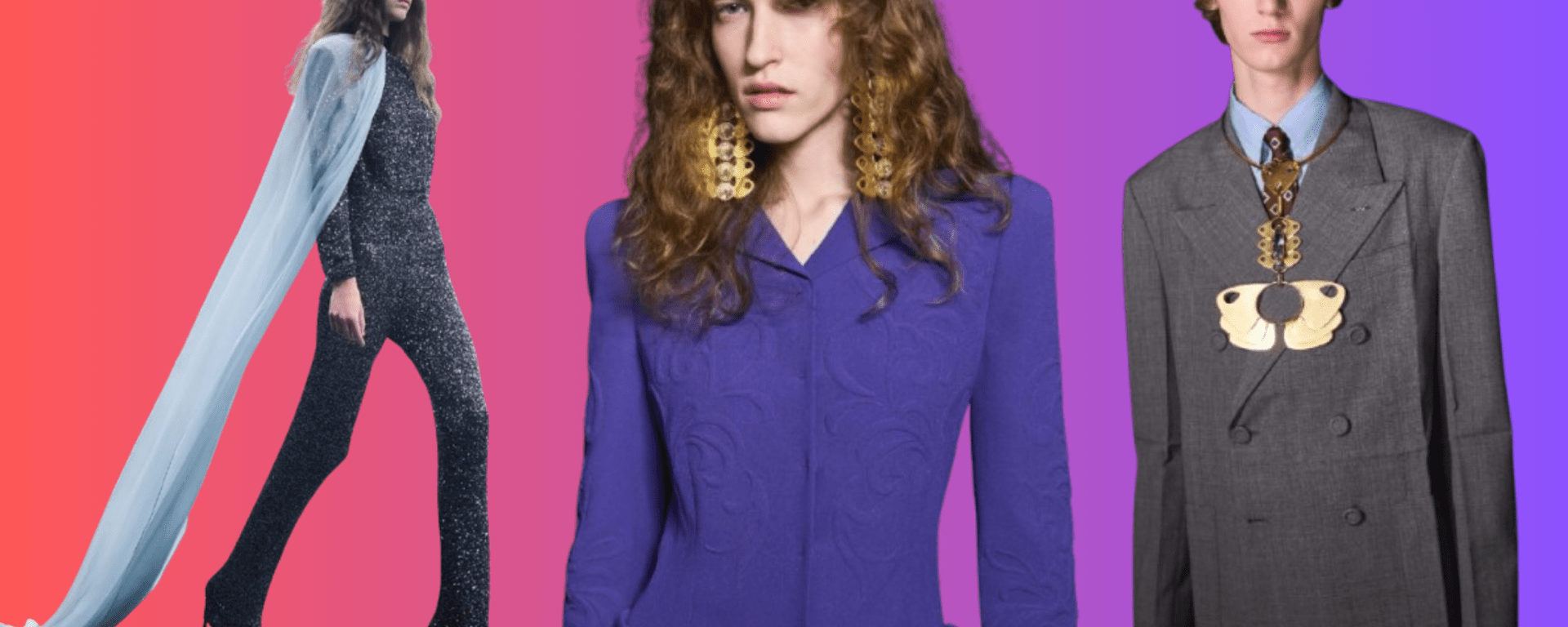

It takes an uncommon kind of courage to bring the specter of fascism onto the catwalk. Yet courage, as fashion has long proven, is often woven into the fabric of provocation. Alessandro Michele, in his latest collection for Valentino, does precisely that—stripping away the ornamental excesses so often associated with his aesthetic and offering instead a meditation on rebellion, fragility, and vision.
Presented in Paris, Michele’s “Fireflies” collection draws inspiration from the haunting imagery of Pier Paolo Pasolini—a poet and filmmaker whose reflections on fascism and conformity remain disturbingly relevant. Pasolini once wrote of fireflies as luminous symbols of resistance against the consuming darkness of tyranny. Michele resurrects this metaphor, not merely as nostalgia but as an urgent reminder of perception itself.
For Michele, the tragedy is not that the fireflies have vanished, but that we have lost the eyes to see them—a thought echoed by philosopher Georges Didi-Huberman. In a world saturated by spectacle and sameness, Michele’s call is not for louder rebellion, but for a subtler kind of defiance: the courage to look, to feel, to resist through beauty.
This show, less flamboyant than Michele’s past opulent narratives, nevertheless burns brighter in intent. Each garment—pared down, stripped of grandiosity—seems to whisper rather than shout. The silhouettes float like whispers of memory, carrying both the melancholy of loss and the promise of persistence. The subdued palette, the fragile embroidery, and the almost monastic simplicity of the lines suggest that resistance does not always demand aggression; sometimes, it demands tenderness.
Michele’s dialogue with Pasolini extends beyond aesthetics—it becomes a political gesture wrapped in poetry. The refusal to conform, the insistence on individuality, the rekindling of human gaze in a homogenized age: these are Michele’s weapons against a new, subtler kind of fascism—the tyranny of apathy, of mass production, of indifference.
As the show closes, a sense of catharsis lingers. It is not the shallow optimism of escapism, but a deeper, more urgent form of hope. Michele invites us to see the fireflies again—to find light where the world insists on shadow. In doing so, he reaffirms what one online observer once called him: “the cultured playwright of fashion.”
And perhaps that is what fashion most desperately needs now—not just design, but dramaturgy; not just spectacle, but soul.
 curlycurlworld: Get Twisted with CurlyCurl: The Latest in Curls, Coils, and Confidence!