

The Pulse of a House Reborn: Piccioli’s Audacious Balenciaga Debut
Yesterday night, beneath the vaulted ceilings of Balenciaga’s Paris headquarters — a seventeenth-century monument to legacy and ambition — fashion’s most delicate coup quietly unfolded. Paolo Piccioli, stepping into shoes long worn by provocation, presented his first collection as creative director: not a bombastic manifesto, but a slow, sure reclaiming of spirit.
The air vibrated with something new — or rather, something restored. In the hush before the first look, the audience heard a heartbeat: the rhythmic thrum of a cassette tape turned invitation, a literal pulse in the dark, echoing Piccioli’s collection title, The Heartbeat. It spoke of life, continuity, renewal.
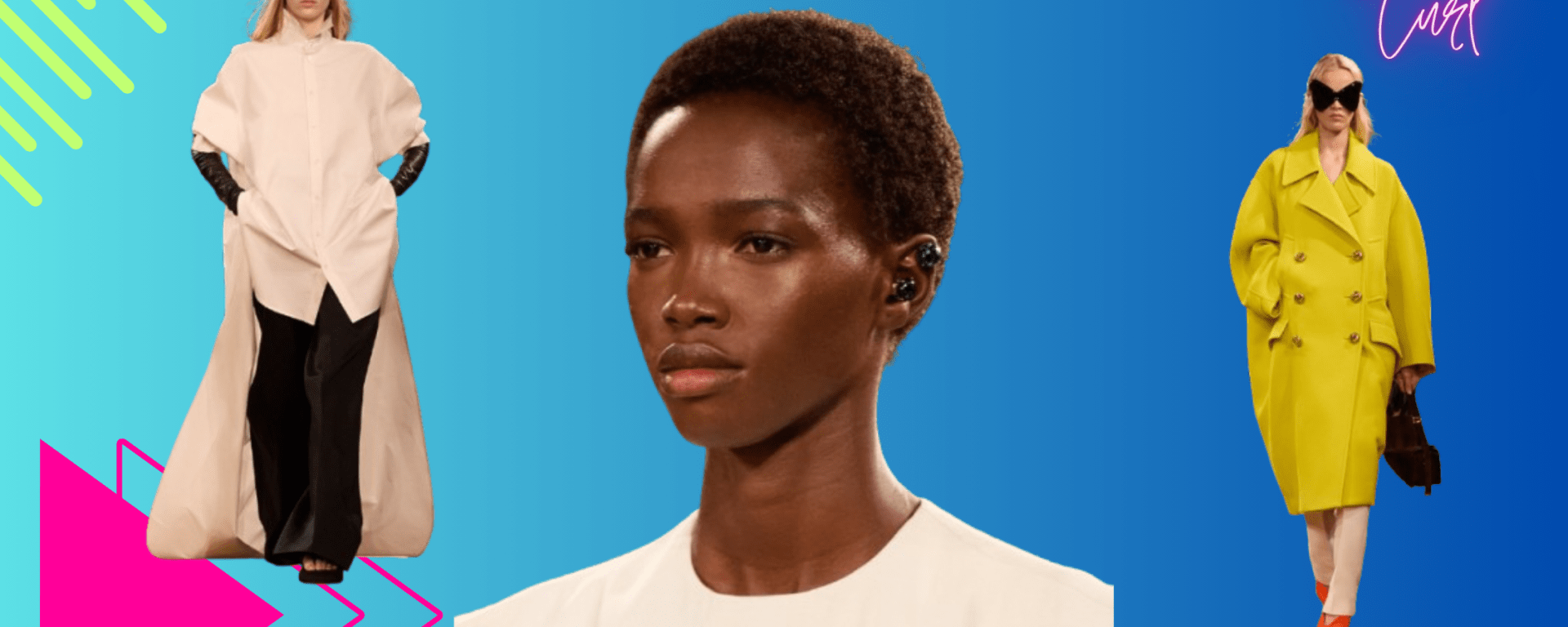
Every element of the show felt deliberated. The space was dim. An orange glow bled into shadows. Voices hushed. We weren’t watching a spectacle — we were witnessing an awakening. The first model emerged in black: a straight, waistless silhouette harking back to Cristóbal Balenciaga’s iconic 1957 sack dress. The aesthetic was austere — but in that austerity lived a promise.
Piccioli, more architect than jester, built volumes around the body. He treated air as a third dimension — the space between fabric and flesh — allowing each garment to breathe, to live. Drapery replaced distortion; softness replaced satire. Where Demna pushed the brand into irony, Piccioli pulled it back toward its founding code.
Color arrived quietly, as if entering the room on tiptoe. In Piccioli’s hands, red was not a shout but a sigh; mauve, a whispered truth. He layered tonal nuances over structure, never letting the boldness betray the silhouette’s integrity. Accessories were scaled small — belts, micro-bags — as though the show were saying: Here is elegance, not excess. Heavy leathers appeared, but cut with restraint. Capes folded into skirts. Jackets lost their lapels. Even the eyewear seemed a shadow play, echoing past edge but distilled into emblem, not attack.
The audience — fashion editors, insiders, stars — sat in silence until the final act: a blush pink gown, soft as a pause, with the weight of expectation folded into its folds. Then applause, slow at first, then full. The chapter of Demna had ended; a new one had begun.
Why This Matters (And What Comes Next)
Balenciaga’s parent group, Kering, is navigating turbulence: sales down, brand identity fragmented, consumer attention fractured. Piccioli inherits not just a creative brief, but a fragile brand narrative. He is walking a knife’s edge between honoring history and demanding relevance.
The gamble is clear: does the house want provocation, or poetry? Under Demna, controversy was currency. Piccioli chose resonance. He did not obliterate Demna’s chapter, but he recontextualized it. The oversized sunglasses, the references — they didn’t disappear: they were refined.
Critics will parse every seam. Can he revive Balenciaga’s accessories — so crucial in luxury profits — with the same refined restraint? Can the romance and discipline he brings survive the commercial grind? The proof is not in the crown, but in the collection that follows.
Yet for tonight, Piccioli delivered a promise. He showed that fashion doesn’t need irony to be sharp, or provocation to be relevant. In his debut, the spirit of Balenciaga — purity, structure, emotional weight — flickered back to life.
Whether he can sustain it, whether the industry will let him, is another question. But last night offered something rare: an experience that felt like art again.
 curlycurlworld: Get Twisted with CurlyCurl: The Latest in Curls, Coils, and Confidence!