
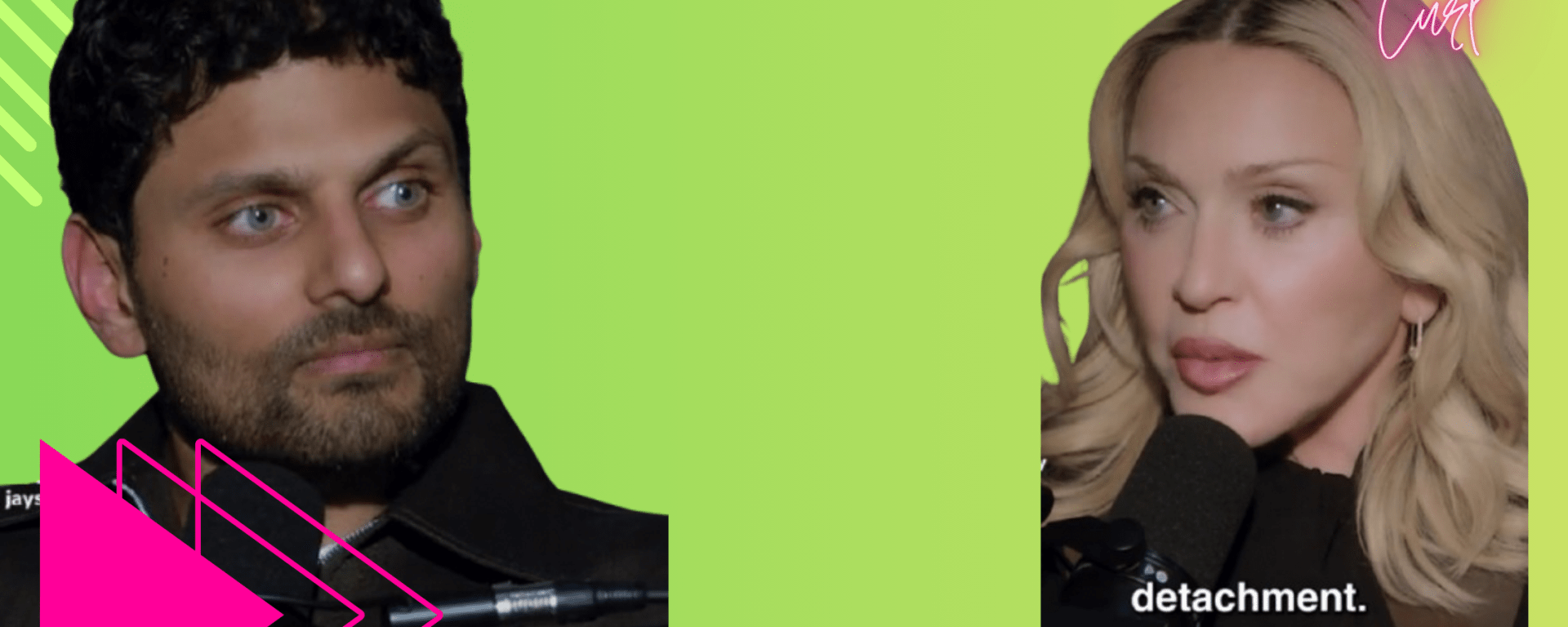
We live in a world that never stops talking. Our phones buzz, our minds race, and our lives spin in endless loops of noise and distraction. Peace feels like a luxury few can afford. But in a recent podcast conversation with Jay Shetty, Madonna offered a reminder that pierced through the chaos: what matters most is intention.
“What am I doing? Why am I here?” she asked aloud. These are not abstract questions for her—they are survival tools. Without intention, she argued, life feels random, even cruel. With it, the mess and the beauty start to form a pattern. “Everything is meant for us, to teach us something,” she reflected. The challenge is not whether life will test us—it always will—but whether we are ready for what those tests reveal.
Her own story proves the point. When she first arrived in New York, young and unknown, she had no friends, little money, and no safety net. She was robbed. She was raped. And yet, instead of surrendering to bitterness, she reimagined her survival as a sign of grace. “I realized how blessed I was, because I had a guardian angel,” she said. It’s not denial of pain, but a transformation of it.
This attitude was sharpened further in yoga, where she encountered the words desire and detachment. She asked: what happens if you want something badly but cannot have it? Most of us spiral into frustration or despair. Madonna’s answer is something different: radical acceptance. “Whatever happens to you is meant to be,” she explained. Not as a fatalistic shrug, but as an opening to deeper growth.
And here’s the uncomfortable truth she voiced—whether you’re privileged or struggling, pain is not optional. Even the most charmed lives are punctured by loss, failure, or betrayal. Our challenges simply arrive in different costumes. The question is not how to escape them, but how to meet them with meaning.
Madonna’s perspective cuts against the culture of curated perfection that dominates modern life. We live as though control is the ultimate achievement: control of our image, our feeds, our future. But she suggests that peace comes not from control, but from the courage to accept what is—and to ask what it might be teaching us.
It’s a radical thought, but maybe also a liberating one. If distraction is the disease of our age, then intention, acceptance, and resilience may be the medicine. And who better to deliver that message than a woman who has not only survived her challenges, but turned them into art, defiance, and ultimately, wisdom?
 curlycurlworld: Get Twisted with CurlyCurl: The Latest in Curls, Coils, and Confidence!