
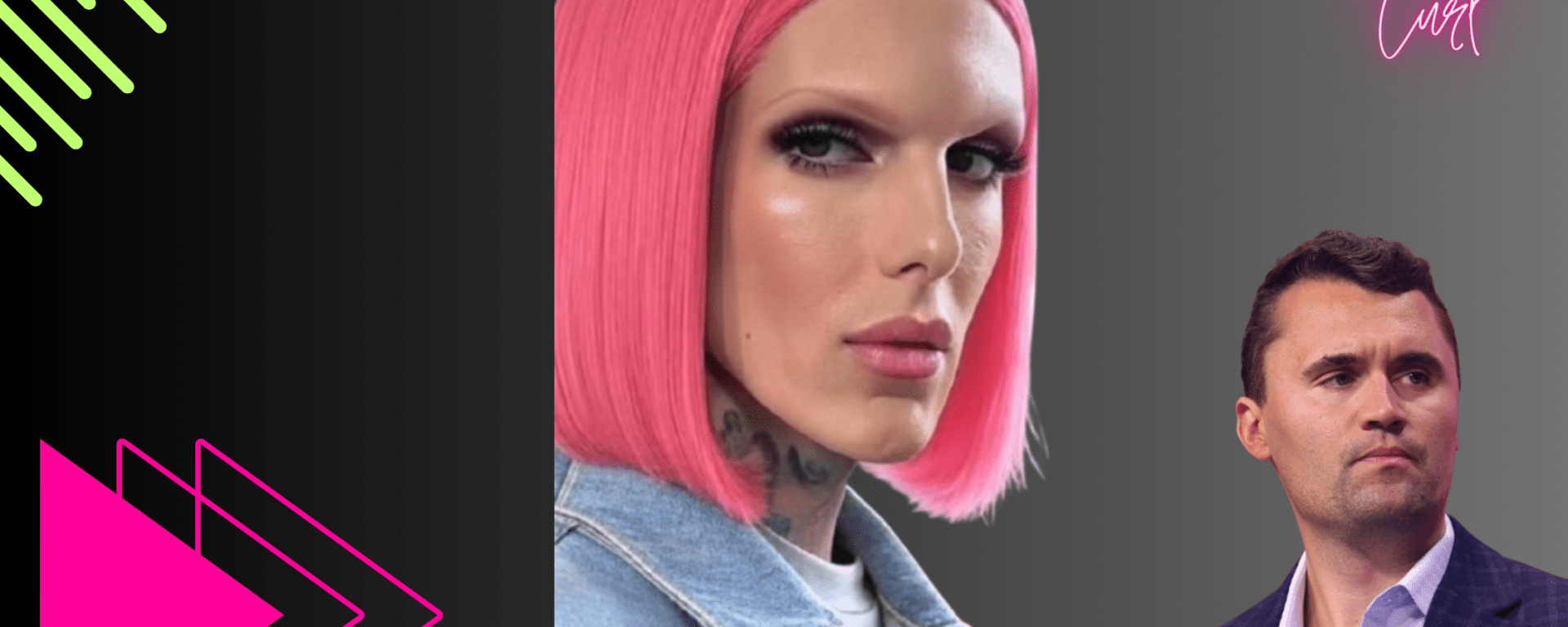
The recent death of conservative activist Charlie Kirk has reignited one of the most contentious cultural debates in the United States. For his supporters, Kirk was a defender of faith and traditional values. For his detractors, he was a polarizing figure whose rhetoric sharpened political and social divides. His passing has not only triggered mourning and controversy but also cost some individuals their jobs after they publicly criticized his legacy — a reflection of how explosive the issue has become in American workplaces and online spaces.
Amid this heated national conversation, Jeffree Star — one of the world’s most influential figures in the beauty industry — stepped into the debate, offering commentary that surprised many outside his usual sphere of influence. Known for shaping global makeup trends and for his outspoken persona, Star took to TikTok Live to share his thoughts on Kirk, gender, and identity, sparking a new wave of reactions.
“I am a man who loves makeup,” Star declared, emphasizing that his passion for beauty has always been an authentic part of who he is. Importantly, he clarified that his family never forced him to hide that side of himself, underscoring his belief that men can embrace cosmetics without compromising their identity.
But Star’s remarks did not stop at the personal. He moved into political territory, criticizing men who use women’s restrooms and claiming they “should be in prison forever.” He then defended Charlie Kirk, describing him as “a man of faith” and rejecting the idea that Kirk was an extremist. Instead, Star argued that society itself is “going in the wrong direction” by blurring distinctions between men and women. For him, makeup is a form of creative expression available to everyone — but it does not change one’s biological sex.
From a journalistic perspective, Star’s intervention matters for several reasons. First, it shows how cultural figures from industries like fashion and beauty are no longer confined to those worlds; they are now major voices in broader political and social debates. Second, Star’s comments bridge unusual audiences: his fan base in the beauty community and conservative commentators who welcomed his defense of Kirk. That crossover highlights the increasingly complex role of celebrity in shaping public opinion.
The reaction to his comments has been predictably divided. Conservative media outlets and commentators applauded Star’s defense of Kirk and his firm stance on gender, calling him an unexpected ally in their cultural battles. Progressives and LGBTQ+ advocates, however, criticized his remarks as harmful and exclusionary, warning that they reinforce stigmas already faced by transgender and gender-nonconforming people.
What emerges from this episode is less about Kirk alone and more about the shifting landscape of American discourse. The debate over his death has become a stage for larger conversations about identity, faith, and cultural boundaries. And Star’s decision to enter that debate demonstrates how personal experiences, celebrity platforms, and politics are increasingly intertwined.
For observers, the significance lies not only in what Star said but in what his comments represent: a collision of beauty culture, political ideology, and deeply personal belief, all unfolding in the public eye. Whether seen as courageous or damaging, Star’s words underscore how America’s cultural conversations are no longer contained within political institutions but are being reshaped by voices from every corner of public life.
 curlycurlworld: Get Twisted with CurlyCurl: The Latest in Curls, Coils, and Confidence!