
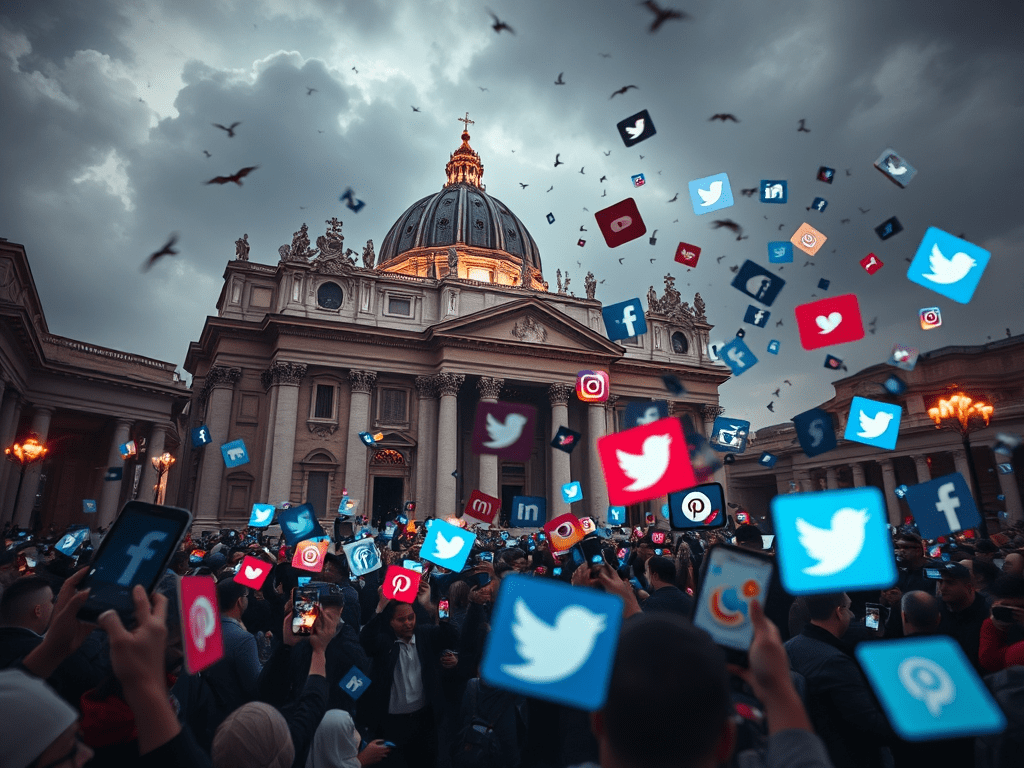
Just hours after the passing of Pope Francis on April 21, 2025, the global response diverged sharply from traditional mourning or solemn reflection. Instead, it unfolded as a distinctly digital spectacle, shaped by the rhythms of online culture. Central to this shift was the unexpected resurgence of Conclave, the Oscar-winning 2024 film honored for Best Adapted Screenplay, which saw an astonishing 283% surge in viewership on Prime Video that very day. The film’s sudden popularity catapulted the Vatican into trending territory across social media platforms, turning it into a cultural moment rather than a purely religious one.
Cinema has long been intrigued by the enigmatic traditions and layered contradictions of the Catholic Church. Films ranging from Angels & Demons to Habemus Papam, and even Paolo Sorrentino’s stylized The Young Pope, have explored the Holy See as a space of power, secrecy, and symbolism. Yet Conclave stood out in its timing and impact—captivating a digital audience that remixed its themes with irony and pop culture flair. The papal selection process was reimagined online with the spectacle and humor of a reality TV showdown, echoing formats like RuPaul’s Drag Race. As memes proliferated and fan edits circulated, the sacred was reframed as entertainment, and the solemnity of the Church was both aestheticized and satirized.
While some critics saw the film as subtly critical of Catholicism, its popularity helped shape the viral nature of the news surrounding Pope Francis’s death. His passing wasn’t just reported—it became “content,” quickly consumed and repackaged for mass sharing. Social media feeds were flooded with tributes, many featuring old photos of celebrities alongside the Pope. These posts often felt more like personal branding exercises than heartfelt farewells, hinting that, for some, the real loss was the chance to capture a final, share-worthy moment with the pontiff.
Following the announcement of Pope Francis’s death, conversations on X (formerly Twitter) quickly spiraled into a surreal mix of speculation, satire, and outright conspiracy. Rather than solemn reflection, users dissected every photo from St. Peter’s Basilica, combing through images of the Pope’s body in search of cryptic clues or hidden symbols. Old apocalyptic theories resurfaced, especially the so-called “Black Pope” prophecy, with countless threads claiming the next pontiff would usher in end-times.
The language surrounding the papal succession took on the tone of a reality TV spectacle. Posts asked, “Who’s next in line for the tiara?” and “Who are the front-runners of the conclave?” even citing odds from betting sites as if the Church were hosting a tournament. The serious spiritual and theological weight of the event was replaced with entertainment-style coverage.
Meanwhile, bizarre content pushed by suspicious bot accounts—possibly part of disinformation campaigns—began circulating. Videos of traditional Easter processions, often featuring hooded figures, were presented out of context and framed as ominous or cult-like, a narrative pushed largely by users unfamiliar with European religious traditions. These posts seemed aimed at sowing confusion and distrust, particularly among audiences already skeptical of institutional religion.
Adding to the strange digital storm was the reemergence of ex-bishop Carlo Maria Viganò, a former Vatican insider and darling of fringe conspiracy groups like QAnon and Pizzagate. His sudden visibility ignited even more fantastical theories among the faithful and the fringe alike.
Elsewhere on the platform, more benign—but still tone-deaf—discussions unfolded. Users treated the cardinal-electors like contestants on a game show, drafting their “top picks” and engaging in mock betting. Many self-declared experts appeared overnight, parroting Church history after a brief dive into Wikipedia, further turning a sacred tradition into a trending, gamified spectacle.
In the wake of Pope Francis’s death, users across the digital spectrum—whether influential voices or everyday posters—seized the moment for their own purposes. Some rolled out newsletters and retrospectives, celebrating his progressive legacy or condemning it from a more traditionalist stance. Others responded with layers of irony, using memes to parody both the tributes and critiques, creating a loop of commentary feeding off itself. Beneath all the noise, one thing became clear: the conversation wasn’t rooted in faith, but in a fascination with the spectacle.
The online response to the Pope’s passing often felt less like mourning and more like a scramble for visibility. Clicks, shares, and engagement metrics took precedence over reverence. Within hours, the digital landscape was flooded with misinformation, politicized hot takes, and opportunistic virtue signaling. In this frenzy, the genuine spiritual impact of losing a religious leader was buried under a pile of algorithm-chasing content.
Even major media outlets contributed to this shift. Rather than delving into the theological or emotional weight of the moment, coverage focused heavily on what comes next—profiles of papal contenders, explainers on conclave rituals, speculative opinion pieces. It wasn’t so much a reflection on Francis’s legacy as it was a rush to capitalize on the intrigue surrounding his absence.
The surge in attention had less to do with a sudden revival of Catholic sentiment, and more to do with the viral success of Conclave, the film that reframed Vatican politics as high drama. What should have been a moment of spiritual significance was transformed into prime material for the content machine—endlessly dissected, reframed, and recycled, all in pursuit of clicks.
Then came the J.D. Vance moment—Vice President of the United States and, coincidentally or not, the last high-profile figure to meet Pope Francis just hours before his death. That alone was enough to ignite the internet’s latest wildfire: the absurd and wildly viral meme, “J.D. Vance killed the Pope.” It was a dark joke born of the web’s twisted sense of humor, casting Vance as everything from a walking omen of doom to the Antichrist himself. The meme took off instantly, feeding on the surreal timing and the internet’s hunger for irony layered with conspiracy.
This wasn’t just news being shared—it was being reimagined, weaponized, and commodified for laughs, likes, and virality. The Pope’s death became less of a religious milestone and more of a chaotic, crowd-sourced narrative arc. It didn’t unfold as a solemn chapter in Church history, but as a hyperactive, meme-driven story shaped by the strange rules of the digital age—a real-time myth spun by a million hands, irreverent and deeply postmodern.
It marked an unprecedented moment. Pope Benedict XVI passed after stepping down, and John Paul II’s death came before the explosion of today’s social media landscape. But in 2025, the death of a Pope occurred in the full glare of a digital ecosystem primed to turn even sacred events into spectacle. Online, Christian extremism—from Catholic traditionalists to apocalyptic Evangelicals—flared with renewed energy. Myth-making and misinformation merged into folklore, while performative piety mingled with irony-laced satire.
Even politics leaned into the theater of faith. During Trump’s presidency, a so-called “Faith Office” was headed by televangelist Paula White, blurring the line between religion and reality TV. Her bombastic sermons and strange rituals marked a new peak in political-religious spectacle not seen since the symbolic deals of the Lateran Pacts. Still, for all the talk of divine leadership, Trump himself spent Easter Sunday not in church, but on the golf course—without a flicker of disapproval from his most devoted supporters.
From formal tributes to irreverent memes, from deep theological takes to off-the-cuff livestreams, every moment surrounding the death of Pope Francis was captured, shared, and reinterpreted. What Conclave imagined as stylized drama has now manifested in full force: an ancient, sacred tradition unfolding in real-time under the distorting glare of social media. The rituals meant to inspire awe and reflection have instead become content—where prayers resemble captions, coincidences are fuel for memes, and reverence competes with virality.
In this digital swirl, genuine contemplation about the Church’s future feels drowned out. While the next Pope is expected to be chosen by May, online platforms like X are already awash with rumors, false claims, and AI-generated narratives. Bots churn out speculation, fanning the flames of ideological conflict between the Church’s reformist and hardline camps, turning what should be a solemn deliberation into a kind of digital showdown.
 curlycurlworld: Get Twisted with CurlyCurl: The Latest in Curls, Coils, and Confidence!