
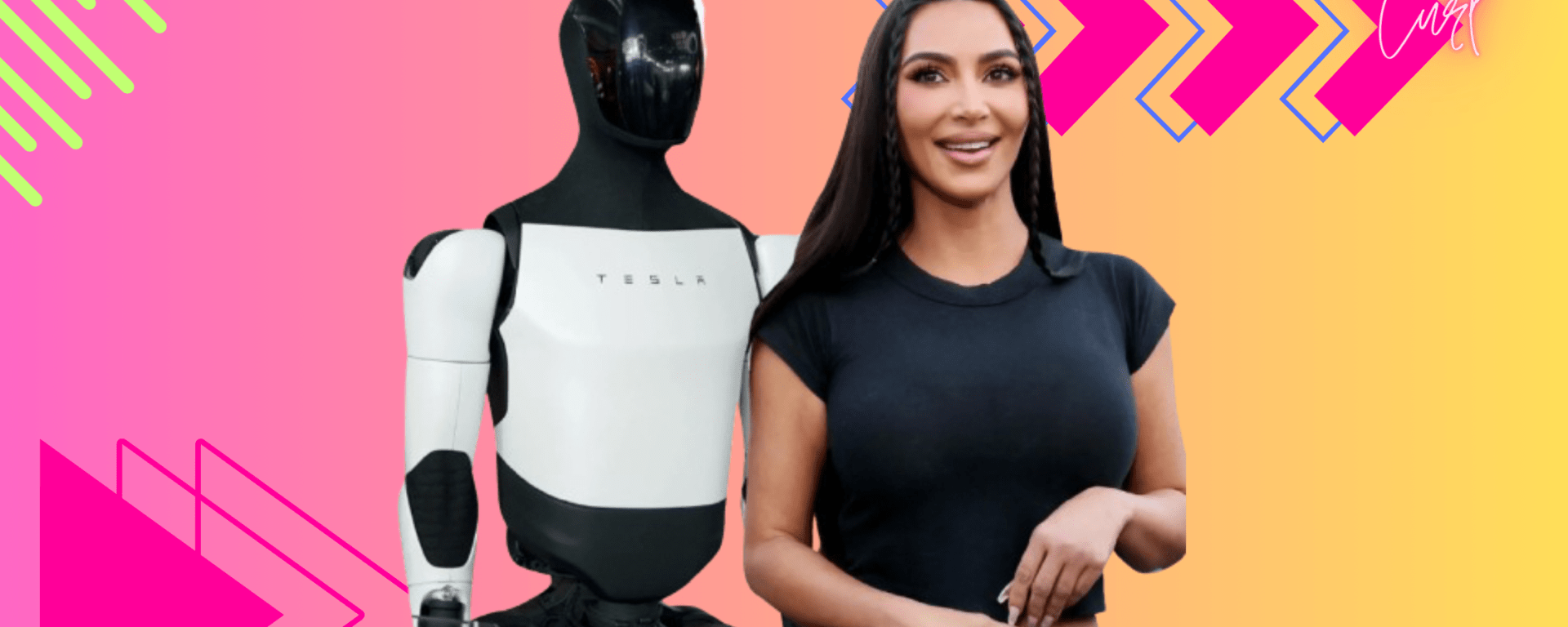
Humanoid robots, also known as anthropomorphic robots, are no longer just a concept—they have names like Optimus, Atlas, and Apollo, and they are already part of our reality. In October 2024, Elon Musk introduced Tesla’s latest robotic model, Optimus 3, capturing attention not only for its advanced features but also for Tesla’s plans to bring it to market. Beyond technological developments, humanoid robots are now making their way into pop culture. This was evident in a recent photoshoot featuring Kim Kardashian alongside Tesla’s robot for Perfect Magazine, sparking discussions about her apparent support for Musk.
For decades, robots have been integrated into industries—automated arms and industrial machines are nothing new. However, major tech companies are now shifting their focus to humanoid robots. According to Bloomberg’s Mark Gurman, Meta and Google are preparing to compete with Tesla in the AI-driven robotics sector. Meta has recently invested in developing a foundational software, described as an “Android for robots,” through its Reality Labs division. This initiative involves collaboration with robotics firms like Unitree Robotics and Figure AI, with a team of over 100 engineers led by Marc Whitten, a former executive at GM Cruise and Amazon. The goal is to introduce a humanoid robot capable of handling household tasks in the near future.
Google is also making strides in robotics. As reported by MIT Technology Review, on March 12, the company revealed a new version of its AI model, Gemini, which extends beyond digital applications to physical-world interactions. In December 2024, Google had already partnered with Apptronik to accelerate the development of AI-powered humanoid robots, such as Apollo. With the announcement of Gemini Robotics, the company aims to integrate large language models with spatial reasoning, enabling robots to carry out complex tasks through direct commands.
The competition in humanoid robotics is intensifying, drawing comparisons to the space race. While U.S. tech giants pour resources into AI-driven robotics, Chinese companies are also making bold moves. According to Reuters, He Xiaopeng, CEO of XPeng Motors, is considering an investment of up to 100 billion yuan (approximately $13.8 billion) to accelerate the commercial production of humanoid robots within a year.
This raises an important question: why prioritize human-like robots when specialized machines, such as robotic vacuum cleaners, have existed for years? The prevailing argument is that our environments—homes, offices, and vehicles—are designed for human use. By creating robots that mirror human form and movement, they can seamlessly navigate spaces, open doors, climb stairs, and interact with objects designed for people. Additionally, humanoid robots can evoke a sense of familiarity and even empathy, which could play a role in consumer adoption. Tesla’s Optimus, for instance, is expected to retail for around $30,000, and emotional connection could be a key factor in its market success.
As robotics technology advances, it is likely that we will see more public appearances of humanoid robots—not just in tech showcases but in pop culture, fashion, and even our daily lives. Perhaps, in the near future, posing with a household robot for social media will be as common as taking selfies with pets or friends.
 curlycurlworld: Get Twisted with CurlyCurl: The Latest in Curls, Coils, and Confidence!