
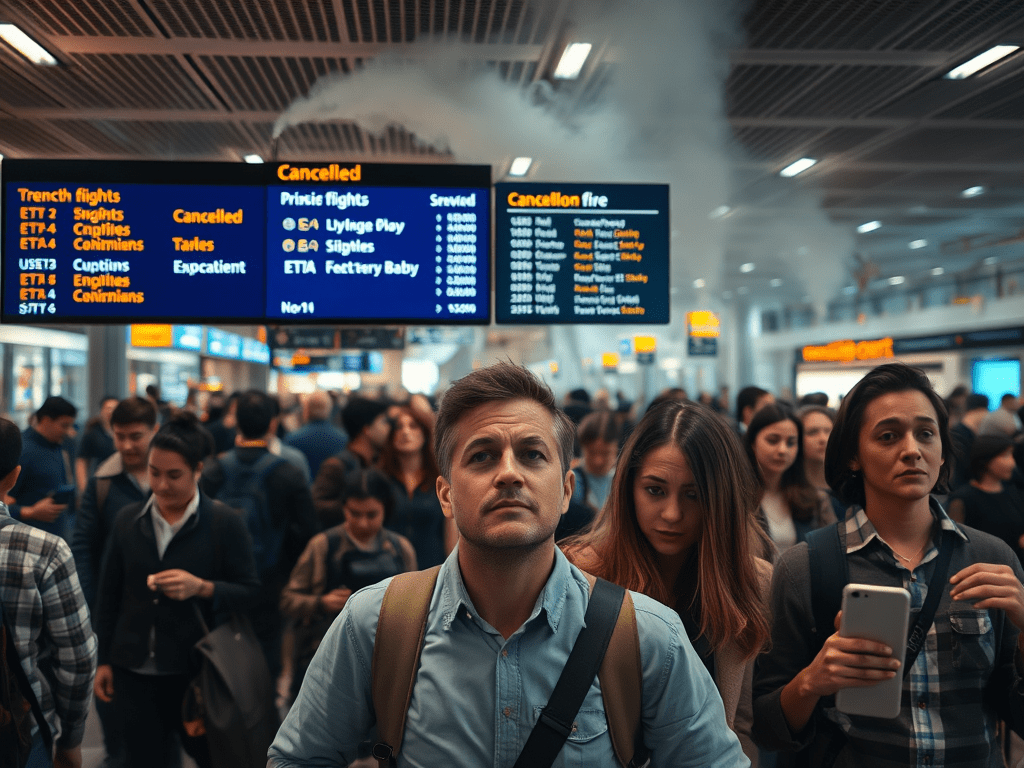
This morning, London Heathrow – one of the world’s busiest airports – announced that due to a fire that broke out overnight, it would remain closed for the day. The incident led to the cancellation of over 1,300 international flights and caused a power outage across London. While this is a significant disruption for travelers, the real concern lies in the recent announcement that, starting in April 2025, all European Union residents wishing to visit the UK for less than six months will need to apply for a specific authorization. The application fee for this new rule starts at £10 (approximately €12), though the UK government has hinted at potential future increases, possibly reaching £16 (around €20). This requirement also applies to travelers transiting through UK airports who plan to leave the international zone. The authorization, called ETA (Electronic Travel Authorisation), can be applied for via the official UK government website or a dedicated app. After submission, it may take up to three working days to receive the decision. Not all applications will be approved automatically. If granted, the ETA will be valid for two years, allowing multiple entries.
This new policy complicates movement between the UK and the European Union, bringing about a range of consequences. However, it’s important to note that the ETA doesn’t affect travelers coming from countries that already require a visa to enter the UK. Instead, the new rule applies to citizens of countries who were previously able to enter the UK without needing specific authorization, such as those from the EU. This change is a direct outcome of Brexit. Since the UK officially left the EU on January 31, 2020, following the referendum in 2016 where the majority voted to leave, the repercussions of that decision continue to unfold.
Brexit has led to increasing dissatisfaction among the British public, including many who originally voted to leave the EU. The term “Bregret” has emerged in the media, blending “Brexit” and “regret,” to describe the growing remorse felt by many in the UK. A significant number of people now believe that Brexit was a mistake. One of the main arguments from the pro-Leave camp was the need to reduce migration, which was seen as a major issue. Populist rhetoric accused citizens from economically less developed countries of taking advantage of the UK’s welfare system. However, the actual data has shown a different story: although immigration from the EU has decreased, there has been an increase in arrivals from other parts of the world, including a rise in irregular immigration. Additionally, the economic benefits that were promised have not materialized. Brexit has contributed to a 2.5% reduction in the UK’s GDP since 2020, and the long-term impact could reach up to 4%, primarily due to reduced trade with Europe.
Beyond economic and migration challenges, Brexit has also heavily impacted the cultural sector, particularly the live music industry. Prior to leaving the EU, British artists could tour freely across Europe without needing visas or special permits. Now, however, musicians face complicated and expensive bureaucratic processes. This has made it much more difficult for emerging artists to plan tours in the UK, limiting their growth opportunities and weakening the country’s music scene. The introduction of visas and permits has made the process more expensive and unpredictable, which has deterred many artists from organizing concerts in the UK. Consequently, the country’s music scene is less vibrant, with only major festivals like Glastonbury still attracting international talent. Even big music events, once iconic in the UK, are now feeling the effects of these restrictions. Brexit has made it costlier and more difficult to hire foreign artists, leading to less diversity in event line-ups and a gradual decline in appeal among European audiences, who now must navigate bureaucratic procedures like the ETA to attend.
 curlycurlworld: Get Twisted with CurlyCurl: The Latest in Curls, Coils, and Confidence!