
The latest fashion season has reaffirmed a growing fascination with the human body—both as an aesthetic focal point and a conceptual battleground. At The Row, models walked barefoot, their legs wrapped only in thick black tights, stripping away excess to emphasize raw form. Over in Paris, Alaïa played with structure, unveiling monochrome, three-dimensional dresses that spiraled around the body, leaving torsos dramatically exposed. Meanwhile, at Chloé, rapper Doechii made waves with her extravagant ensemble of cascading ruffles and fur—yet chose to go barefoot, underscoring a recurring theme of body-conscious presentation.
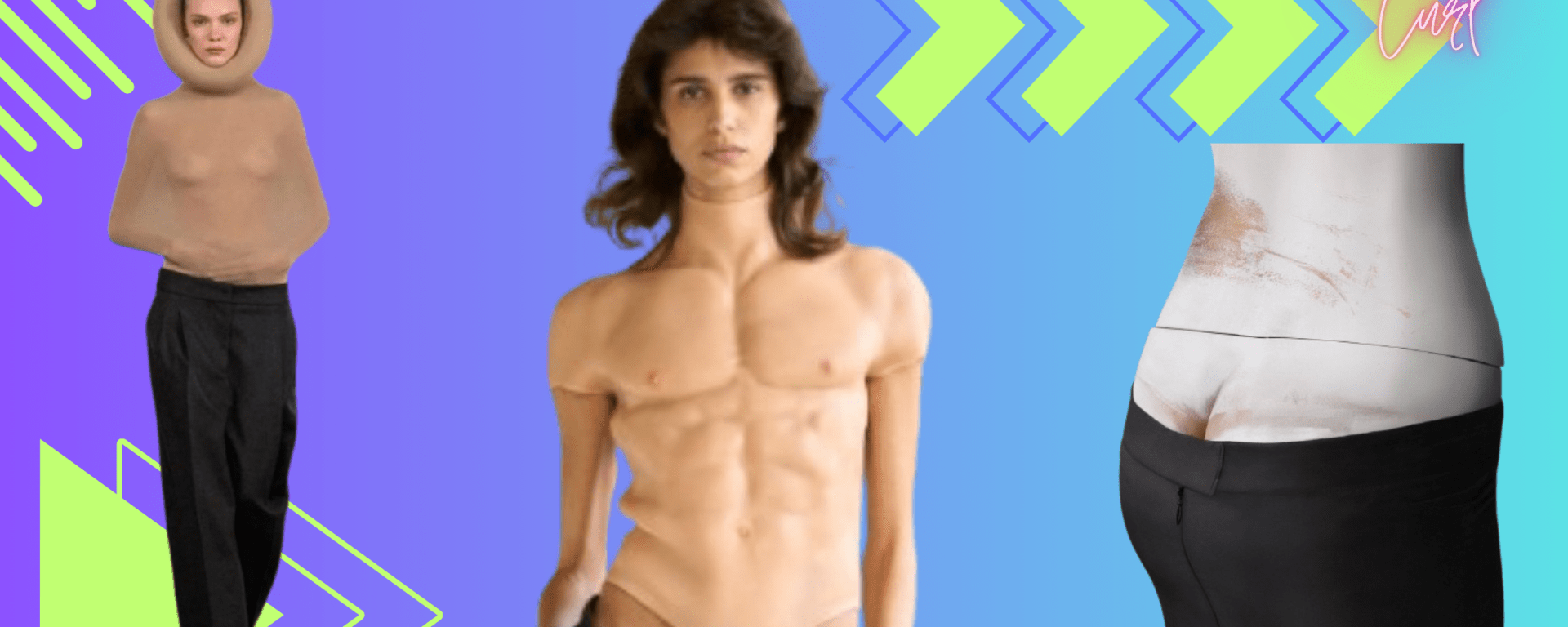
This preoccupation with the body extended beyond high fashion’s mainstream names and into the world of independent designers. Dutch designer Duran Lantink, known for his avant-garde approach, presented tailored trousers accompanied by prosthetic torsos and breasts, turning the body itself into a medium of artistic exploration. While nudity and fashion have long been intertwined, this season’s interpretations go beyond mere sensuality. Luxury and independent brands alike seem to be posing an essential question: In an era of increasing aesthetic conservatism, homogenized creative direction, and nostalgia-driven consumerism, what holds more value—the clothes or the body that wears them?
Nowhere was this discourse more evident than in Diesel’s revival of the early 2000s “bumster” jeans. The ultra-low-rise pants, initially made infamous by Alexander McQueen in the ’90s, sparked a viral social media movement. This reemergence forces fashion observers to consider whether the industry is pushing boundaries or simply recycling past provocations. McQueen himself once explained that the bumster silhouette wasn’t designed for mere shock value but to elongate the torso and alter body proportions in an unexpected way. He famously stated, “I design clothes because I don’t want women to look all innocent and naive. I don’t like women to be taken advantage of… I want people to be afraid of the women I dress.” In reviving the bumster jeans, Diesel isn’t just embracing a nostalgic aesthetic—it is reigniting a discussion about body perception, agency, and power in fashion.
The Body Reshaped: Proportions and Femininity in Contemporary Fashion
Even when models weren’t baring skin, the manipulation of body proportions dominated runway aesthetics. At Miu Miu, pointed bras exaggerated the shape of the chest, almost distorting the body to question conventional femininity. This was a deliberate move by Miuccia Prada and stylist Lotta Volkova, who dedicated their collection to exploring modern womanhood. Elsewhere, Duran Lantink reimagined traditional pieces—tartan skirts and Aran sweaters—by inflating them to near-grotesque proportions. His unconventional silhouettes recalled Comme des Garçons’ iconic Spring/Summer 1997 collection, where Rei Kawakubo deconstructed the female form with exaggerated humps and padded distortions. Kawakubo once described her approach as “the clothes could be the body and the body could be the clothes”—an ethos that still resonates today.
The cyclical nature of fashion history is evident in the return of McQueen’s bumsters. When he first introduced them in the early ’90s, they were met with scandal, yet they redefined fashion’s relationship with the body. McQueen was not interested in overt sexualization but rather in the power of transformation. By framing the lower back as a new focal point, he subverted traditional notions of eroticism and redefined how garments interact with the body. Diesel’s modern reinterpretation revives these themes but now faces a different cultural landscape—one where digital discourse and body politics are more charged than ever.
The Body as a Political Battleground
In recent years, body positivity and inclusivity have gained traction in both fashion and pop culture, yet the tides are shifting. The rise of weight-loss drugs like Ozempic and Wegovy, coupled with a return to aesthetic conservatism, has reshaped industry trends. The financial strain on luxury brands has only intensified this movement, as nostalgia shifts from Y2K’s rebellious hedonism to the restrained femininity of the 1950s. This shift has brought back not just silhouettes but also outdated ideals, including modesty and rigid gender roles.
In response, designers are subtly weaving their own counter-narratives. At Saint Laurent, Anthony Vaccarello eliminated trousers altogether, presenting a vision of femininity rooted in timeless sensuality. Meanwhile, Hermès, a brand long associated with understated luxury, redefined its aesthetic by introducing sharp leather silhouettes that exuded both authority and allure. The message is clear: fashion may be embracing a more traditional look, but the conversation around femininity is anything but conventional.
Miu Miu, a frontrunner in shaping contemporary femininity, continues to balance nostalgia with subversion. The brand’s “office siren” and coquette aesthetics have fueled record-breaking sales, with a staggering 93% increase in 2024. The latest collection’s exaggerated pointed bras, initially met with amusement, have already captivated models and consumers alike. Miuccia Prada herself noted, “All the girls were excited—they wanted them more pointy.” Beneath its playful veneer, the collection carried deeper political undertones. While it referenced vintage femininity, it also embraced inclusivity by featuring trans models—a move echoed by designers like Willy Chavarria and Conner Ives at London Fashion Week.
The inclusion of pointed bras in Miu Miu’s lineup might seem like a simple design choice, but its social implications are far-reaching. It cleverly bypasses conservative criticism while making a statement on gender, fashion, and the body. As the fashion world teeters between embracing tradition and pushing forward progressive ideals, it’s clear that the body remains the ultimate canvas for expression.
The Future of Fashion: Can the Body Speak When Designers Cannot?
With fashion becoming increasingly cautious—whether due to commercial pressures, social media scrutiny, or shifting cultural norms—designers are finding new ways to make statements. If clothing must tread carefully, the body itself becomes the message. This season’s runway shows, from the bare torsos at Alaïa to the sculptural exaggerations at Miu Miu and Duran Lantink, reveal an industry searching for fresh ways to redefine identity, power, and beauty.
Fashion, at its best, challenges norms. And when words fail, the body—exposed, reshaped, or concealed—becomes the loudest voice in the room.
 curlycurlworld: Get Twisted with CurlyCurl: The Latest in Curls, Coils, and Confidence!