
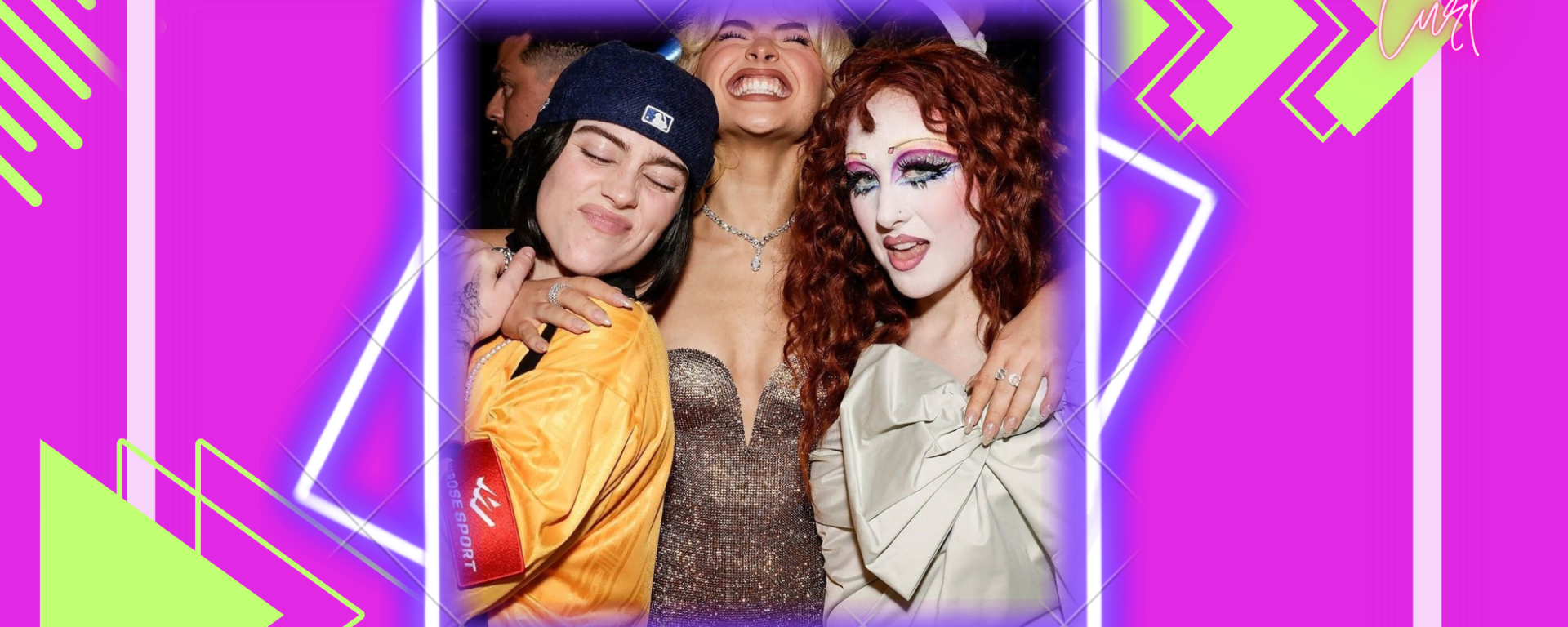
During last night’s Grammy Awards, Vanessa Friedman of The New York Times raised an interesting question on X. What is the significance of the traditional red carpet? Many celebrities continuously change outfits throughout the event. In the past, a key aspect of red carpet coverage was seeing which ensemble each star chose for the night. However, this year’s ceremony deviated from that norm, as numerous celebrities cycled through multiple looks.
Miley Cyrus arrived in a Saint Laurent leather dress. Later, she switched to a black knit Saint Laurent outfit inside the venue. Then she changed into an Alaïa dress for her performance. Chapell Roan started with a Jean-Paul Gaultier archival piece. Then she wore Thom Browne, followed by Acne Studios. Ultimately, she chose a Zana Bayne stage costume. Charli XCX also showcased three different outfits. She began with Gaultier by Ludovic de Saint Sernin. Then she wore a vintage Dior ensemble. She concluded with Ann Demeulemeester. Other artists, including Lady Gaga, Billie Eilish, Cynthia Erivo, and Doechii, also made multiple wardrobe changes.
Some outfit swaps were practical. These included changes made for performances requiring specific makeup, choreography, or artistic direction. However, many red carpet looks did not align with what stars actually wore throughout the evening. This shift shows a growing trend. Fashion choices are being fragmented to suit different moments of the event. This is likely to maximize media attention and engagement. In an era dominated by social media, this approach is understandable. However, it also diminishes the authenticity that once made red carpets so captivating. The arrival moment has become a purely performative spectacle instead of a meaningful fashion statement.
The symbolic breakdown of red carpet fashion’s significance was clear. It received further emphasis from the unexpected arrival of Kanye West and Bianca Censori. These two individuals were not even invited to the event. In front of a sea of photographers, Censori dramatically removed her long black coat. She revealed a completely transparent dress. The dress left nothing to the imagination. This material was not sheer fabric or delicate organza. It had the clarity of glass or cellophane. This clarity made the dress practically nonexistent. Under the relentless camera flashes, she was entirely exposed.
Some might liken this moment to The Emperor’s New Clothes. However, it’s doubtful that Hans Christian Andersen influences either of them. Predictably, the photos went viral, leaving attendees and onlookers stunned. However, the most ironic part of their appearance was its brevity. Shortly after their headline-grabbing stunt, security escorted them out. Their presence was nothing more than a fleeting shock value moment.
For many, the Grammys exist in two distinct spaces. One is the highly publicized red carpet. The other is the private world of the ceremony itself. This world remains largely unseen apart from glimpses of star interactions and second looks. West and Censori seemed less interested in attending the event. They focused more on orchestrating a spectacle. Their actions mirrored people who attend a party only to post a quick Instagram story. They do this to prove they were there and then leave moments later. In everyday life, such behavior might be seen as embarrassing; in the world of celebrities, it’s just another Sunday night.
The actions of Kanye West and Bianca Censori suggest a shift in focus at the Grammys. Their frequent outfit changes throughout the evening imply that the true focal point isn’t the ceremony itself. Instead, the arrivals are the focal point. Attendees can make their statement on the red carpet. Afterward, they have two options. They can slip into something more comfortable. Alternatively, they can leave entirely, as West and Censori did. This shift raises a larger question about the evolving role of red carpet fashion.
Historically, these looks carried weight. They were deliberate style statements. These styles were an extension of a celebrity’s public image. They were a choice meant to be remembered in cultural history. The decision to wear a particular designer was not just a matter of aesthetics. It was a calculated move that cemented an association between the star and the brand. However, the constant rotation of outfits throughout the night weakens this impact. It reveals an underlying anxiety among celebrities, stylists, and fashion houses. There is a frantic desire to leave an impression. There is an apparent lack of confidence in any single look to do so. This also dilutes the significance of the brands themselves, reducing them to interchangeable props in a never-ending visual cycle.
This is the direction of modern celebrity culture, whether we like it or not. It demonstrates a preference for representations over realities. In this landscape, three photos of Miley Cyrus in different outfits from a single event become three separate posts. This triples engagement. It also ensures visibility for multiple designers. It’s a win for attention metrics and brand partnerships alike. The shift is so blatant. Even subtlety in advertising has become obsolete. Cyrus herself casually name-dropped the designer she was wearing when addressing the audience. In today’s world, marketing isn’t just present; it’s the main act, performed in plain sight.
In this landscape, stepping onto the red carpet can be considered “attending” the event. This holds true even without an invitation. One just needs to ensure that being escorted out by security is not seen as a humiliation. Given Kanye West and Bianca Censori’s track record, it’s unlikely they subscribe to such a conventional concept as shame.
This entire approach, driven by marketing logic, is one of many contradictions. Over time, these contradictions have deepened the gap between perception and reality, especially in the world of fashion. The public has become so accustomed to media spectacle that the idea of authenticity feels almost irrelevant. What we see in glossy images and viral moments rarely reflects the full picture. It’s so much so that questioning it feels redundant. Discussions in fashion journalism are questioning the point. Industry circles echo these “But what’s the point of…?” questions often, illustrating a growing cynicism toward the industry’s ever-evolving theatrics.
The excessive outfit changes at the 2025 Grammys are part of the same cultural shift. This shift has given us runway collections that bear little resemblance to what’s actually sold in stores. It also includes arbitrary pricing strategies that defy logic. Additionally, there is the phenomenon of overbranding, where a single celebrity simultaneously represents multiple luxury houses. Charli XCX, for instance, became the face of the brat summer aesthetic while endorsing various brands. Zendaya now seems to align herself with a new fashion house every six months. These contradictions only make sense within the bubble of social media marketing, where visibility trumps coherence. And so, to borrow a well-known phrase: as long as there’s engagement, there’s hope.
 curlycurlworld: Get Twisted with CurlyCurl: The Latest in Curls, Coils, and Confidence!