
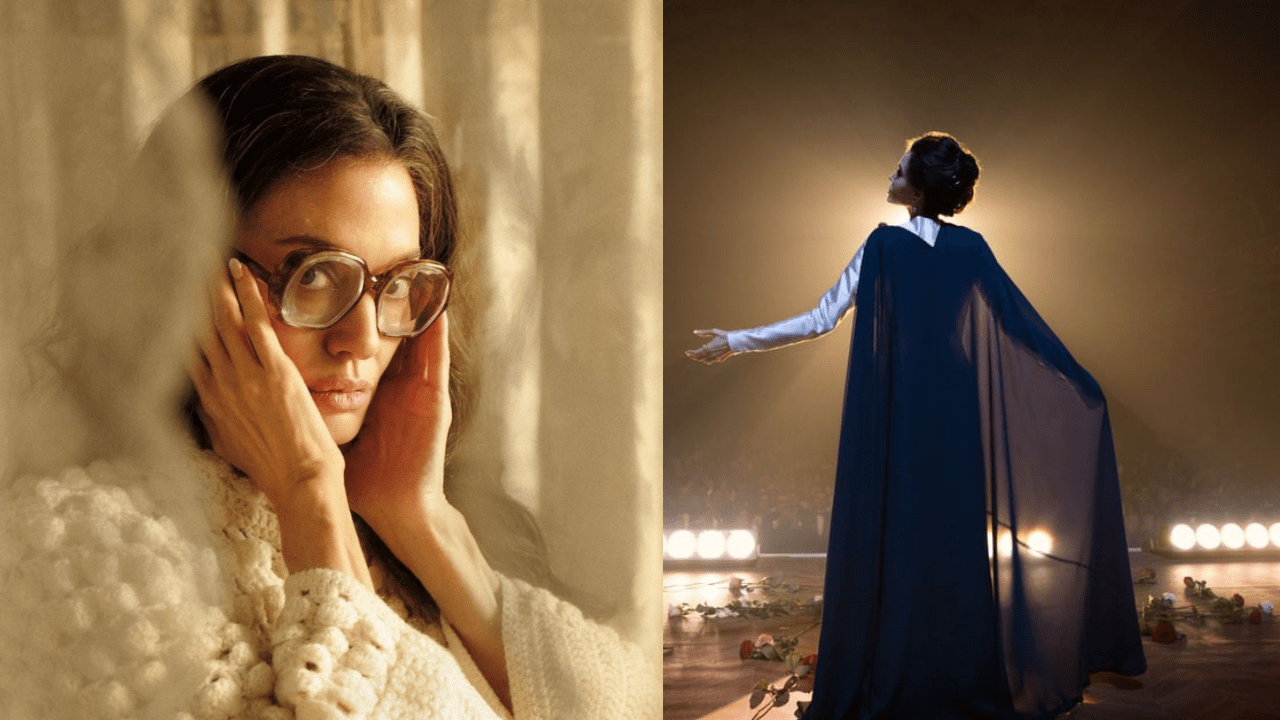
In our culture, there is a persistent obsession with women’s bodies. This topic continues to resurface in discussions, articles, and films. This scrutiny focuses on women in the public eye. It has sparked ongoing debates about the pressures of beauty standards. Cinema, however, offers a unique perspective, one that frames the female body in ways that speak to universal themes. Through iconic figures and compelling storytelling, filmmakers show how the public’s fixation on the physical form intersects with personal identity. They often demonstrate how these women are both shaped and defined by their appearances. A powerful example of this is Pablo Larraín’s Maria. The actress Angelina Jolie plays the legendary opera singer Maria Callas.
The Parallels Between Maria Callas and Angelina Jolie
Director Pablo Larraín prepared to portray Maria Callas in Maria. He worked with casting director Maurilio Mangano and his team. They found intriguing connections between the lives of Callas and Angelina Jolie. These parallels show how society has a long-standing cultural fixation on women’s bodies. Women’s physicality is scrutinized and dissected, particularly when they are famous. Callas was famed for her vocal talent. She also became known for her dramatic weight loss. This transformation overshadowed her artistry in the public’s eye.
The decision to lose weight was personal for Callas. It began after her meeting with Milanese designer Elvira Leonardi Bouyeure, known as Biki. Biki’s harsh commentary on Callas’s figure was impactful. She declared that Callas was “so disproportionately fat” that no clothing could honor her beauty until she shed pounds. This reflects the pressure that Callas felt to conform to a standard of physical beauty. The irony of this transformation is evident. Callas had already achieved fame when she weighed nearly 100 kilograms. Yet, she was constantly scrutinized for her body.
Jolie’s experience, though unique, shares similar contours. She faced public speculation regarding her health and appearance. Like Callas, she became a subject of constant media attention. Her body often became a talking point.
The Weight of Expectations: Callas’s Struggle with Her Body
For Callas, the pursuit of thinness became a defining part of her life. She shed an astounding 50 kilograms, following an ironclad diet that became a central part of her existence. The obsession with her weight loss was documented in great detail, with reports highlighting each milestone. In 1952, during La Gioconda, she weighed 92 kilograms. By 1953, during a performance of Norma in Trieste, she had reduced her weight to 80 kilograms. A year later, during Don Carlo at La Scala, she weighed 64 kilograms. However, even after shedding 36 kilograms in two years, Callas wasn’t satisfied. She set her sights on an ideal weight of 54 kilograms. Between 1955 and 1957, Callas reached what she considered her ideal beauty. This coincided with her blossoming friendships with filmmakers Luchino Visconti and Pier Paolo Pasolini.
Angelina Jolie’s Silent Struggle with Public Scrutiny
Jolie’s journey with body image, much like Callas’s, became intertwined with her personal struggles and public life. At the age of 15, Jolie faced anorexia, which led her family to seek specialized care. In 2007, following the death of her mother, similar issues resurfaced. However, unlike Callas, Jolie never openly discussed her relationship with her body. Despite this, the media persistently scrutinized her appearance, with the tabloids relentlessly reporting on her supposed weight.
In 2016, gossip about Jolie’s weight reached a fever pitch during the promotional tour for Maleficent: Mistress of Evil. Sources like Radar Online spread allegations that she weighed 35 kilograms. They cited photographs as evidence. They also speculated on her health. These claims relied on unverified photos and opinions of nutritionists. They did not include medical reports or personal admissions from Jolie herself.
Jolie had, in fact, undergone serious medical procedures that played a significant role in her physical appearance. In 2013, she publicly shared her decision to undergo a preventive mastectomy. She discovered she carried the BRCA1 gene, which significantly increased her risk of developing breast cancer. She also had her ovaries removed in 2015 to reduce the risk of ovarian cancer. Despite her openness about her medical choices, speculation about her weight and health continued to overshadow her personal decisions.
Two Divas Converging in Maria: Callas and Jolie
In Maria, Larraín adopts a distinctive method to portray the lives of these two women. He crafts a narrative that explores the complexities of their experiences in the public eye. The casting of Jolie serves as a tribute to Callas. It also reinforces the themes of the film. The casting reflects how women are often defined by their physical appearance rather than their talents or accomplishments. Through Larraín’s lens, the character of Maria splits into two divine figures. These two women were both larger than life, yet they were often reduced to their bodies.
Under the respectful direction of Larraín, both Callas and Jolie transcend physical appearance. The film’s portrayal emphasizes the power of their respective talents. It shows how each woman’s extraordinary abilities far outweigh societal expectations of beauty. These abilities surpass concerns about body image. Larraín’s approach highlights the idea that talent defines a person. Inner strength is also key, regardless of size or physical appearance. In this way, Maria becomes not just a film about an iconic singer. It also reflects on the broader cultural issues surrounding women’s bodies, fame, and the demands placed upon them.
The lives of Maria Callas and Angelina Jolie, as depicted in Maria, exemplify how women face constant public scrutiny. This scrutiny often focuses particularly on their physical appearance. Both women were known for their extraordinary talents. Unfortunately, their bodies often became the subject of speculation and judgment. This focus overshadowed their personal achievements. Larraín’s film reminds us of the broader societal pressures that shape women’s lives. These pressures profoundly impact both their public and private identities. In the end, their stories challenge us. We need to reconsider the way we define women. We should not define them by their bodies, but by their humanity and their undeniable talents.
 curlycurlworld: Get Twisted with CurlyCurl: The Latest in Curls, Coils, and Confidence!