
Dear friends,
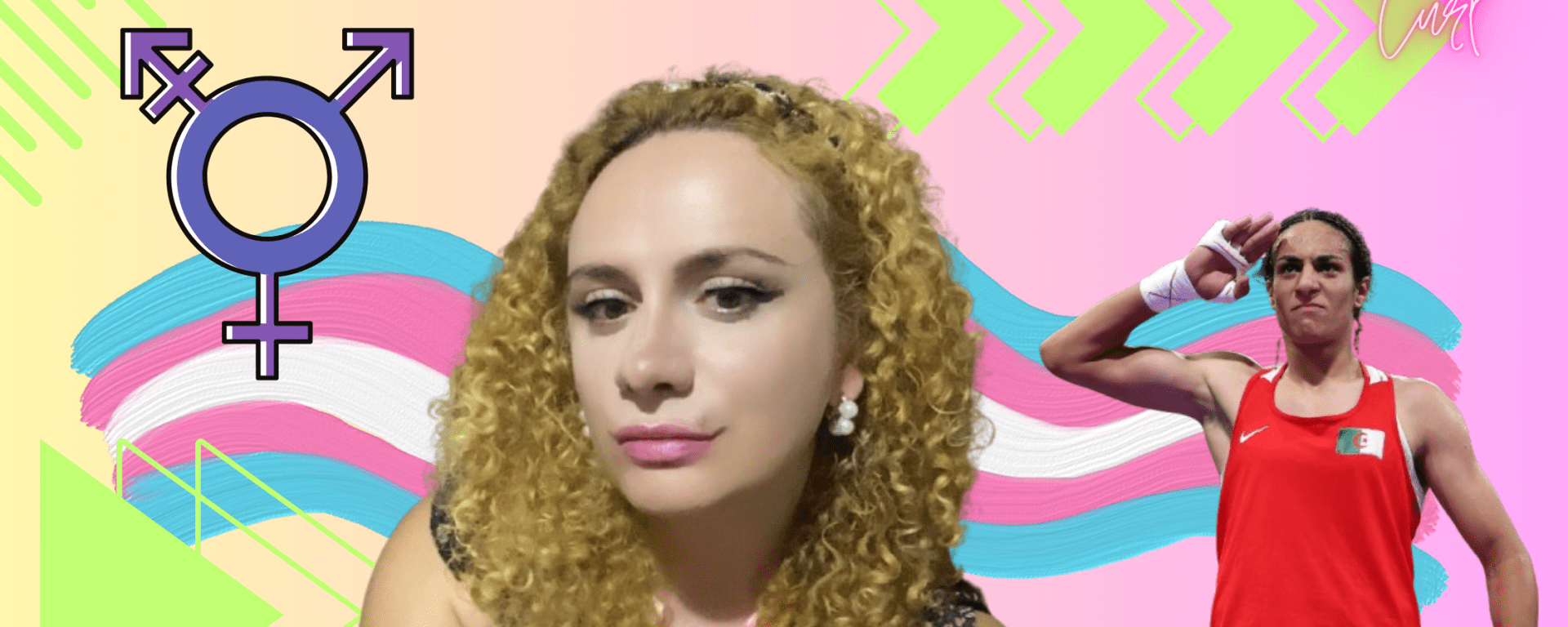
This week I invite you to read my story on Grazia, , where I talk about my personal path and my gender transition. I shared my thoughts about the story of the Algerian boxer Imane Khelif, excluded from the Paris 2024 Olympics because of her intersexual condition. Intersexuality is a congenital condition in which a person is born with sexual characteristics that do not fit the typical definitions of male or female, including chromosomal, gonadal or anatomical variations. It is not a choice, but a biological reality that requires understanding and respect.
In my article, I also talk about my transition journey, which began in 2002. Mine is a story of resilience, marked by contrasting emotions and deep insecurities. I clearly remember the difficult years of high school, which began in 1995, when I attended the State Institute of Art in Parabita (Italy). Those years were painful because of the bullying I suffered, both by classmates and by some teachers. A substitute physical education even went so far as to publicly humiliate me for my attitude, defining me in offensive terms. That was the turning point, the beginning of an inner rebellion and towards the outside world. I couldn’t handle the emotional turmoil I felt to be different, and that also reflected on my academic performance. My grades dropped drastically, and I sought refuge in the most rebellious groups in order to be accepted. The pain of that period has never completely abandoned me: every time I pass in front of that high school, I still feel the scars reopen.
At home, things were no longer simple. My father, who grew up in a period of great austerity after the Second World War, had a traditional and sexist mentality. The fear of disappointing him prevented me from telling the real reason for my poor academic performance. Only my mother tried to understand me, but the environment in which I grew up was anything but open to acceptance.
Being transgender, as well as being intersexual, is not a choice but a condition that must be addressed with sensitivity and medical, psychological and professional support. During my journey in London, in 2005, I made the decision to begin my transition and was welcomed into the production of the musical Billy Elliot, working with iconic figures such as Elton John, Lee Hall, Stephen Daldry and David Furnish. That experience was a moment of rebirth for me. I finally felt included and found a purpose in my work, which deeply reflected my life and what I was going through.
Subsequently, I graduated in Art and Design and Management for television and journalism, feeling for the first time that everything I was building made sense. I also enrolled in university in 2006, but I had to interrupt for economic reasons, being still in transition. Despite everything, in 2015 I graduated from the prestigious Central Saint Martins, where I had the honor of meeting Louise Wilson, one of the pioneers in the field of fashion communication, who trained talents such as Alexander McQueen, Stella McCartney and Riccardo Tisci. Louise left us in 2014 due to a terminal illness, but her teaching to never give up remains imprinted in me.
For my final project, I made a short film entitled Gender Dysphoria, in which I explored the transgender condition, emphasizing that it is not a choice, but an identity to be accepted and understood. Gender identity is complex: it is estimated that about 1% of the British population identifies as non-gender. Of these people, a significant percentage undertakes a transitional medical path, a long and often arduous process, but fundamental for psychophysical well-being.
Throughout my career, I have had the privilege of working with Stonewall, who supported my project, and I collaborated with Adam Cooper in 2013. In 2015 I started working for the famous musical Phantom of the Opera by Andrew Lloyd Webber, at the press office, and in 2016 I had the honor of organizing the big event for the 30th anniversary of the show. It was a moment of immense satisfaction, despite the great loss of my father, who passed away a few days earlier. Only in the last years of his life had he begun to accept my identity.
My story, like that of many others, is a testimony of struggle and hope. I invite you to find out more about Grazia, where I shared the details of my path and the meaning of living authentically, with courage and determination.
I’ll be waiting for you on Grazia.
With love,
Mabel Casalini
 curlycurlworld: Get Twisted with CurlyCurl: The Latest in Curls, Coils, and Confidence!