
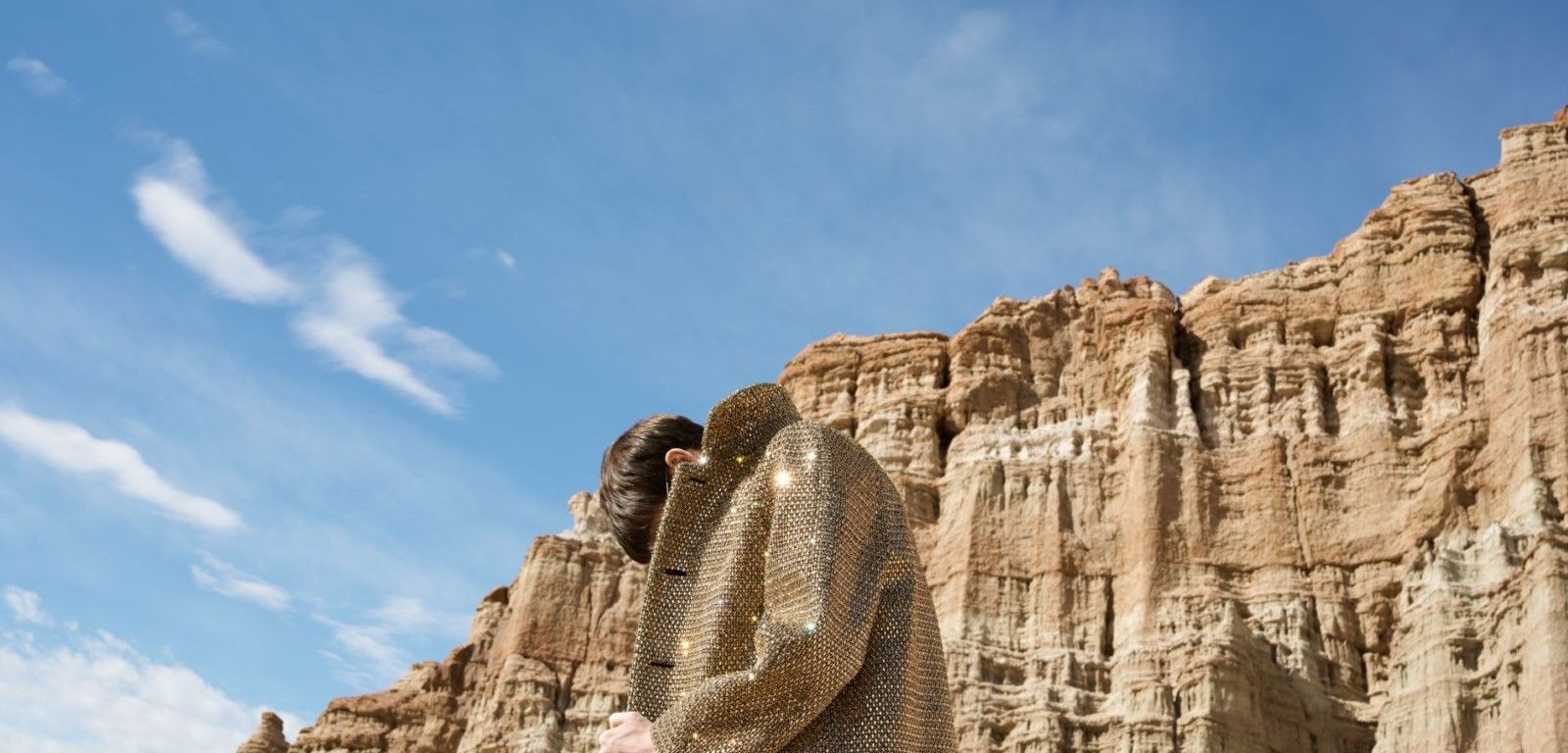
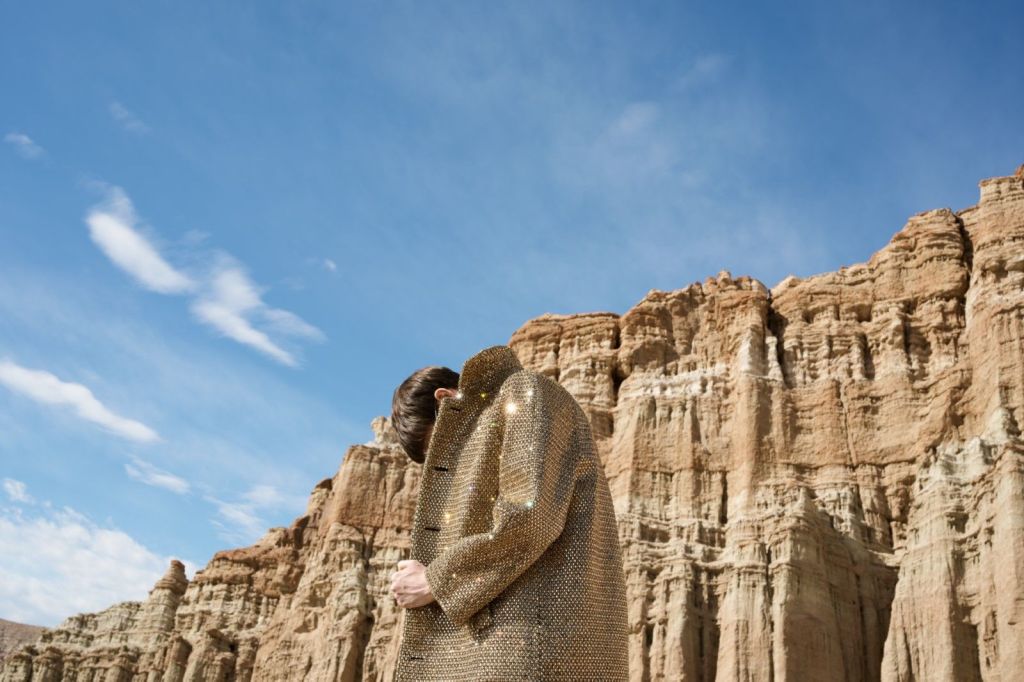
Music serves as a unifying thread connecting the Mojave Desert, psychedelia, the Mods of the ’60s, and English tailoring. The Mods’ iconic sartorial style, defined by sharply tailored suits, was built around their musical identity. Psychedelia, emerging from the music scene, captivated Los Angeles rockers who indulged in LSD during desert retreats. These influences seem to have inspired Hedi Slimane’s vision for the latest Celine video-show.
In this video-show, tall, slender young men with a carefree attitude march along Route 66, showcasing impeccably tailored suits. The video’s grand production, reminiscent of Tokio Hotel’s iconic “Monsoon” video, features helicopters and a fleet of black Cadillacs. The Celine collection itself is strikingly austere, dominated by black with highlights of white shirts, a singular gray Prince of Wales suit, and eye-catching pieces adorned with sequins, crystals, and a coat that gleams like chain mail.
For fashion enthusiasts and fans of Hedi Slimane, this Celine video-show is a must-see, blending elements of music, fashion, and desert mystique into a visually stunning presentation.



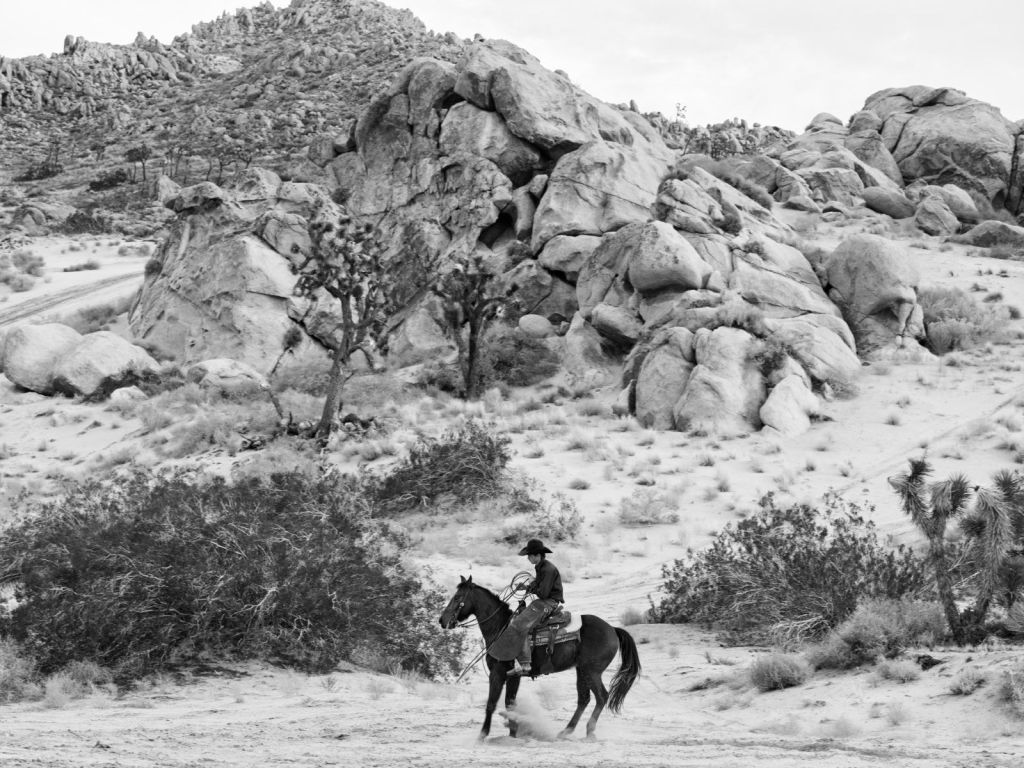
In the video, Brayden Liberio, a young professional cowboy, stands out as the only individual not dressed in Celine attire. Slimane featured him as part of a photographic project initiated in 2013, titled “California Teen Cowboy.” This project may be linked to the ninth issue of Hero Magazine, “Suburban Heat,” which featured a Slimane-photographed cover of a young man in a cowboy hat. Although the collection hints at a western influence, it’s not as overt as Pharrell’s country-inspired turn. Instead, subtle elements like capes, wide-brimmed hats, bow ties, and hand-embroidered vests evoke the imagery of western figures from “Deadwood” or “Tombstone.” This aesthetic also slightly echoes Cillian Murphy’s character in “Oppenheimer,” who dons large 1940s suits and wide-brimmed hats, contrasting with Slimane’s tight, precise tailoring. Slimane’s work nods to 19th-century Anglomania and Beau Brummell, the English dandy who revolutionized men’s fashion with principles of color, layering, and silhouette that still influence modern tailoring.
Brummell’s sartorial revolution focused on the precision of the cut, prioritizing it over colors and decorations. This philosophy resonates with Slimane’s minimalist collection, featuring lapel-less blazers known as frock coats, reminiscent of those worn by Brummell. Notably, the collection’s presentation title and accompanying music marked a departure from Slimane’s usual practice of remixing tracks by emerging artists. Instead, he chose Hector Berlioz’s “Symphonie Fantastique,” which tells the story of an artist’s opium-induced visions as an escape from unrequited love. This symphony is divided into five movements and features a recurring musical theme, the “idée fixe,” symbolizing obsession. Tailoring is Slimane’s lifelong obsession, as he once explained to Le Figaro: “I found my style more than 20 years ago, or perhaps it found me. It flows through a line, a stroke, a silhouette that I have obsessively pursued since then, defining who I am. It belongs to me, and in return, I am bound to it.”
 curlycurlworld: Get Twisted with CurlyCurl: The Latest in Curls, Coils, and Confidence!