
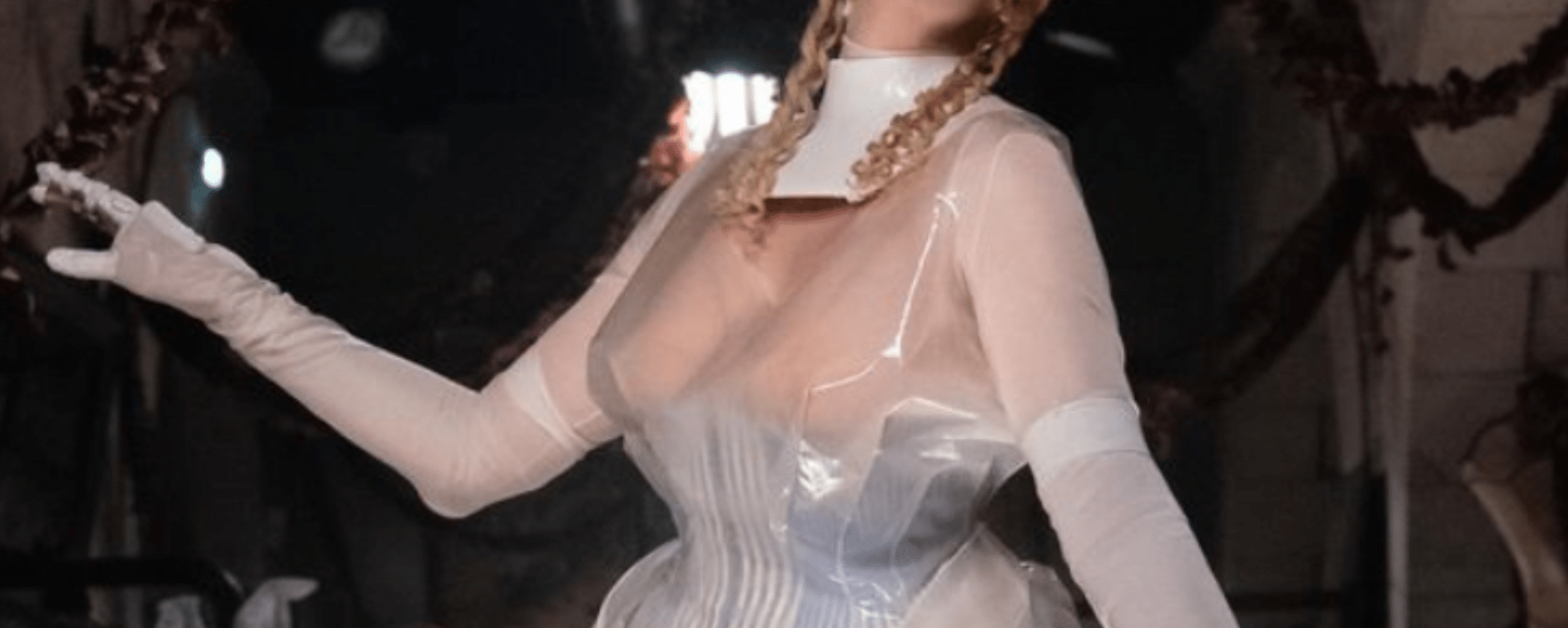
Shaking Realism’s Foundations in a Sea of Mundane: A Theatrical Ode to Luxury in Fashion
In these arid times, as Leon Talley noted, a famine of beauty prevails. Fashion, mired in a creative drought, often succumbs to reflecting mundane issues. Yet, amid the sea of elevated basics, John Galliano’s recent Maison Margiela Haute Couture show emerged as a turbulent spectacle, shaking the very foundations of the industry. In a world where identity becomes a commercial strategy, Galliano’s artistic, theatrical presentation stood out, creating a dream amidst the mundane. As Mabel Casalini observed, the fashion landscape needed this departure from realism, a reminder that luxury clothing is more than a reflection of the present. Galliano’s show, a cinematic finale set to Adele’s poignant melodies, became a vivid aquarium where the ghosts of human desire swam, marking a triumphant conclusion to Couture Week in Paris.
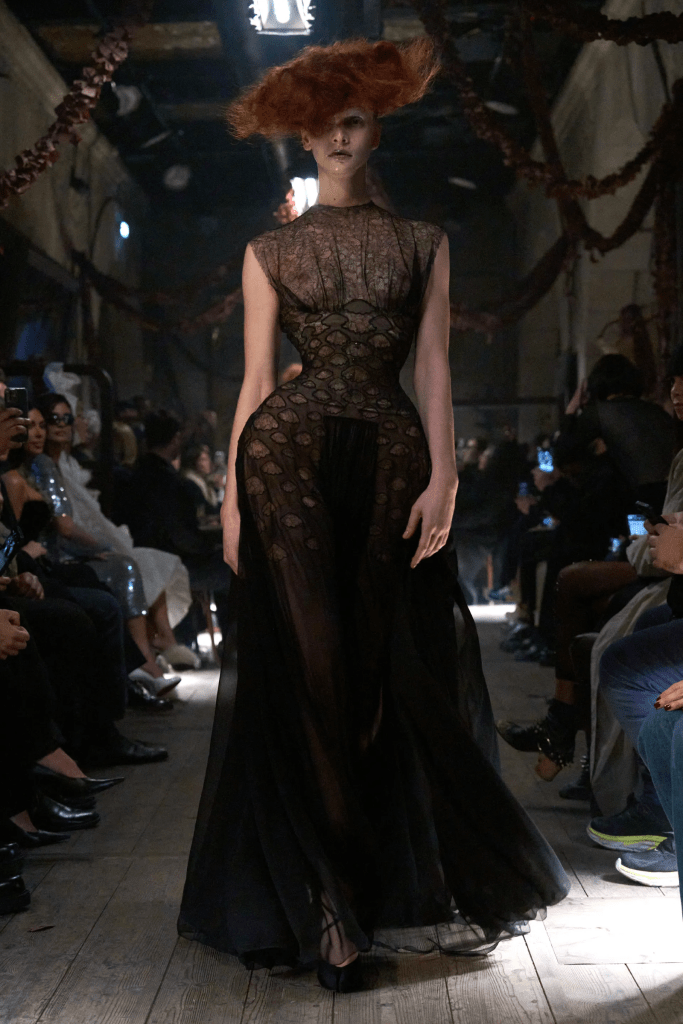
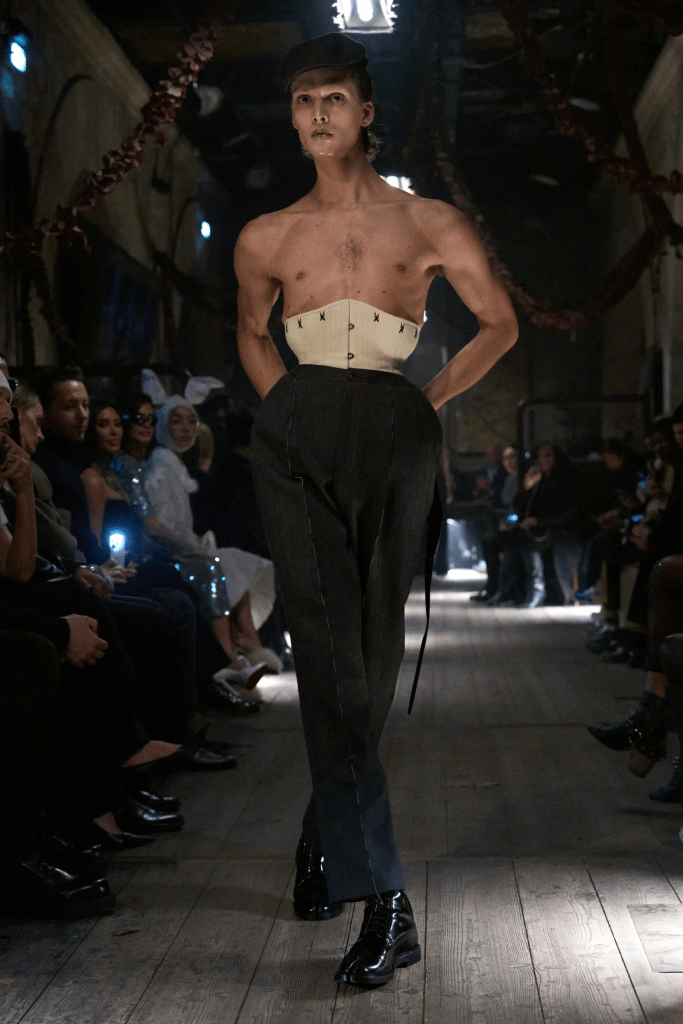
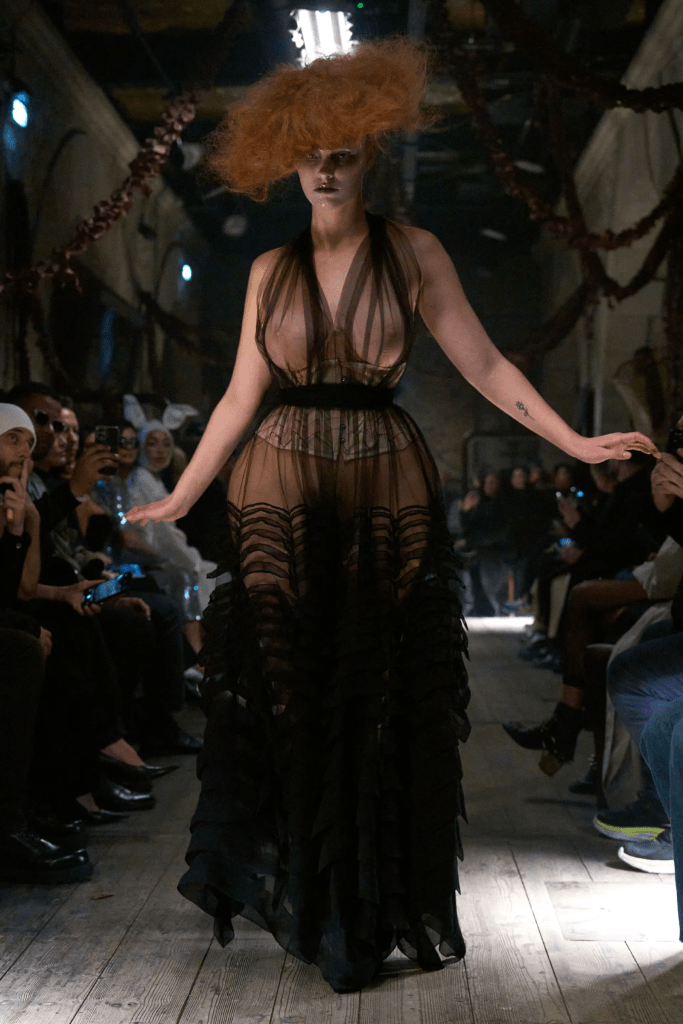
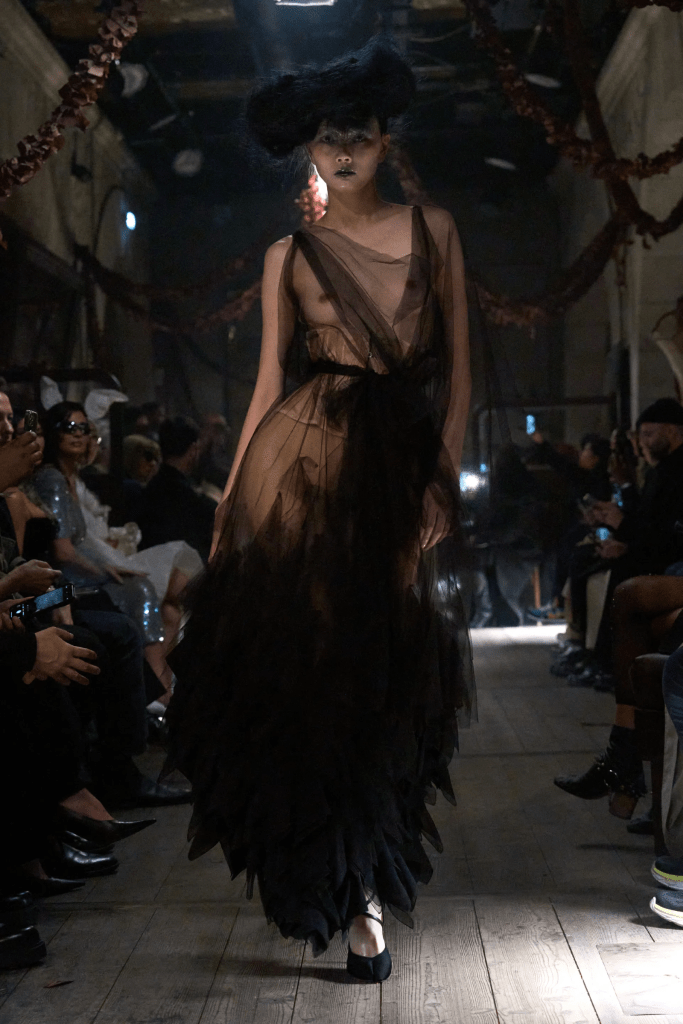
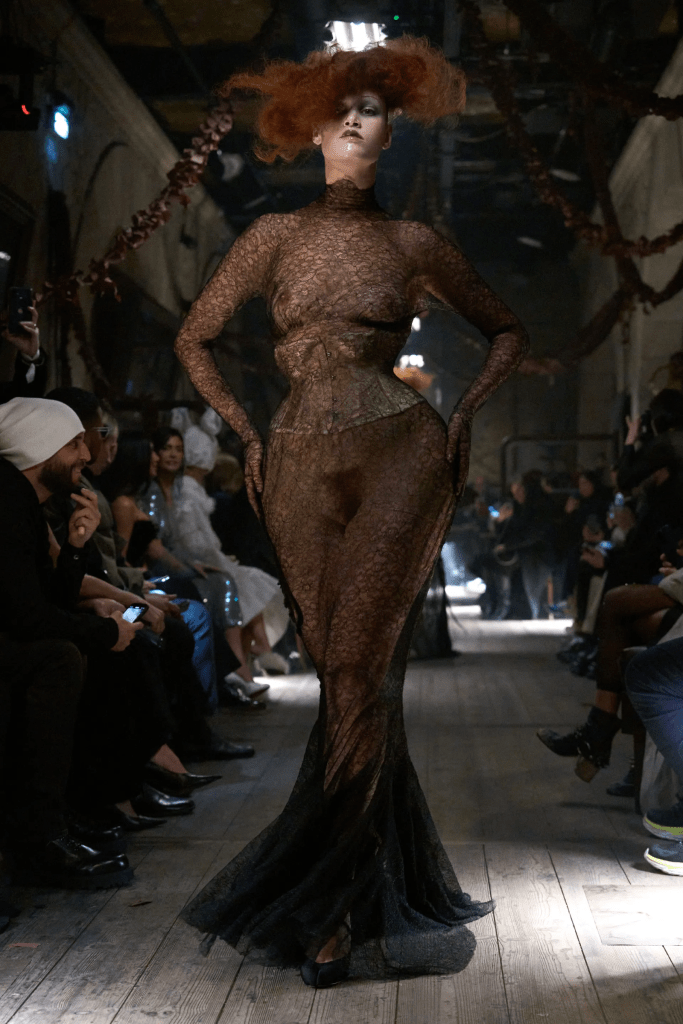
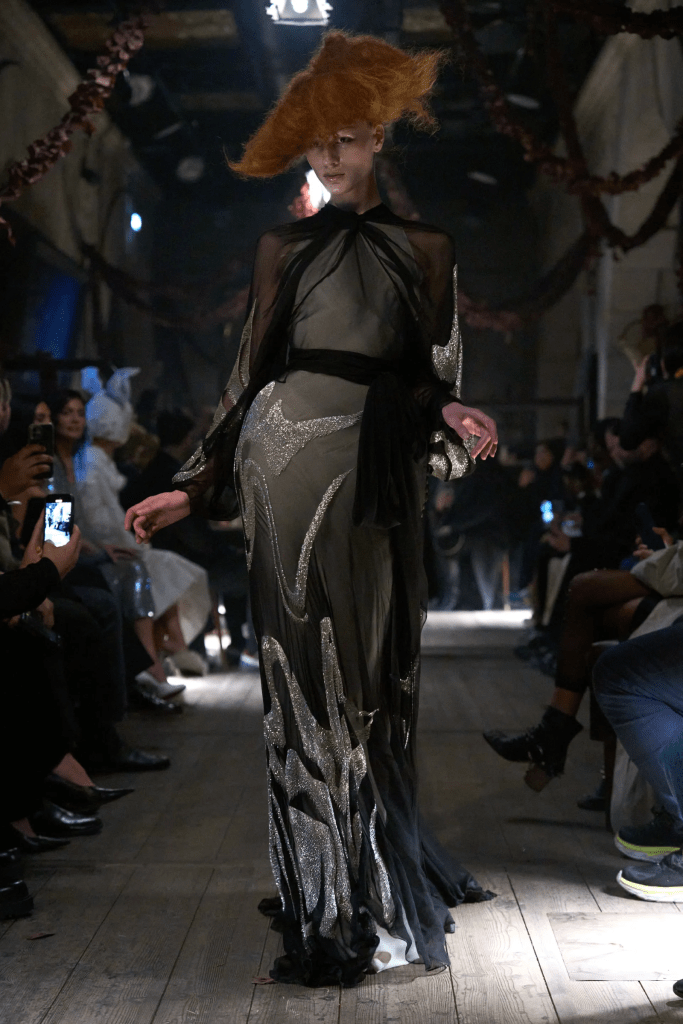
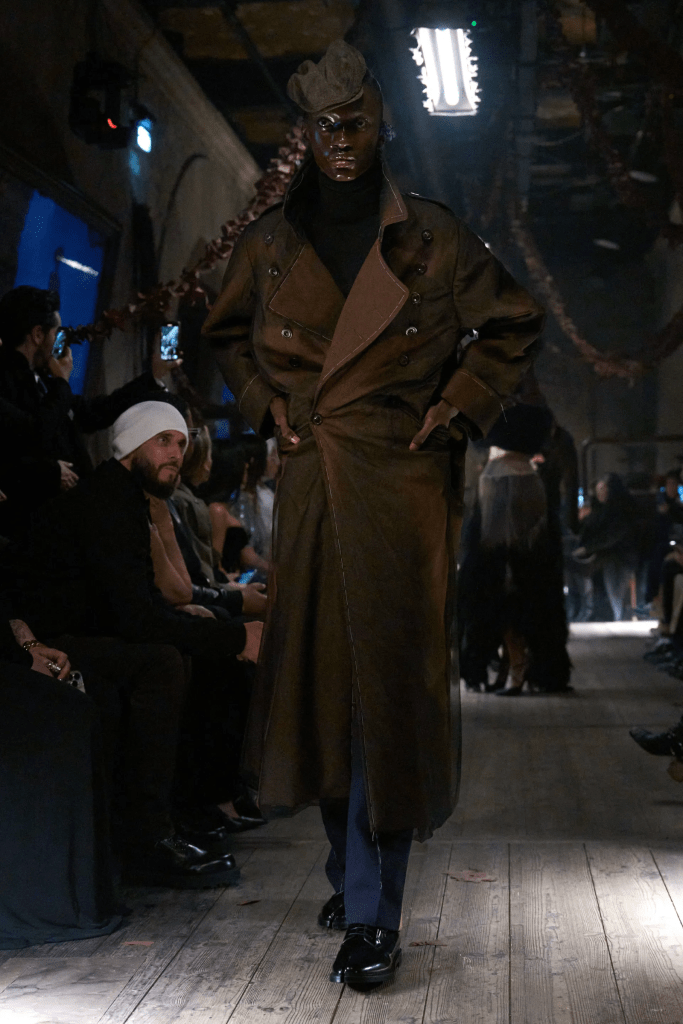
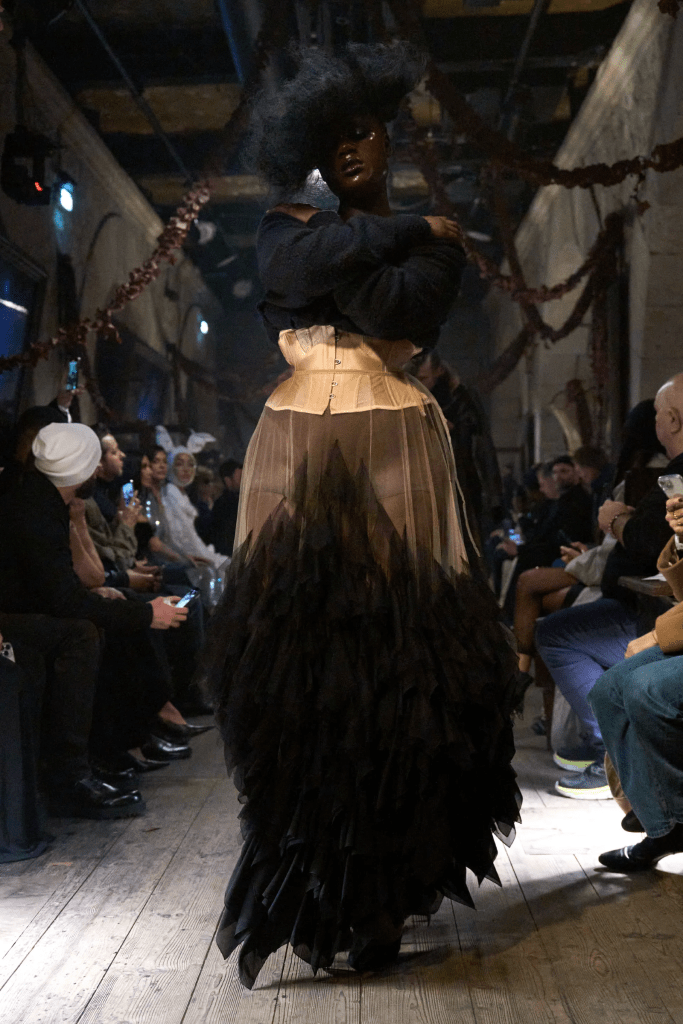
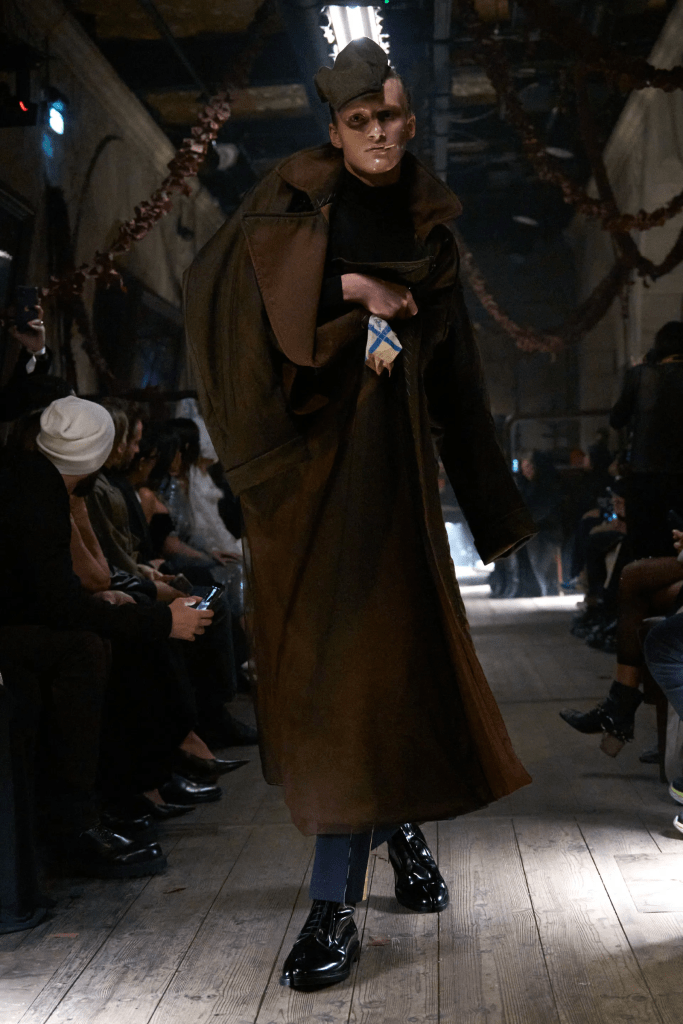
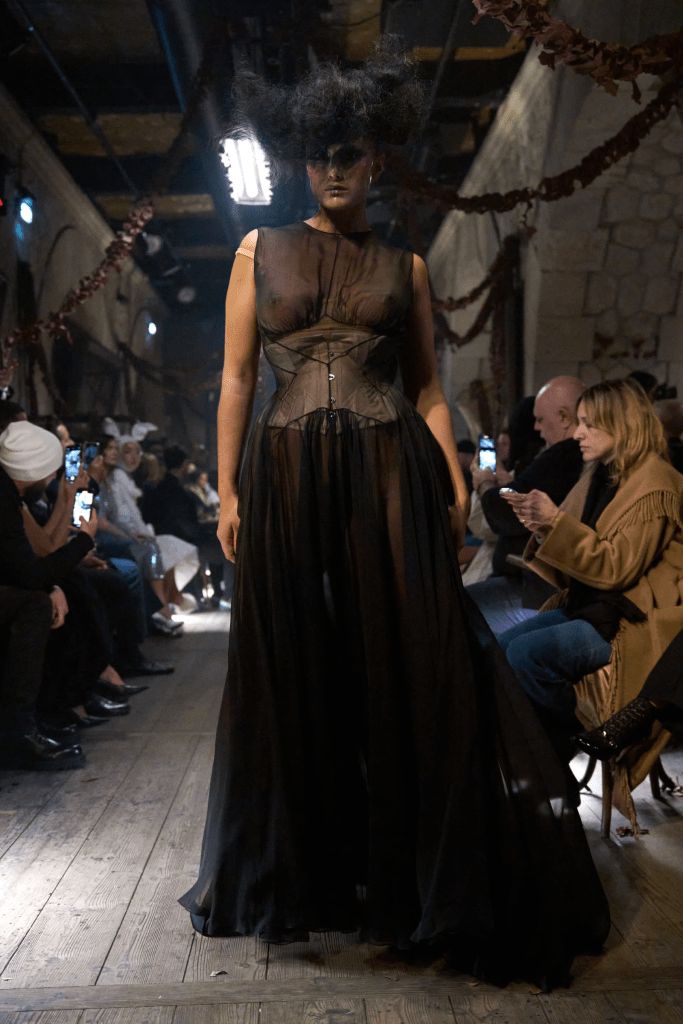
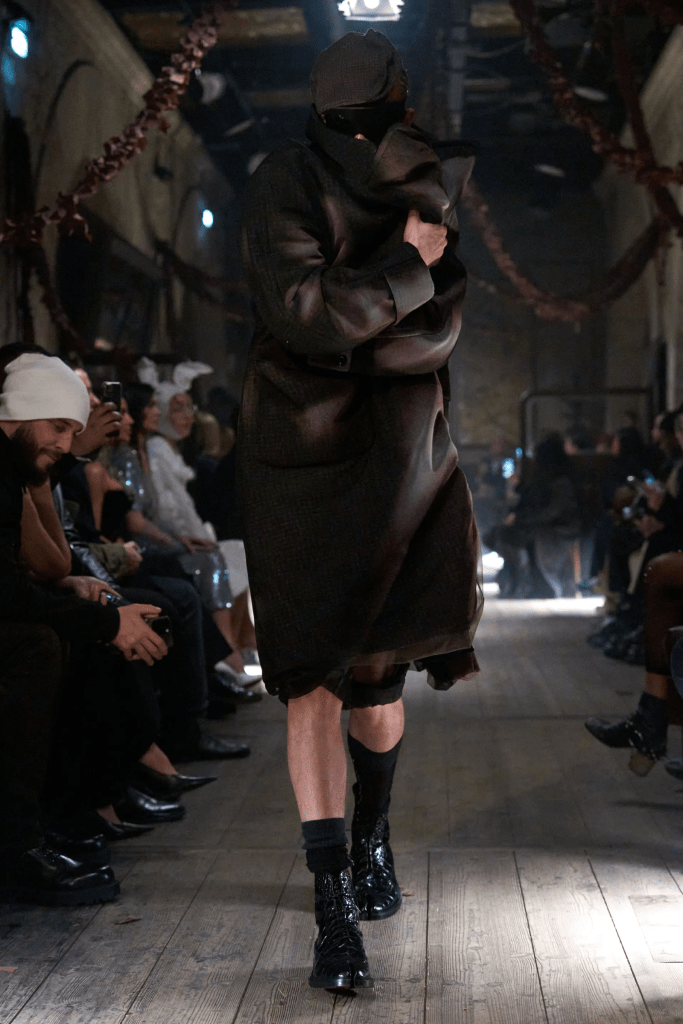

Returning to Baudelaire, the quintessentially Parisian poet, his Danse Macabre seems a fitting melody for this show—a parade of skeletons and exposed flesh, a remix of death entwined with desire. “Ô charme d’un néant follement attifé!” whispers through the air, aligning seamlessly with the macabre elegance on display. Fashion, as the realm of human creativity, deserves to explore the full spectrum of emotions, even the raw and disquieting. Too long have we confined fashion to a realm of pure luxury, marginalizing the voices of the “damned” designers—Jun Takahashi, Henri Alexander Levy, Ziggy Chen, and others. The industry, tethered to commercial imperatives, restrained its narrative to perpetually positive tones, neglecting the rich, dark hues of human emotion. The “decade of smoothness” yielded to designers like Galliano and McQueen, who once artfully aestheticized the sinister without unsettling moral sensibilities. For a glimpse, witness Andrew Groves’s transgressive SS99 runway or Carol Christian Poell’s macabre presentations. Fashion, while expert at cultivating dreams, has inadvertently forsaken its own nightmares.
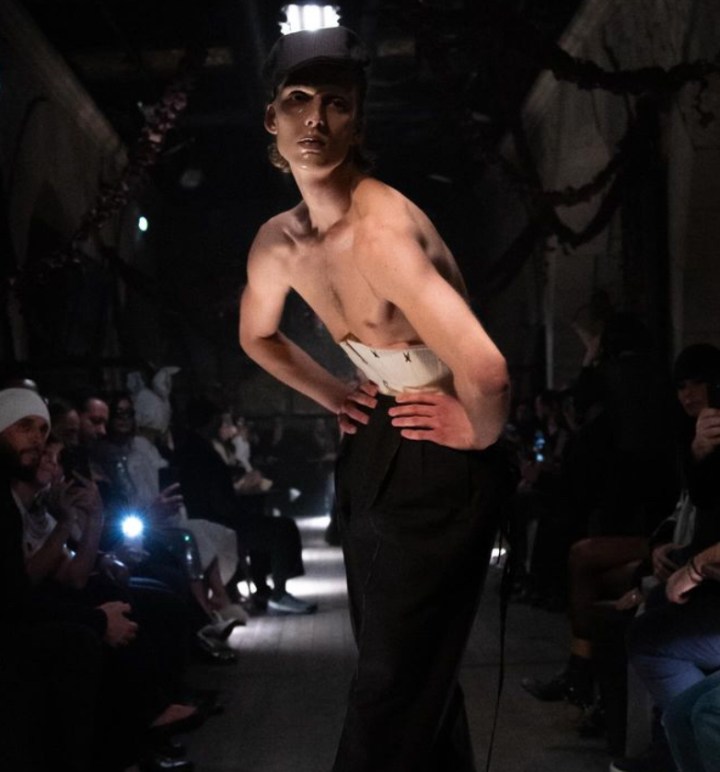
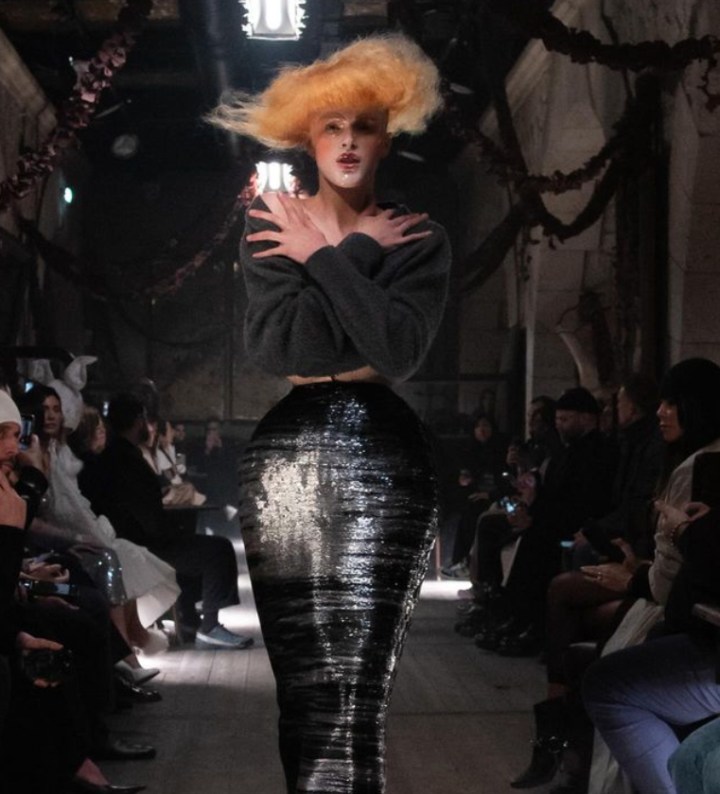
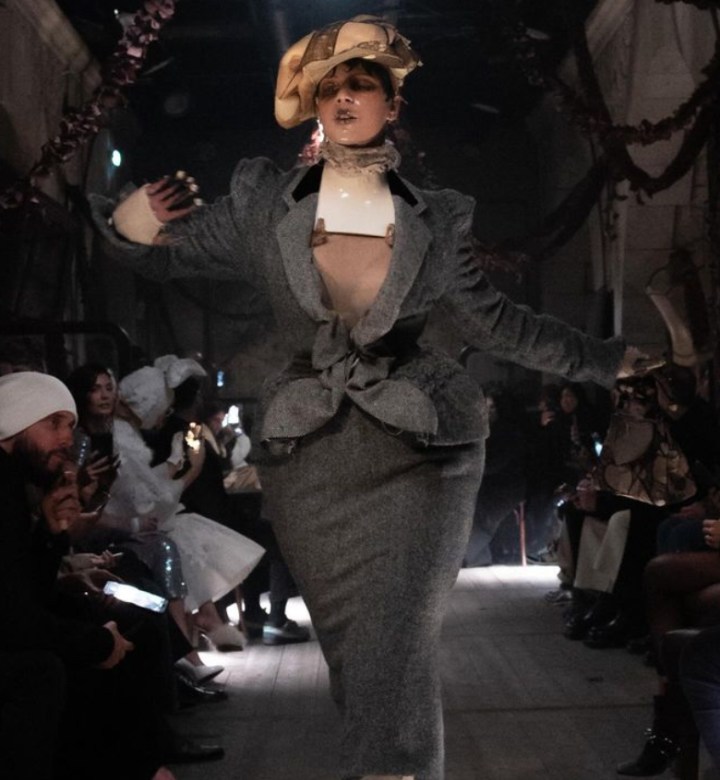
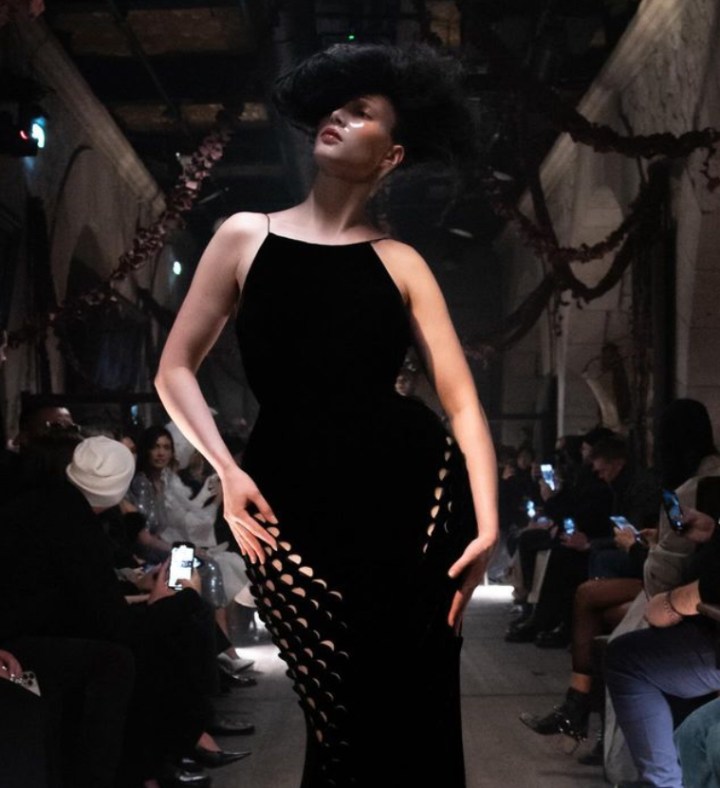
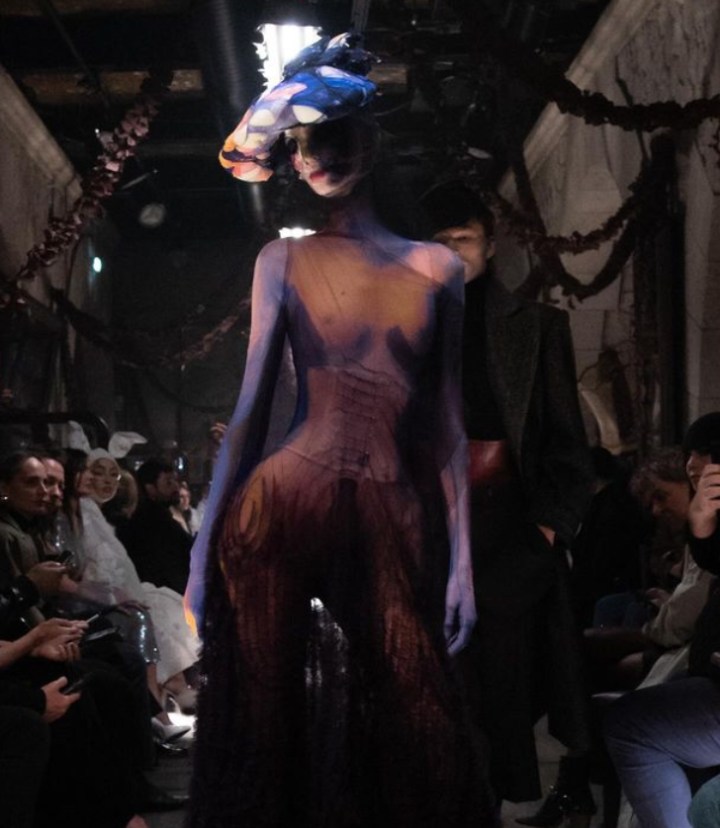
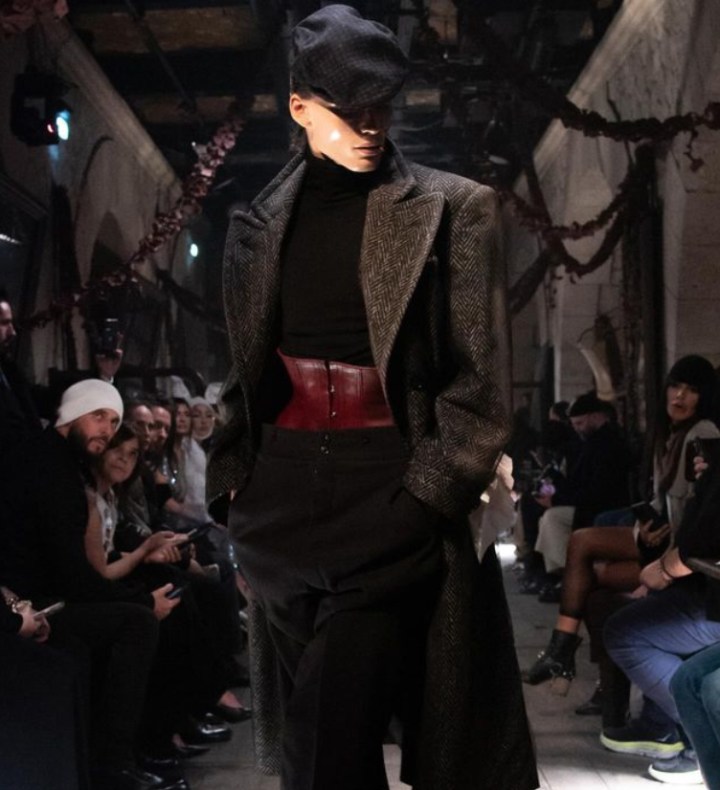
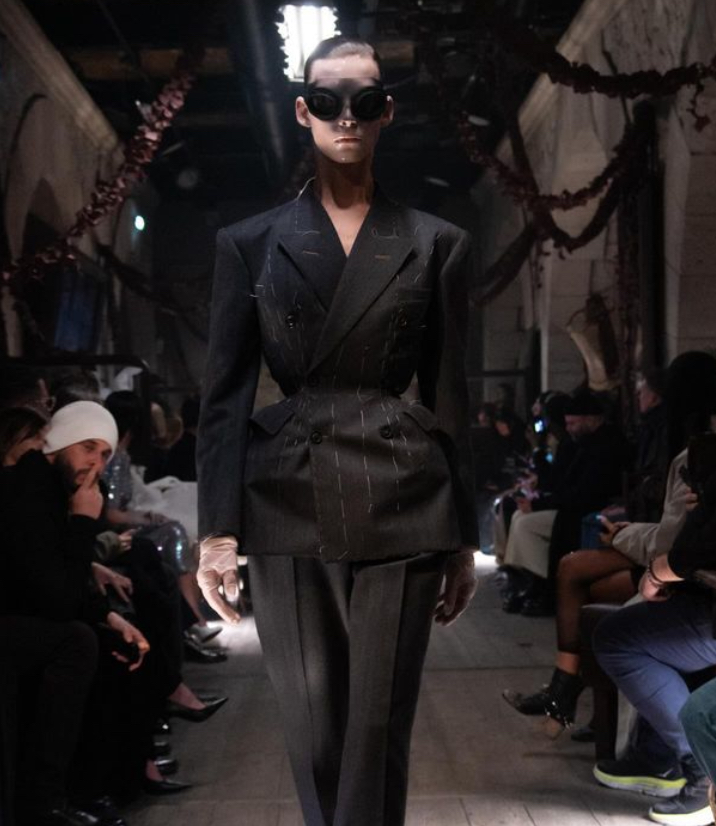

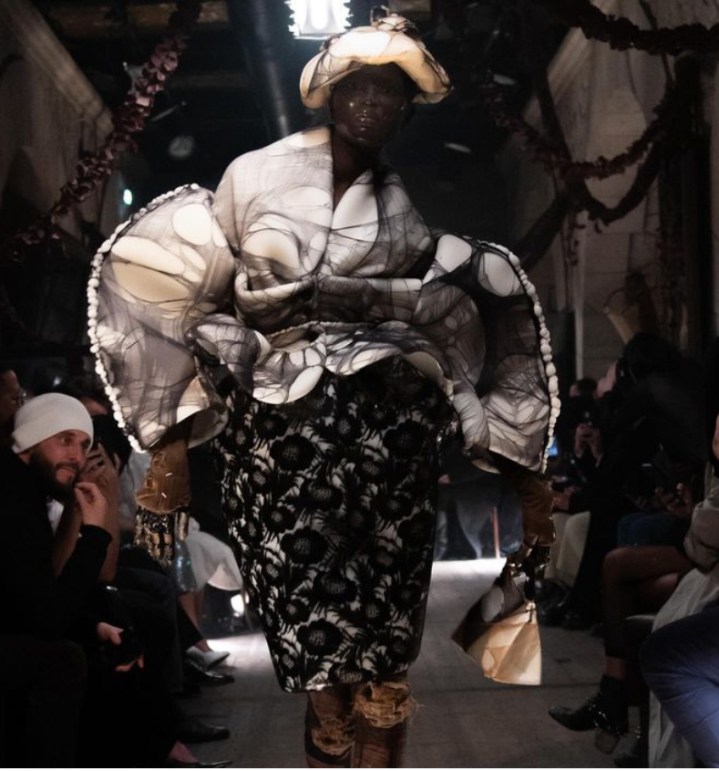
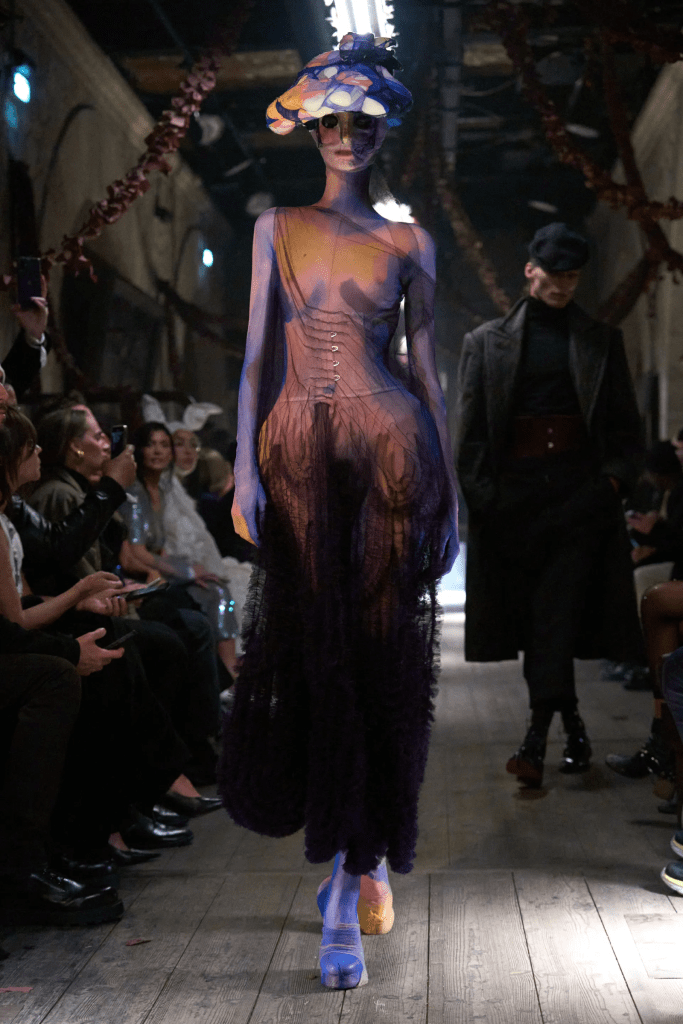
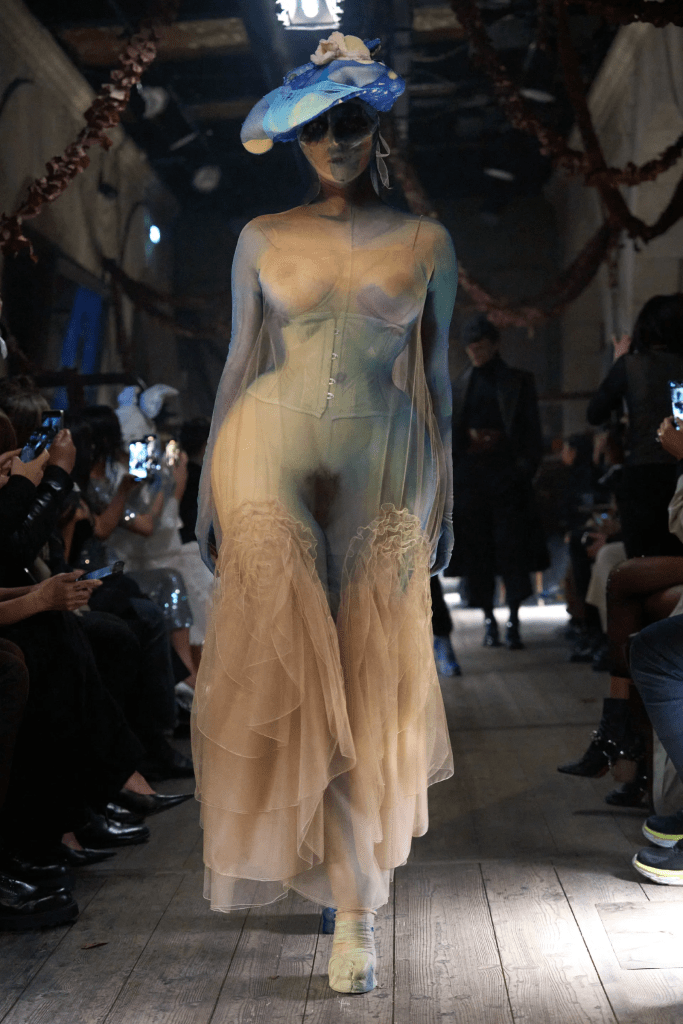
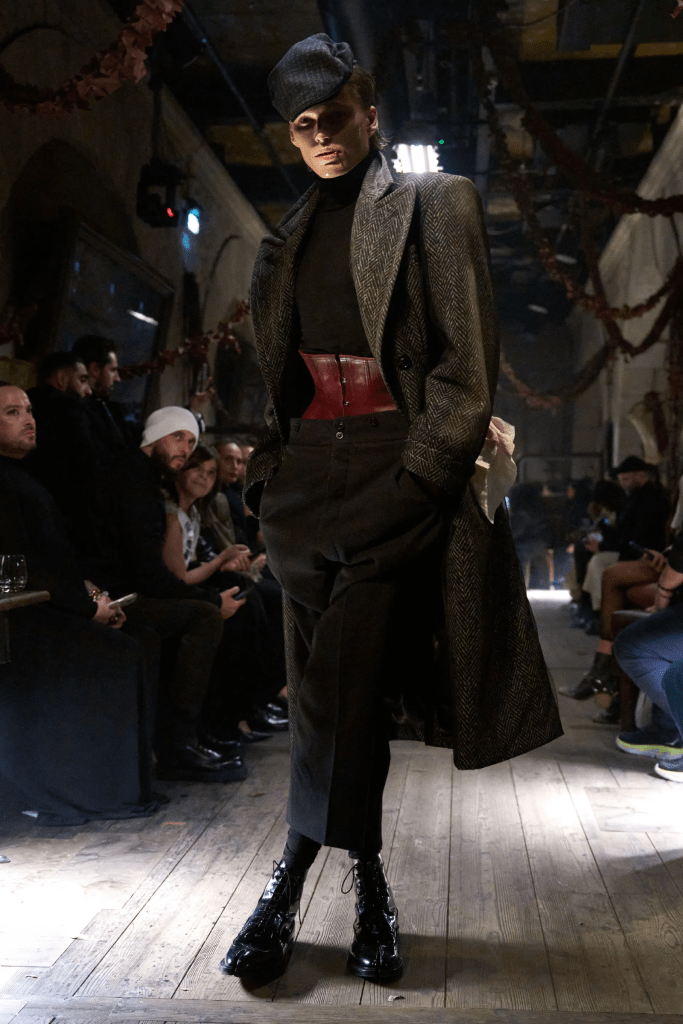

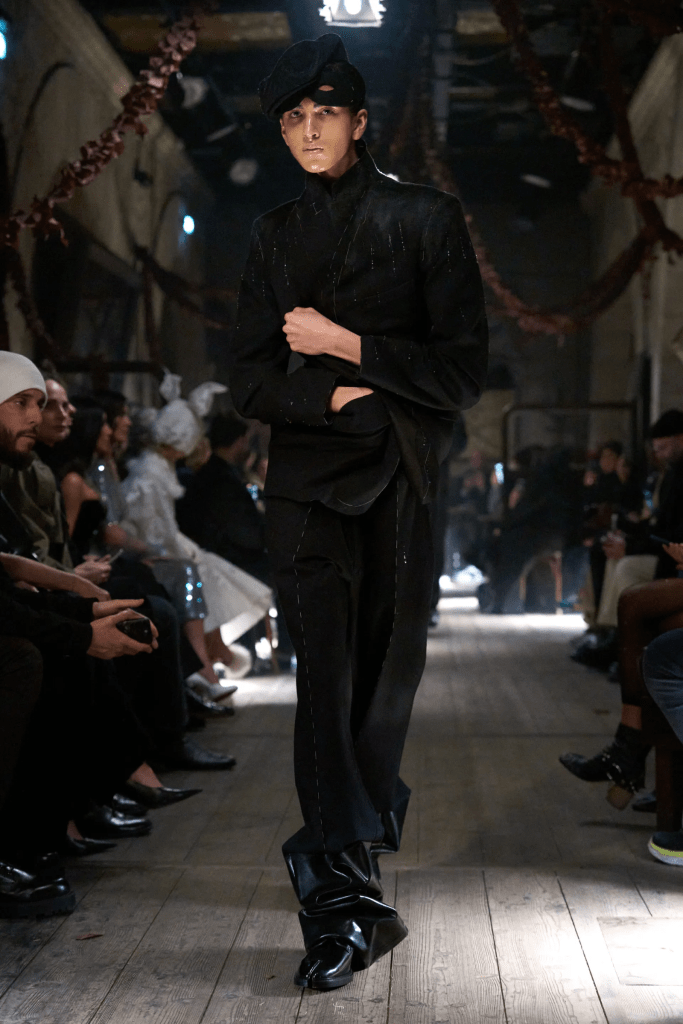

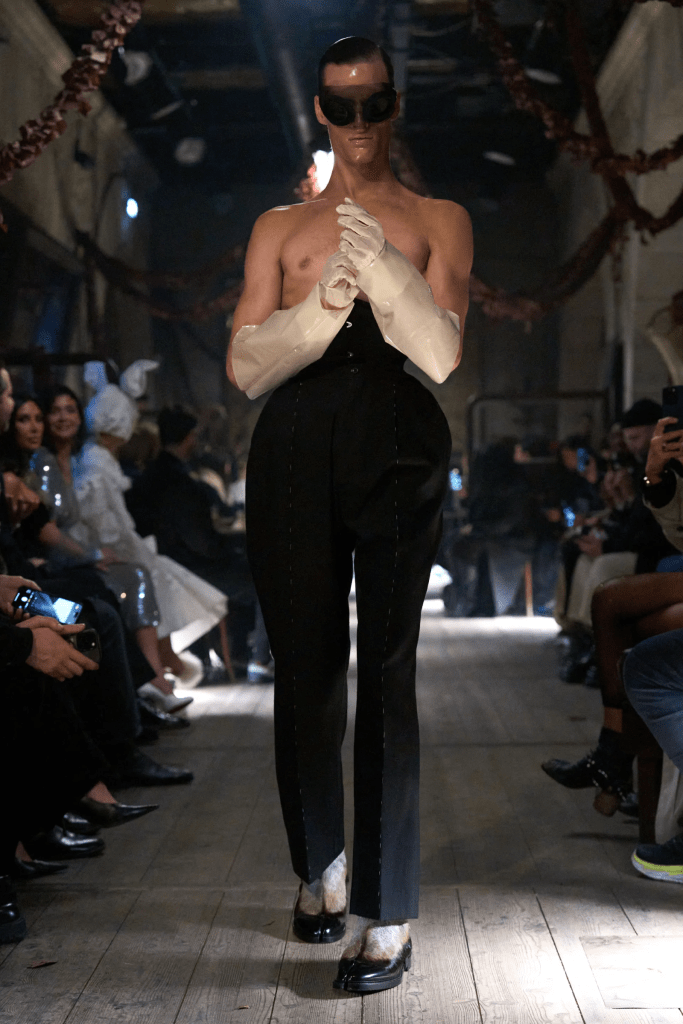
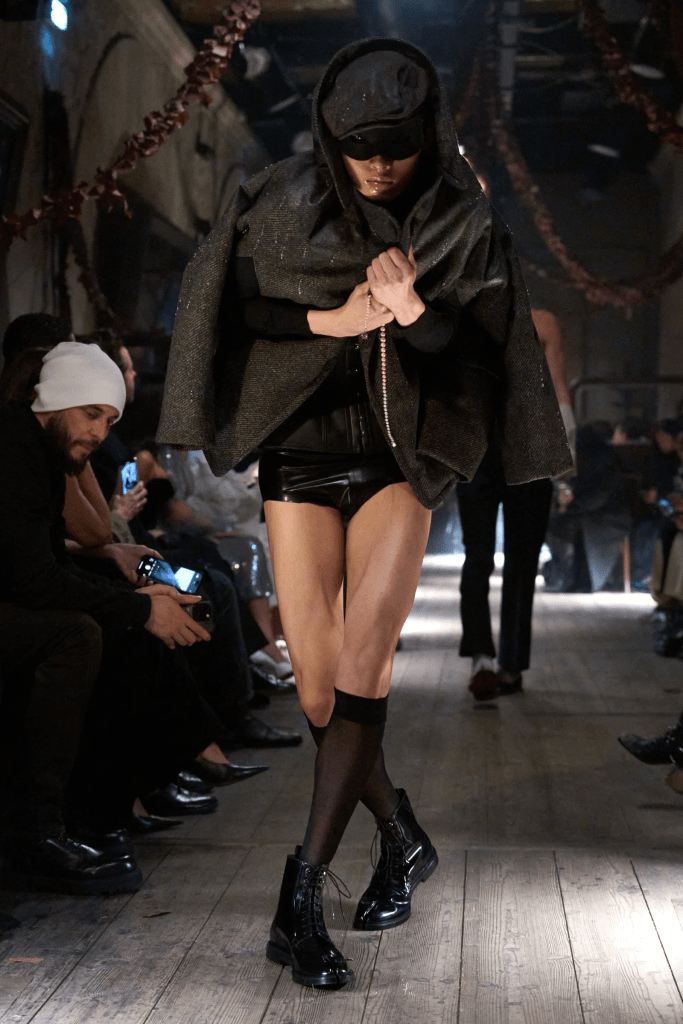
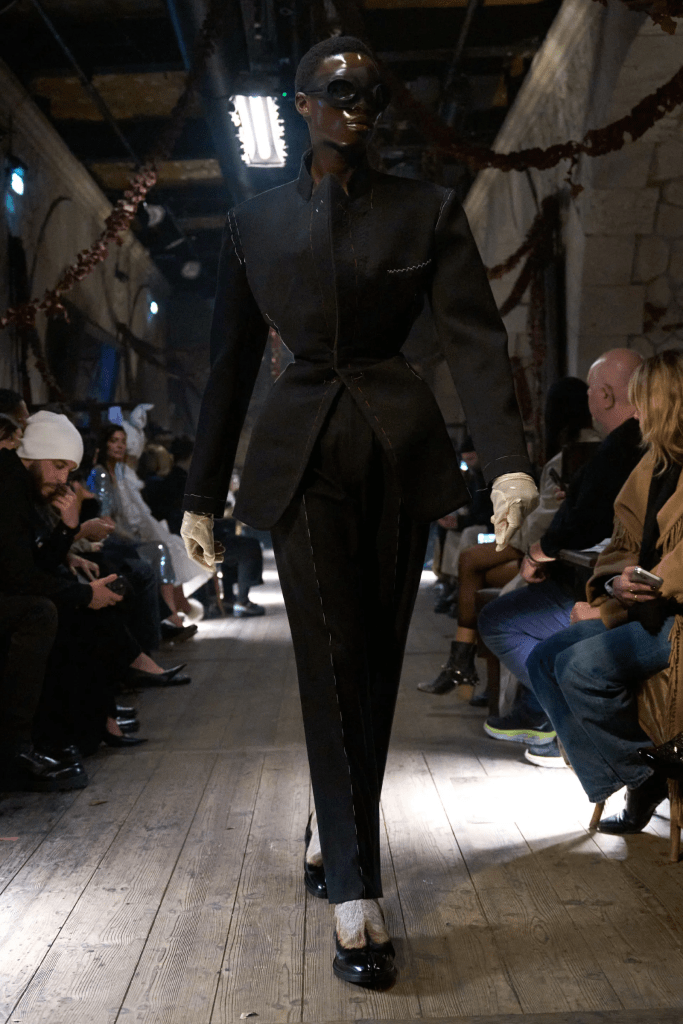

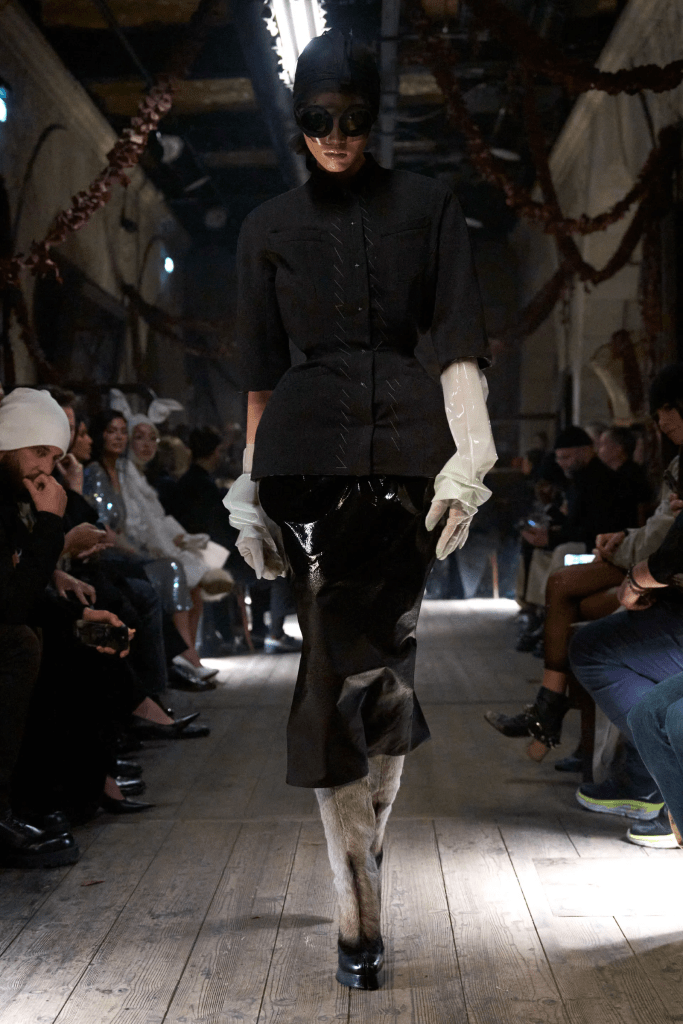
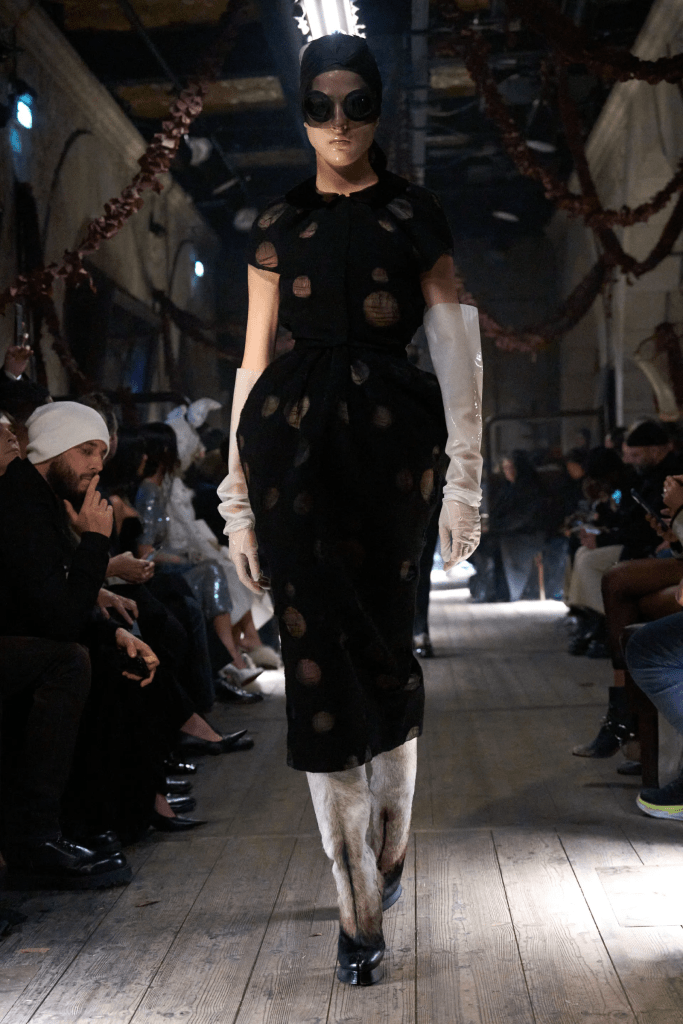

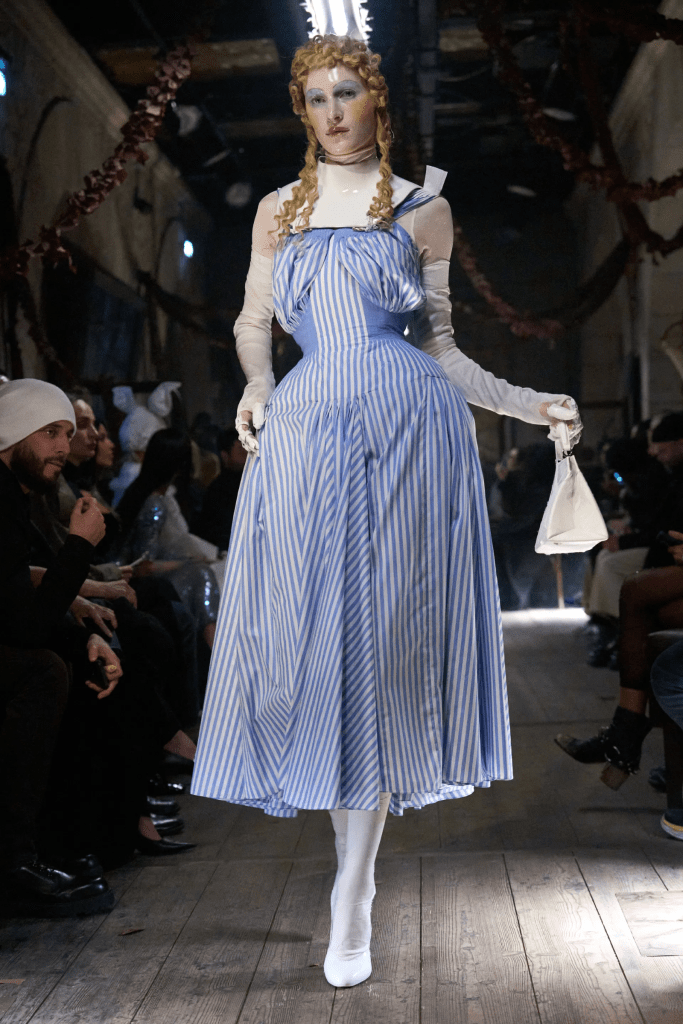
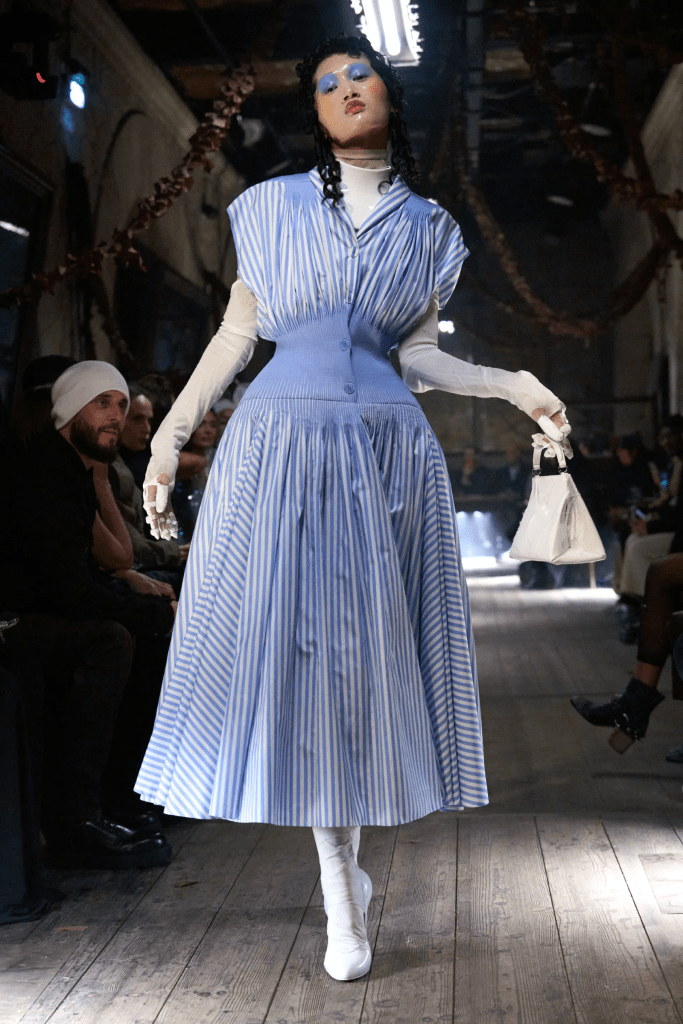
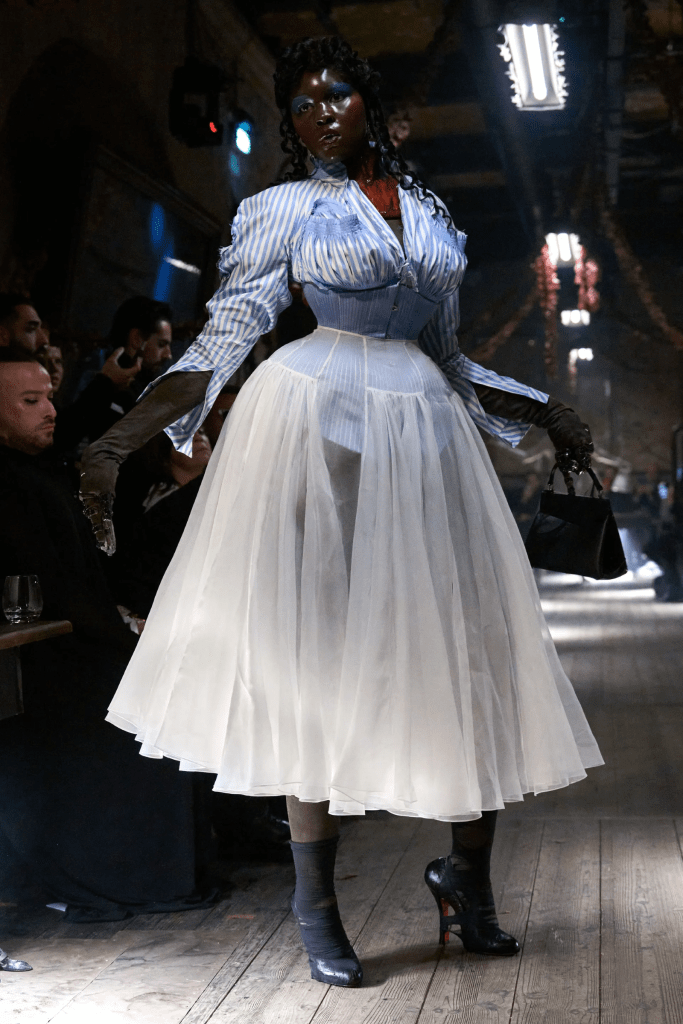
In the vast tapestry of creative expression, where corporate storytelling often succumbs to a plasticized prose, John Galliano’s recent showcase rises as an eloquent departure. What distinguishes his message is its universal resonance, defying cultural and critical barriers. This Couture spectacle wasn’t just a display of transparent organza garments or intricately painted stockings; it was a narrative woven with technical prowess, featuring weaves and textures of wool illusionistically impressed into silk, and the striking visual impact of latex drapes enveloping Gwendoline Christie.
Amidst the contemporary landscape, saturated with nostalgic sentiments and a yearning for a return to a dreamier past, Galliano’s artistry emerges as a beacon of the present. Many voices may spill ink on the tragic commerciality of today’s creative landscape, longing for an era that once served as the grand dream machine. However, Galliano’s revelation goes beyond mere nostalgia.
His showcase wasn’t just a visual spectacle—it was an exploration of creative expression in its most subtle, magical, and stunning form. It wasn’t a retreat into the past but a bold affirmation that the space to delve into the shadowy realms and the darkest sides of human imagination still exists, even in our contemporary milieu. In a world where many shy away from the uncharted territories of creativity, Galliano fearlessly demonstrated that the potential for exploration persists, waiting to be embraced by those who dare to venture into the unexplored. The commercial noise may drown out the whispers of these shadowy realms, but Galliano’s work stands as a testament to the enduring significance of pushing boundaries and uncovering the profound depths of creativity in the present day.
 curlycurlworld: Get Twisted with CurlyCurl: The Latest in Curls, Coils, and Confidence!