
The Paradox of Fashion Accolades: Celebrating Brilliance or Prolonging Convention? Insights from the 2023 Awards
In a world where the digital realm often distorts reality, peculiarities and eccentricities abound. It’s not unusual to stumble upon someone who unabashedly bestows ‘likes’ upon their own photos, a peculiar act that leaves one pondering the bounds of self-appreciation. Strangely, this brings to mind the historical imagery of Napoleon Bonaparte crowning himself – a bizarre display of self-indulgence that raised eyebrows. But in the ever-evolving realm of fashion, oddities are not confined to the past.
Enter the enigmatic world of the Fashion Awards, an event steeped in tradition, having graced the industry since its inception in 1984. Its longevity alone might lead one to believe that it is a bastion of innovation, a beacon in a complex and ever-shifting fashion landscape. However, as the world grapples with critical discussions surrounding the dearth of fresh ideas, the commodification of the fundamental tenets of fashion, and the struggle of emerging voices to be heard, the Fashion Awards find themselves on shaky ground.
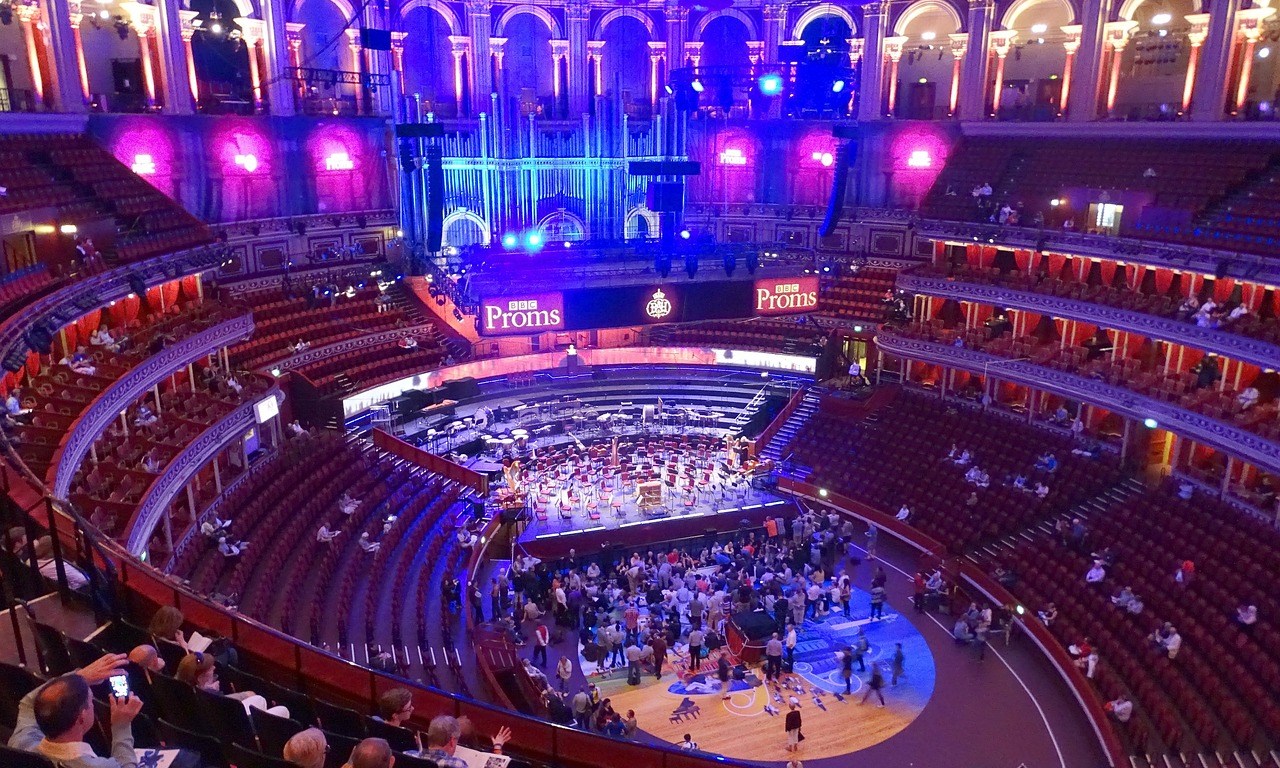
The juxtaposition becomes even more glaring when juxtaposed with the Sustainable Fashion Awards, an event that crowned Milan Fashion Week with two hours of self-celebration. This upcoming edition of the London Fashion Awards, slated for December 4th at the Royal Albert Hall, appears poised to tread an even more perplexing path. The question arises, why?
While accolades like the Woolmark Prize and the LVMH Prize serve the purpose of thrusting emerging talents onto the global stage, lending an air of discovery to the proceedings, the Fashion Awards seem to revel in celebrating those who have already scaled the highest peaks of creative achievement. The nominees for the 2023 Designer of the Year category include luminaries such as Jonathan Anderson, Miuccia Prada, Raf Simons, Daniel Lee, Matthieu Blazy, and Sarah Burton – all undeniably brilliant creative minds. But one can’t help but wonder: do they truly need another award to validate their exceptional contributions to the world of fashion?
In an era fraught with debates on the very essence of fashion and its place in the world, where originality and innovation are more critical than ever, it is peculiar, to say the least, that we continue to heap accolades upon those who have already garnered the adulation of legions of admirers. The Fashion Awards 2023 may be a dazzling spectacle, but in a world that hungers for fresh voices and radical ideas, it leaves us questioning the essence of recognition in an industry where some have already ascended to the pinnacle of success.
In the echelons of creative leadership, the contenders for the coveted title of creative director bring more than just illustrious résumés to the table. They preside over flourishing enterprises that turn out sales with an almost mechanized efficiency, all while boasting bank accounts that would likely elicit pangs of envy from underpaid laborers in their respective industries. The question that naturally arises is whether these accomplished individuals truly require the coronation and a chorus of accolades. This query gains further resonance when we consider that their coronation is often orchestrated by creative directors who, in a substantial number of cases, serve as the guiding hand, providing minimal input in the form of sketches while delegating the lion’s share of production direction to substantial teams.
Recent events have cast a revealing spotlight on the hitherto uncelebrated design studio directors from iconic houses such as Valentino, Gucci, Saint Laurent, and Tom Ford. These behind-the-scenes creatives have been catapulted into the limelight, prompting us to scrutinize the intricate allocation of responsibilities within their respective studios. It forces us to question the exact extent of a creative director’s contribution, juxtaposed with the considerable influence wielded by design directors, who sometimes find themselves credited as the primary or co-authors of a brand’s distinctive aesthetic.
For those well-acquainted with the inner machinations of these creative ateliers, the division of labor may be crystal clear. However, for less initiated enthusiasts, the revelation that their cherished masterpieces aren’t exclusively the offspring of a singular genius can be a disheartening revelation. Rather, they emerge as meticulously crafted amalgamations of the creative director’s vision, the painstaking craftsmanship of the design director, and the collective ingenuity of the design teams under their expert guidance.
The enigma surrounding these prestigious awards endures, as does the ambiguity surrounding their selection criteria and underlying purpose. It leaves us to ponder whether they serve a more profound purpose beyond providing a transient moment of jubilation for those who’ve already tasted the spoils of success. This uncertainty is palpably reflected in the cyclical waxing and waning of public interest in these revered accolades.
The British Council’s awards raise intriguing questions when it comes to their purpose and impact. At a cursory glance, one might assume they aim to honor brands as corporate entities, much like other industries have their own distinct awards. However, a closer examination reveals that these accolades are rather nominal in nature. Their primary focus is on creatives who, even within emerging or model categories, are already well-established and, quite frankly, have little room left to ascend the ladder of success. It’s worth noting that many among them often delegate assignments and share credit.
The stated objective of these awards is “to amplify leaders of change, celebrate excellence in creativity, and support the next generation of creative talent.” Yet, a discerning observer would argue that the awards primarily celebrate the status quo, lauding a generation that has been in the limelight for over three decades. While their work unquestionably exemplifies excellence in creativity, it seldom originates from a single visionary mind.
The repetitiveness of these awards cannot be ignored; year after year, the same shortlist of ten names is drawn from the very same hat. Consequently, these accolades fail to exert any significant influence on the trajectory of one’s career. They do not represent a crowning achievement, a moment of elevation, or a breakthrough. It often seems that many of the recipients treat these awards as mere ornaments, akin to how Gwyneth Paltrow famously utilizes her Oscar as a doorstop.
In some instances, the awards take on an almost ironic undertone. Consider, for example, a nominee in the “New Establishment” category, Dilara Findikoğlu, who has already achieved cult status as a designer, even garnering features in The New York Times. When she’s not gracing fashion weeks, she reigns as the queen of decadent Halloween parties. However, in the lesser-known corridors of the London fashion industry, she’s infamous for her rather tyrannical methods—a polite euphemism for her management style. This begs the question: Is it equitable to confer a “Designer of the Year” award when, in reality, the role of a designer is dispersed among numerous professionals? Could a more nuanced approach be adopted, with separate accolades for creative directors and design directors? Or does the relative obscurity of the latter category lead the organizers of such ceremonies to overlook it entirely?
While everyone appreciates a medal, a sense of doubt persists among us, the spectators, regarding the ultimate significance of these awards. The red carpet spectacle often takes precedence, leaving us to ponder the true essence of the evening.
 curlycurlworld: Get Twisted with CurlyCurl: The Latest in Curls, Coils, and Confidence!