
“Exploring the Intersection of Luxury Couture, Celebrities, and Environmental Responsibility”
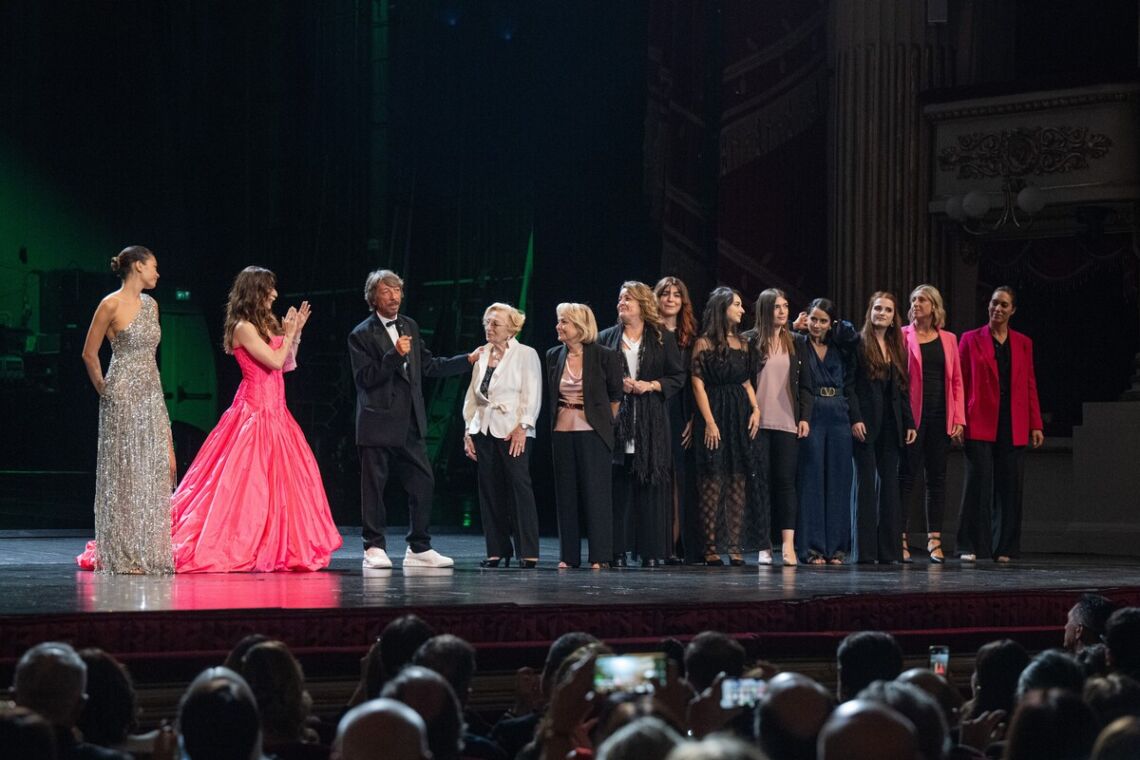
On a memorable Sunday evening, the stage was set for the Sustainable Fashion Awards hosted by the Camera Nazionale della Moda Italiana. The star-studded event featured a dazzling array of fashion luminaries, and amongst them, the esteemed committee consultant, Chiara Ferragni, graced the red carpet in a vintage Tom Ford masterpiece from the FW96 collection. Her ethereal all-white ensemble, complete with a plunging neckline, captured the essence of elegance.
The CNMI red carpet played host to a glittering cast that included Pierpaolo Piccioli, Donatella Versace, Elodie, Marco de Vincenzo, Drusilla Foer, Cate Blanchett, Silvia Grilli ,Marco Mengoni, Bianca Balti, Maximilian Davis, and the former editor-in-chief of British Vogue, Edward Enninful, to name but a few. This eclectic gathering represented a vibrant tapestry of the fashion, music, and film industries, as they all gathered in resplendent attire to face the flashes of the paparazzi at the illustrious La Scala in Milan.
The occasion was a celebration not only of the timeless allure of Made in Italy fashion but also of sustainability. However, a pertinent question lingered – what brand of sustainability did this gala event truly honor? Let us delve deeper. As per CNMI’s vision, the Sustainable Fashion Awards stand as a tribute to the accomplishments and tireless endeavors of Italian and international designers and brands in reshaping the fashion industry into a more sustainable, ethical, and circular domain.
Nonetheless, the media’s spotlight remained, as often the case, fixated on the couture donned by the attending stars, with the accolades predominantly bestowed upon the most renowned luxury fashion houses. The red carpet, affectionately referred to by some as “green” in keeping with the theme, offered the first glimpse into a night dedicated to the most glamorous of paradoxes. Despite the vintage gowns gracing the evening, the very next morning, the invitees unflinchingly resumed their customary #advs postings, highlighting the intriguing duality of an industry on the quest for sustainability, yet beholden to the allure of the ever-present advertisement.
“Sustainable Fashion Awards: A Night of Glamour, Innovation, and Reflection”
An evening of glamour and recognition unfolded as ten esteemed awards were presented at the Sustainable Fashion Awards. Gucci, a standout, claimed The Ellen McArthur Foundation Award for Circular Economy for their groundbreaking Denim Project. This initiative not only certifies the brand’s cotton fibers as products of regenerative agriculture but also provides a traceable passport for them. While this project is set to launch in 2024, it’s important to note that other fashion houses have been treading similar paths, and its implementation remains selective within Gucci’s collections.
The Bicester Award for Emerging Designers was elegantly bestowed by Chiara Ferragni upon Priya Ahluwalia. Yet, this prestigious accolade raised intriguing questions about its sponsor, a luxury shopping center—seemingly an odd pairing in the realm of sustainability.
The night continued with The Humanitarian Award for Equity and Inclusivity, honorably conferred upon Donatella Versace, and The Visionary Award presented to Edward Enninful. The event gracefully transitioned from discussions on inclusivity to activism, showcasing not only sustainable ‘Made in Italy’ fashion but also the creativity of emerging independent designers.
In essence, what was meant to be a contemplative examination of fashion’s impact on the planet turned into a public penance ceremony, led by the industry’s most influential figures. Like beads on a rosary, each Sustainable Fashion Award served as a prayer for inclusivity, offering ten profound reflections and a collective plea for a more sustainable fashion future.
Navigating Fashion’s Paradox: The Clash of Sustainability and Hypocrisy
Within the carefully crafted phrases that heralded the new edition of the competition by the Camera Nazionale della Moda Italiana (CNMI), one message emerges boldly: “The fashion industry is increasingly recognizing the weight of its environmental and social impact.” Indeed, this assertion resonates truth, considering the growing awareness among brands regarding their contribution to climate change and the pressing need to address it. However, it also casts an unforgiving light on the sensational hypocrisy that unfolded during Sunday night’s gala.
The fashion world, undeniably, has embarked on a journey to reduce its ecological footprint. Brands are now, more than ever, mindful of their environmental and social responsibilities. Yet, the gala presented a stark paradox. While the industry strives for eco-consciousness, it simultaneously embraces the practice of “greenwashing” with open arms. Sustainability campaigns have become a recurrent sight, but genuine transparency remains elusive.
The Fashion Revolution’s Fashion Transparency Index is a telling revelation. Luxury giants like Tom Ford and Max Mara register a transparency rate of 0%, a jarring revelation considering their prominence. Even more baffling is that those at the forefront of sustainability efforts are not necessarily leading in transparency. It becomes evident that, in some cases, the launch of new sustainability projects serves as a smokescreen rather than genuine commitment.
In this complex landscape, fashion finds itself at a crossroads. The industry is indeed recognizing its environmental and social impact, but it must now bridge the chasm between intent and action. The gala serves as a stark reminder that the path to sustainability is paved with contradictions. As consumers and advocates demand authenticity, fashion must heed the call for true transparency, for only then can it truly carry the banner of sustainability forward without the shadow of hypocrisy.
The CNMI Sustainable Fashion Awards: Where Beauty Meets the Paradox of Sustainability
The CNMI Sustainable Fashion Awards unfolded as a picturesque spectacle, a symphony of elegance embodied by the stars in attendance and punctuated by impassioned award-winners’ speeches. Yet, beneath the veneer of beauty lay a performative agenda, an event seemingly tailored for a future that prioritizes aesthetics over substantive change. It was an evening that shed light on values that Italian fashion, despite its storied heritage, struggles to embrace wholeheartedly.
The ceremony seemed to conflate inclusiveness and sustainability, presenting them as mere items on a checklist rather than as intricate threads woven into a multifaceted tapestry. Sustainability, as it stands, is inherently inclusive, but the recognition of this fact transcends glamorous events. The spotlight should extend beyond the red carpet to encompass those often overlooked – the Italian artisans diligently preserving fading crafts, the souls ensnared in the web of forced labor on Uzbek silk plantations, and the children toiling in the cotton fields of China. These unsung heroes should share the stage with the luminaries of Italian pop culture. After all, their dedication, resilience, and plight are integral aspects of sustainable fashion’s narrative.
Yet, herein lies a paradox. Sustainability, synonymous with anti-consumerism, finds itself at odds with an industry inherently intertwined with capitalism. Fashion, with its relentless pace and ever-evolving trends, appears to tread a divergent path from the ideals of sustainability. Yet, this divergence might be the crucible where genuine change emerges.
The collision of these two worlds, one driven by conscious consumption and the other by commercialism, forces us to confront critical questions. Can fashion truly be sustainable within a system rooted in consumerism? Should the pursuit of sustainable fashion necessitate an upheaval of the very industry that sustains it?
Perhaps, the divergence between sustainability and fashion is not a divide to bridge but a dynamic tension that propels us toward innovation. This tension could be the catalyst for reimagining fashion’s relationship with the environment, society, and capitalism. It is in this paradox that the potential for transformative change resides, where fashion and sustainability are not mutually exclusive but rather two parallel tracks converging on a shared destination, a more conscientious and harmonious future.
CASE OF STUDIES
1.  Patagonia’s Commitment to Sustainability: This case study delves into Patagonia’s sustainable practices, including its use of recycled materials, fair labor practices, and activism for environmental causes.
2.  H&M’s Conscious Collection: Explore how H&M has implemented sustainability initiatives through its Conscious Collection, incorporating organic materials and recycling programs.
3.  Eileen Fisher’s Ethical Fashion: Eileen Fisher is known for its ethical and sustainable fashion practices. This case study examines its supply chain transparency and focus on sustainable materials.
4.  Adidas and Parley for the Oceans: Investigate the collaboration between Adidas and Parley, which turns ocean plastic waste into sportswear, showcasing the intersection of fashion and environmental sustainability.
5.  The Slow Fashion Movement: Explore case studies of various slow fashion brands and their commitment to sustainable, high-quality, and timeless clothing.
6.  The Sustainable Fashion Revolution in Copenhagen: This case study explores how Copenhagen became a hub for sustainable fashion and the role of brands like Ganni and Filippa K in this movement.
7.  Luxury Brands Going Sustainable: Analyze how luxury brands like Stella McCartney and Gucci are incorporating sustainability into their high-end fashion lines and marketing strategies.
8.  Fashion Revolution’s Fashion Revolution Week: This case study examines Fashion Revolution Week, an annual event that calls for greater transparency and sustainability in the fashion industry.
9.  The Impact of Fast Fashion: Investigate the environmental and social impacts of fast fashion, with a focus on the negative consequences of rapid production and consumption.
10. Sustainable Materials in Fashion: Explore how fashion brands are incorporating sustainable materials like Tencel, organic cotton, and recycled fibers into their collections.
 curlycurlworld: Get Twisted with CurlyCurl: The Latest in Curls, Coils, and Confidence!
One thought on “Gala Glamour and Sustainable Style: A Night at the CNMI Sustainable Fashion Awards”