

“Exploring the Root Causes and Impact of Audience Object Throwing at Singers”
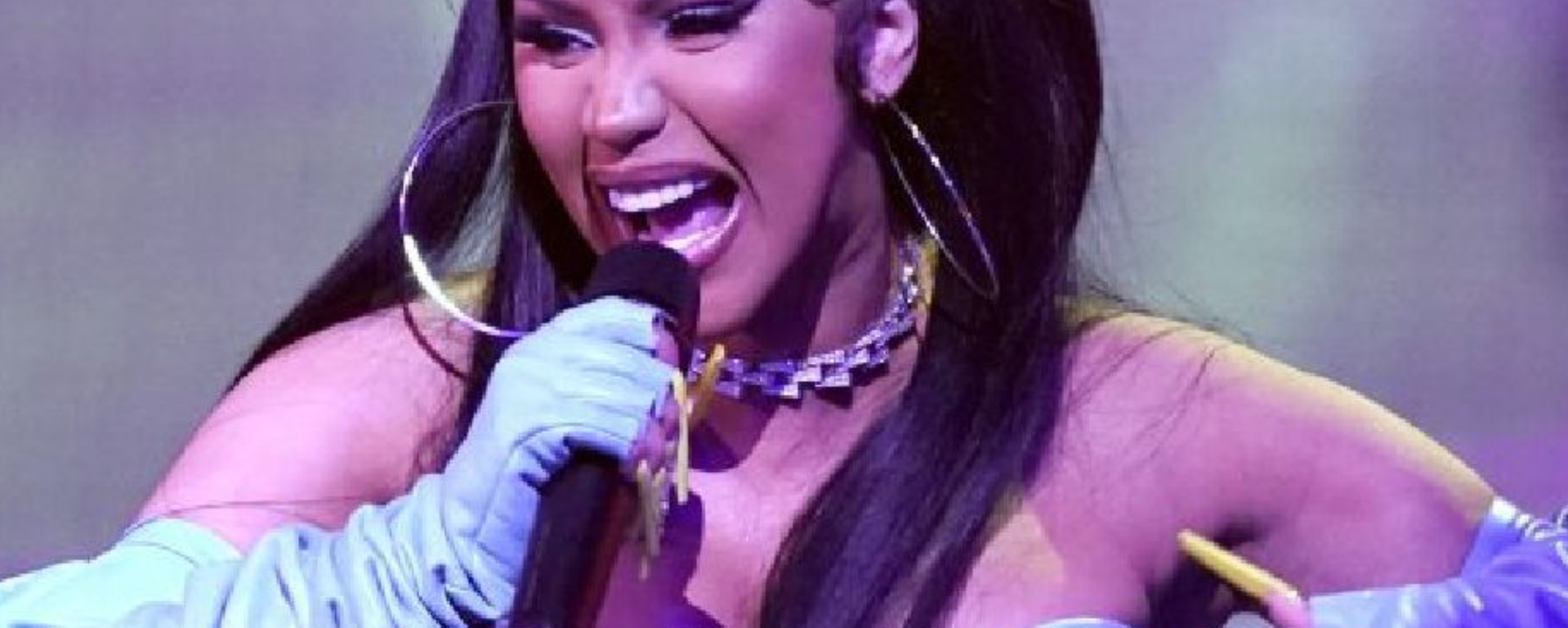
In the vibrant city of Las Vegas, where dreams and fantasies merge with reality, Cardi B took the stage for a highly anticipated performance. As the spotlight shone upon her, the crowd erupted in ecstatic cheers, filling the air with an electrifying buzz. Little did anyone know that amidst this exhilarating atmosphere, an unfortunate incident was about to unfold.
In the midst of her mesmerizing performance, Cardi B’s focus was suddenly interrupted when an audacious fan decided to take matters into their own hands, or rather, their own drink. With surprising swiftness, a cup soared through the air, splashing its contents on the unsuspecting rapper. In the heat of the moment, Cardi B’s fiery spirit couldn’t be contained, and she instinctively retaliated by hurling her microphone towards the perpetrator.
The aftermath of this unexpected altercation has cast a shadow over the music world. Cardi B, now entangled in a battery lawsuit, faces a legal battle that threatens to overshadow her artistic achievements. Unfortunately, this incident is not an isolated case; it sheds light on a disturbing trend that has marred the live performances of numerous artists.
From international sensations like Harry Styles, Drake, to the soulful powerhouse Adele, singers across genres and backgrounds have found themselves grappling with assaults from their own admirers. It seems that amidst the excitement of a live show, some audience members have lost sight of the boundary between revelry and respect.
The rise of social media and the digital age has revolutionized the way we interact with celebrities and artists. The access to their lives and the ability to connect with them on various platforms may have blurred the line between fan and friend. However, this newfound intimacy should never translate into a lack of decorum or a disregard for personal space.
In the not so distant past, the chaos and rapture that ensued during a concert were viewed as an integral part of the entertainment, almost a testament to the fervent passion of the crowd. History even attests to peculiar traditions like throwing shabby tomatoes at actors during early 1900s shows, a curious custom that continues to inspire the name of a renowned film review service, “Rotten Tomatoes.”
Fast forward to the present, as the world emerges from the shadow of a global pandemic, the dynamics of public gatherings have shifted. While the excitement of a live performance still holds an allure like no other, the notion of common decency and respect must reign supreme.
Artists pour their heart and soul into their craft, spending countless hours perfecting their performances to provide their fans with unforgettable experiences. Their talent and dedication deserve applause, not misplaced projectiles. The stage should be a sanctuary for artistic expression, not a battleground for senseless actions.
As we navigate these changing times and regain a sense of normalcy, let us collectively embrace a more considerate and respectful approach to expressing our adoration for artists. Celebrate their music, their talent, and their artistry with enthusiasm, warmth, and admiration. By doing so, we not only ensure a safer and more enjoyable experience for performers and fans alike but also preserve the magic and wonder of live music for generations to come.
“Summer Concert Mishaps: Cardi B, Bebe Rexha, Pink, Harry Styles, and Taylor Swift’s Unexpected Encounters”
During this eventful summer of music performances, several American artists experienced unexpected and dangerous incidents involving audience members. Cardi B faced a peculiar situation with an exaggerated fan and a microphone being auctioned, but another performer, Bebe Rexha, had an even worse encounter. During her New York concert last June, a spectator threw a phone at her, hitting her in the eye and requiring medical attention for stitches.
The person responsible for this reckless act was apprehended and claimed it was intended to be humorous. Sadly, such incidents didn’t end there. Pink, performing in London, encountered strange objects being thrown at her during both concerts, ranging from a wheel of brie to the ashes of a fan’s mother.
Other artists like Harry Styles and Taylor Swift also experienced bizarre instances during their world tours. Harry Styles was hit by candy, a water bottle, chicken nuggets, and a bouquet of flowers in different cities, while Taylor Swift’s signature bracelets became the preferred target of her devoted fans, known as Swifties.
However, amidst these unfortunate occurrences, some diligent fans decided to take action and created a Concert Etiquette Guide to promote better behavior and ensure the safety and enjoyment of everyone at music events.
Concerns over an alarming trend in concert behavior have sparked artists to openly communicate with their fans. One such example is singer and producer Charlie Puth, who appealed to his Twitter followers to enjoy the show responsibly and avoid causing harm. Meanwhile, British singer-songwriter Adele addressed the issue more assertively during a Las Vegas concert. Armed with a t-shirt-shooting cannon, she boldly stated, “People seem to be forgetting show etiquette lately and just throwing things onstage. I challenge you, I dare you to throw something at me. Rest assured, I won’t tolerate it.” This emphasizes the importance of respecting artists’ performances and ensuring a positive concert experience for everyone involved.
In the intricate tapestry of human interaction, the issue transcends surface-level concert behavior; it delves into the very essence of etiquette and the profound transformations in our society post-2020. The prevailing sense of fear and uncertainty that shrouded our world during that tumultuous time compelled many to seek solace in optimism and resilience, yet paradoxically, studies now reveal a disconcerting decline in the basic tenets of courtesy and politeness.
Embracing this enigmatic facet of our human psyche, esteemed researchers from the University of Calgary have unveiled the concept of “Post-pandemic Rudeness” through their insightful discourse on The Conversation. This subtle yet pervasive cycle of frustration and resentment seeps into our daily lives, most notably within the spaces of relaxation and leisure, where expressions of impoliteness often surface.
For artists, their craft is an artful dance that harmonizes emotion and creativity, transcending the boundaries of time and space to touch the very soul of their listeners. Establishing a profound emotional connection with their audience becomes a vital conduit for an artist’s success, the conduit that weaves the threads of their artistry with the tapestry of human experience.
Yet, amid the euphoric whirlwind of a concert, when spectators are swept away by the adrenaline and fervor of seeing their cherished idols in the flesh, the line between admiration and audacious action can blur. The intoxicating energy pulsing through the crowd may incite impulsive and irrational attempts at personal interaction, unwittingly veering into the realm of rudeness and intrusion.
The quandary then arises: how should these artists, these fragile purveyors of emotion, navigate this delicate balance between forging deep connections with their ardent fans and safeguarding the sanctity of their creative space? The answer lies in a courageous and unwavering stand against the currents of post-pandemic rudeness, as exemplified by the likes of Charlie Puth and the indomitable Adele, who chose to confront the issue head-on.
In a world where personal boundaries are sometimes blurred and emotions run amok, artists and their cherished audiences must unite as guardians of a sacred realm – the realm of live performances. A realm where the transcendent power of music intertwines with the collective heartbeat of humanity, fostering an environment of respect, admiration, and deep appreciation.
It is within this crucible of shared consciousness that the magic of music flourishes, birthing ethereal moments that transcend time and space. As artists pour their souls into their craft, and audiences bask in the catharsis of shared experiences, the bond between creator and beholder deepens, intertwining the narratives of life with the pulsating rhythms of the universe itself.
 curlycurlworld: Get Twisted with CurlyCurl: The Latest in Curls, Coils, and Confidence!