

An outline of the screen print suit’s history, from Martin Margiela through Pierpaolo Piccioli
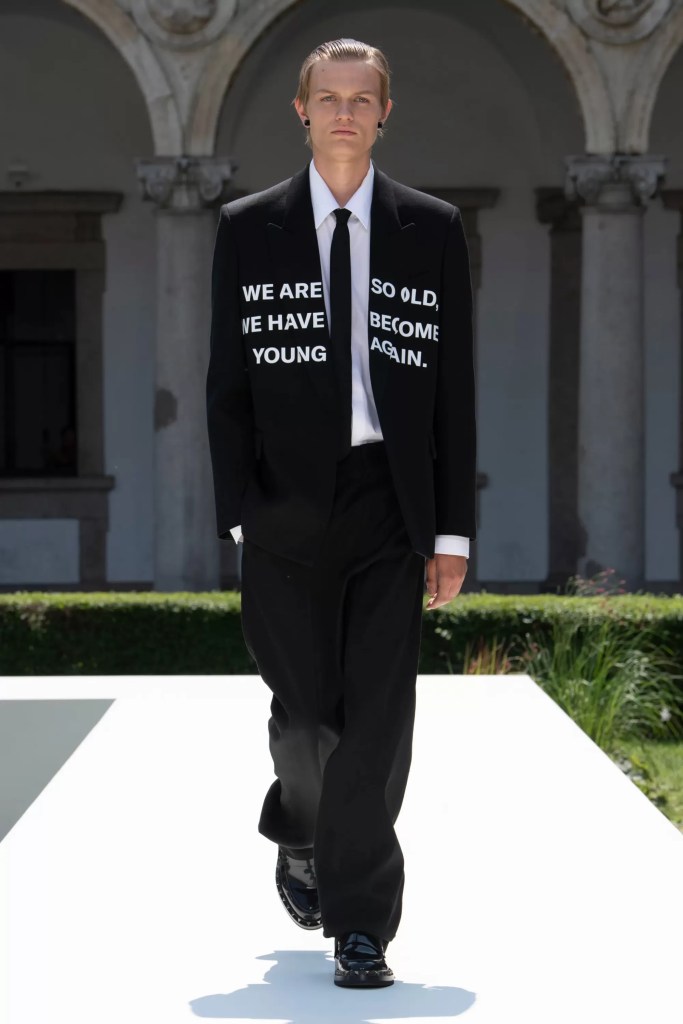
In one of his most enduring movies, Palombella Rossa, Nanni Moretti admonished, “Words are important!” Pierpaolo Piccioli, author of the best-selling book Una vida comme tante (a life like many others) used the words of American writer and journalist Hanya Yanagihara to showcase his vision of masculinity free of any sociohistorical prejudices. We are so old that we have become young again, reads a structured black blazer during the Narratives show at La Statale in Milan. The quote’s creator smiles in the front row as she admires her own words on a high-end garment. Since words are a recurring theme in the works of stylists who have attempted to first deconstruct and then reconstruct the idea of male identity through the Screen Print Suit throughout history, from Virgil Abloh to Martin Margiela, Junya Watanabe, and Yohji Yamamoto, the revolution in sartorial codes, according to Valentino, also passes through words.

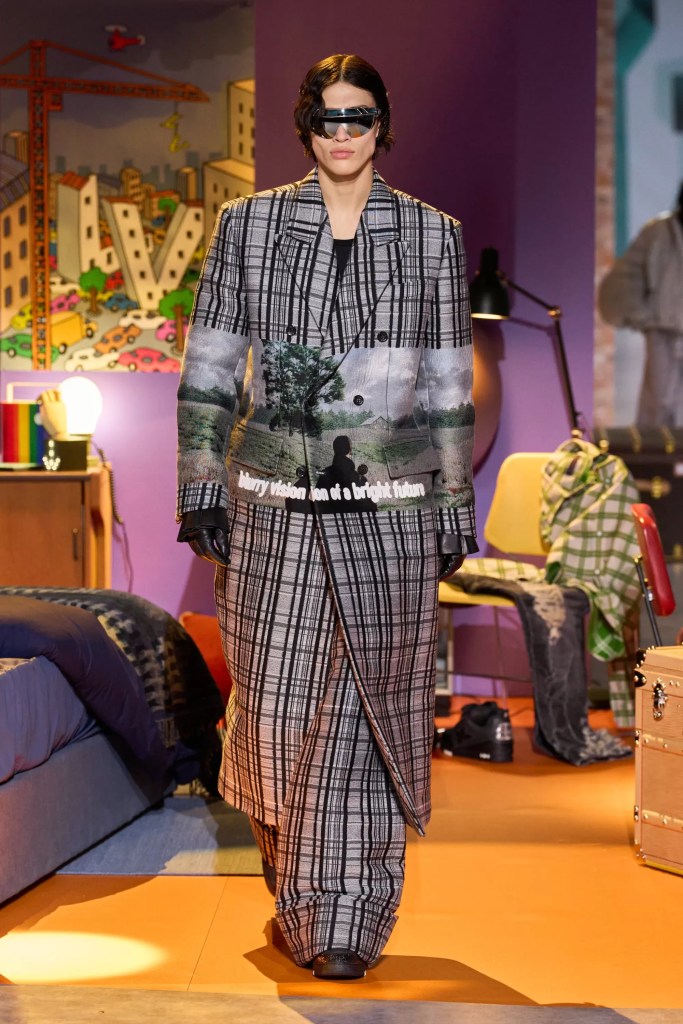



Colm Dillane and Ibrahim Kamara used language as a priceless instrument for Louis Vuitton’s FW23 collection to honor the artistic and cultural legacy of Virgil Abloh. Structured clothing with colorful designs, a riot of colors, and inspiring slogans like “bright vision” or “fantastic future”:
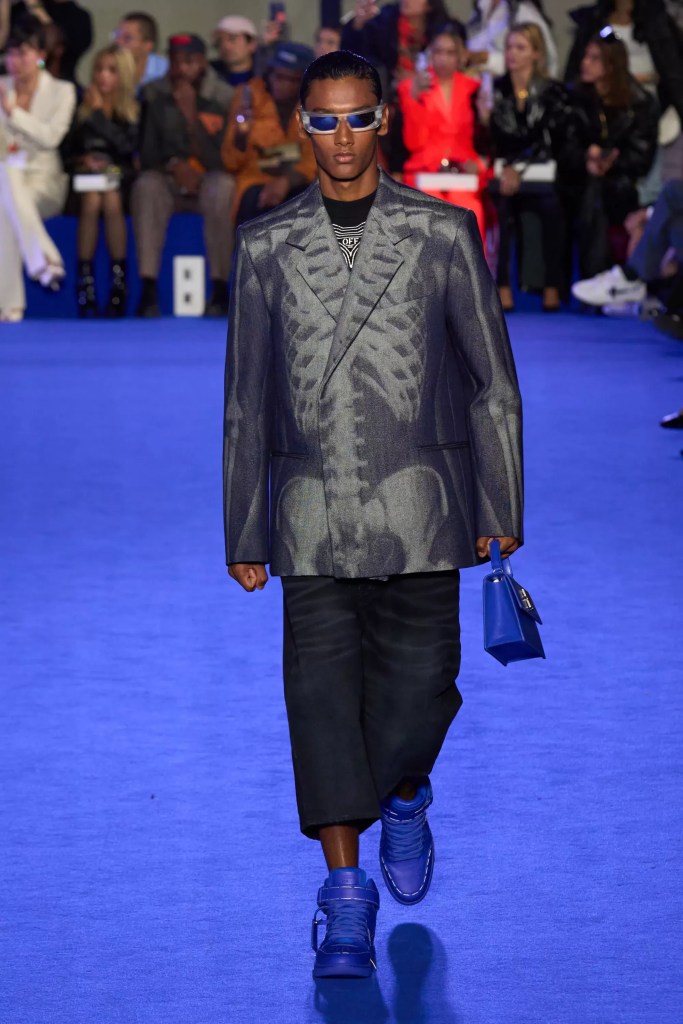
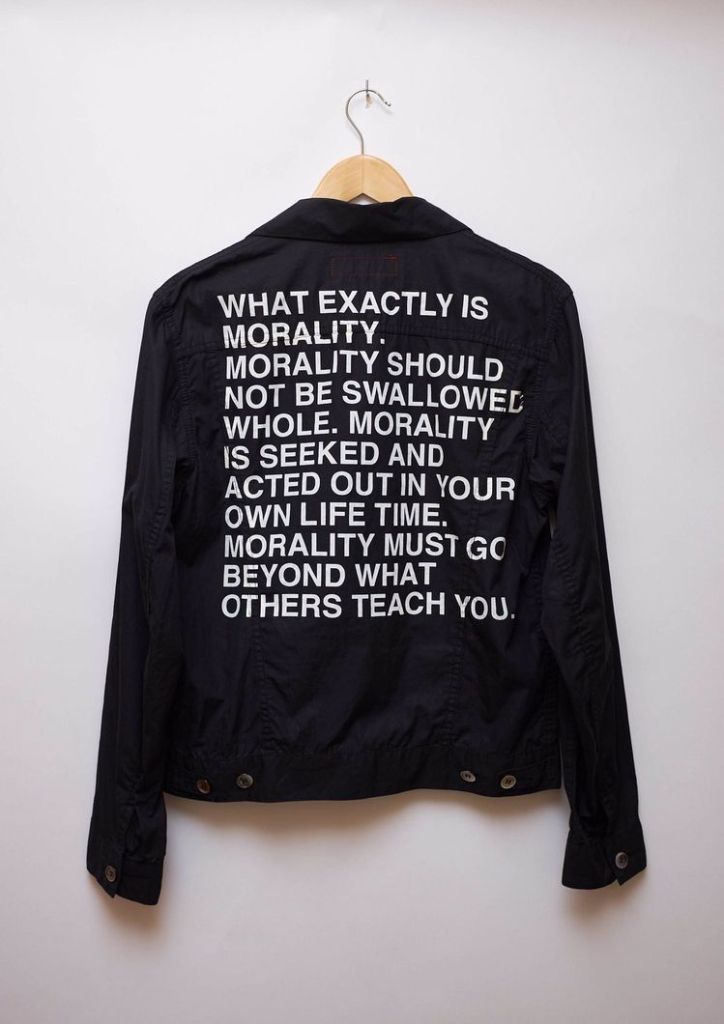
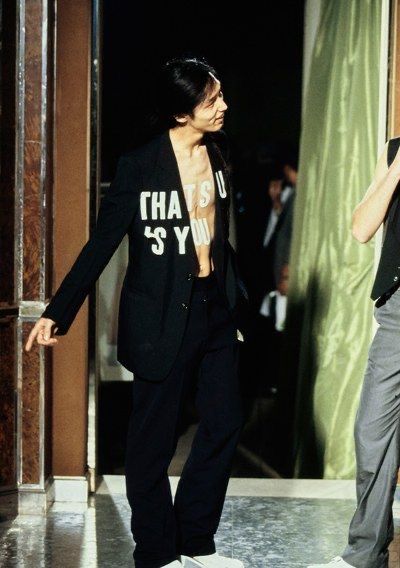
A collection honoring Abloh’s legacy continues to reflect his unwavering optimism. In the same year, Kamara once more (this time at Off White) investigated the potential of the screen print suit by suggesting the print of a body exposed to X-rays on a denim jacket. If we go back twenty years, we find that printed words have always been a part of avant-garde fashion, from the controversial statements on Takahiro Miyashita’s Number Nine grunge t-shirts to the poem jeans created by Junya Watanabe with Levi’s. Yohji Yamamoto has always been a trailblazer when it comes to using text printed on fitted blazers to blur the lines between genders.
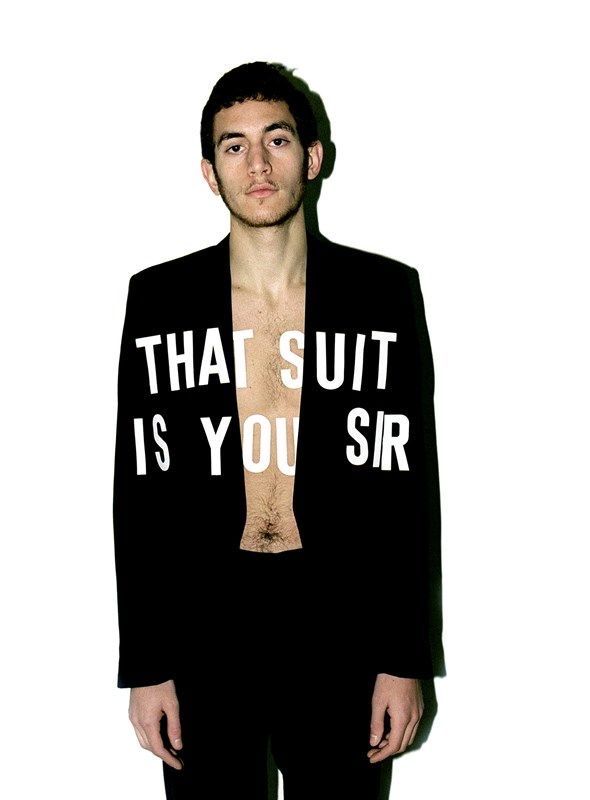
According to prominent Japanese designer Yohji Yamamoto, “I think my men’s clothes look as good on women as my women’s clothes,” he told the New York Times in 1983. “I always wonder who made the decision that men and women should dress differently. When it comes to FW21, the writing multiplies and breaks apart covering a two-piece suit, with brief, hermetic, winking or evasive words embellishing strictly black genderless clothing. “Forget me not” is written on a coat from SS04, but the print “Will be back soon” peeks out in place of it in FW17. Martin Margiela, who debuted a screen-printed suit in 1999, was likely the first to do it. The spring/summer fashion show featured a sort of greatest hits: the trompe l’oeil prints alluded to those shown for spring ’96, the man-sized doll dresses alluded to autumn ’94, the Stockman mannequin tops alluded to spring ’97, and to close the show, a print reading “This suit is yours sir” ran across the model’s black blazer and bare chest.
 curlycurlworld: Get Twisted with CurlyCurl: The Latest in Curls, Coils, and Confidence!